Product News | October 11, 2021

TSmedia, d.o.o. Chooses Broadsign International, LLC for its “Digital Giants” LED Screens

LED displays up to 55 square meters in size run on Broadsign’s digital signage platform.

One of TSmedia’s Digital Giants LED screens.

Ljubljana, Slovenia. November 26, 2014. The largest network of digital out-of-home displays in Slovenia, TSmedia, has selected Broadsign International, LLC’s cloud-based digital signage software to power its new class of technologically advanced LED screens, called “Digital Giants”.

Seven digital billboards ranging from 13 to 55 square meters in size were activated in May 2014 and complement TSmedia’s preexisting displays in the likes of shopping malls, post offices and gas stations. Located in prominent positions along Ljubljana’s main crossroads, the city center and its biggest shopping mall, Digital Giants have rapidly been gaining popularity among advertisers and are viewed as the next “big” thing in Slovenian advertising.

TSmedia plans to expand the Digital Giants network to new locations in Ljubljana and across Slovenia.
“Broadsign was selected to power our new and advanced network of digital screens due to the significant importance we place on viewer-targeting, consumer engagement and high accountability,” said Tomaž Pernovšek, CEO at TSmedia. “We are always working hard to offer our advertisers the latest and most efficient advertising platforms. The capabilities of Broadsign’s robust software align with TSmedia’s needs and will help meet our advertising objectives.”

The entire TSmedia network of outdoor digital displays reaches almost 90% of Slovenia’s population and guarantees advertisers extensive reach, visibility and successful campaign performance.
“Broadsign has developed a reputation for providing trusted and high quality performance to the biggest screens in the world, from Las Vegas’ Harmon Corner to London’s Waterloo Motion. As such, we are proud to add TSmedia, leading DOOH network of its nation, to this list of renowned locations and premium displays,” said Skip Beloff, Vice President of Sales at Broadsign.

If you are looking to deploy a series of unique digital out-of-home displays in the near future, sign up for a 60 day free trial of Broadsign’s digital signage software.

About Broadsign

Broadsign International, LLC is the first global provider of cloud-based software for digital signage networks. Its platform was designed exclusively as a management system for media companies operating digital out-of-home and digital place-based media networks, giving them an unlimited capacity for growth without adding personnel. After over a decade in the industry, Broadsign’s latest incarnation, Broadsign X, has become a mature and reliable fit for all digital signage software needs and its Android-based smart player, Broadsign Xpress, has decreased the cost of deploying digital signage compared to PC-based hardware alternatives. Broadsign’s constant growth, extensive network and dedication to predicting and responding to industry trends make its digital signage solutions a safe bet for the future of networks with even the most complex of requirements. For more information about Broadsign, visit https://broadsign.com.

About TSmedia

TSmedia is a Slovenian corporation, renowned for its extensive experience in the development of digital contents and services, management of various media and information points. TSmedia participates in creation of the Slovenian media landscape with the leading digital media Planet Siol.net, and constitutes the central Slovenian information point with najdi.si — the entry point to the Slovenian Internet, the Telephone Directory of Slovenia, the Contact Centers 1188 and 1977, and the business register Bizi.si. According to MOSS (Slovenian online audience measurement), the medias of TSmedia enjoy the largest overall reach in the country, effectively reaching more than two thirds of all internet users.

Product News | October 11, 2021

Broadsign x ALOOH 2026: Insights from Leading LATAM OOH Media Owners

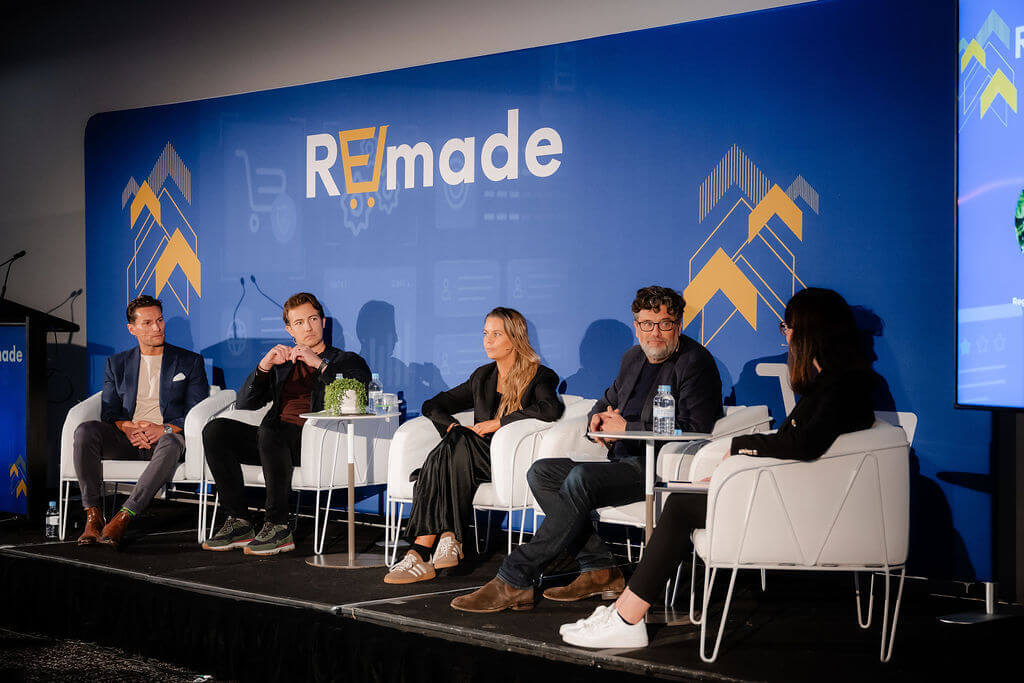
ALOOH 2026 x Broadsign Webinar insights from leading LATAM media owners

Ahead of the 2026 ALOOH annual forum happening in Lima in September, Broadsign held a webinar in partnership with ALOOH Latam, inviting out-of-home (OOH) media owners of the region to learn how they can turn their static and digital OOH assets into a unified revenue engine. Broadsign’s Sales Director, Jose Delgado, and Head of Sales for Latin America, Manuel Ameneiros, provided a comprehensive overview of the Broadsign Platform and how it can help media owners grow their network and scale their revenue across static, digital and programmatic OOH. 

The session was followed by a customer panel, moderated by Jacobo Gomez, Sr. Account Manager at Broadsign, with guest speakers Paulo Cesar Queiroz, Chief Executive Officer at RZK Digital, and Andrea Mereghetti, Chief Technology Officer at Proxymo. They answered questions about how they grew their revenue across direct and programmatic OOH channels, simplified network and inventory management, and seamlessly scaled their network with Broadsign. Read the summary of the customer panel below. 

How RZK Digital is driving digital innovation in Brazil’s OOH landscape with Broadsign

Founded in 2021, RZK Digital has achieved a 54% annual growth rate by focusing exclusively on urban bus terminals in Brazil. With the Broadsign Platform, the company efficiently manages 850 synchronized digital screens across 54 terminals, reaching nearly 3.2 million people daily. This streamlined operational model enables a team of just two people to maintain high-impact advertising campaigns across their entire network.

What strategic value does your network hold for your advertisers? What would be your elevator pitch to advertisers? 

In Brazil, the OOH market has long been dominated by established giants with massive networks. In a highly regulated city like São Paulo, outdoor advertising in public spaces is subject to strict regulations. Access to advertising spaces at transportation terminals is granted through public concessions, which are long-term contracts. We focused our growth on bus terminals, which was the first time such a large-scale initiative had been undertaken here in Brazil. 

However, we quickly realized that the true value wasn’t in the screens themselves, but in the audience. Our challenge was to shift the market mindset from ‘buying screens’ to ‘buying audiences.’ To achieve this, Broadsign’s partnership with Quividi was essential, as the use of Broadsign’s proof-of-play and Quividi’s computer-vision cameras’ real-time measurement capabilities enabled us to offer advertisers real-time outdoor advertising audiences across countless bus terminals. Audience data is also audited by a national agency, the IVC (Instituto Verificador de Comunicación), which is directly connected to RZK Digital’s systems, enabling it to monitor the collected data in real time.

The first-party data we’ve structured became our key differentiator. By offering free public Wi-Fi at our terminals, we have built a massive data taxonomy. When people connect to the Wi-Fi, they answer three or four questions that help us determine how often they return to bus terminals, allowing us to build a comprehensive understanding of their habits. By automating the collection of this information, we were able to gather data from 1.5 million respondents.

This data advantage, paired with Broadsign’s technology, gives our clients unmatched operational agility. They don’t face restricted launch dates; they can pivot instantly, run dynamic creative tests, or adapt campaigns based on real-time factors like weather. We’ve effectively brought best practices from technologically advanced markets like London, Singapore, and Hong Kong to Brazil, making data-driven advertising our core differentiator.

Could you tell us about the complex Casas Bahía use case and how Broadsign helped facilitate the deployment?

Casa Bahía is a major brick-and-mortar retailer with stores across Brazil. To build greater loyalty with them, we pushed the boundaries of our network capabilities, and the Broadsign Platform proved to be the ideal partner to help us do so. On the day of a new Casa Bahía store’s opening, we broadcast the live event in which company executives presented details about the new store via the terminals in our network. Following this success, another large retailer, Magalu, requested a similar live commerce activation via YouTube, which we executed with equal ease. These innovations and the simplicity with which Broadsign enables them have become powerful tools for captivating new and existing clients.

How Proxymo is scaling and monetizing digital OOH with Broadsign

Founded in 2008, Proxymo is one of the largest digital media companies in Mexico, with over 1,200 digital screens nationwide, distinguishing itself through a unique blend of media reach and technological innovation. With the Broadsign Platform, they deliver cutting-edge solutions and engaging experiences for their diverse audience.

What are your biggest technical challenges in integrating and, above all, monetizing a network as large and diverse as Proxymo?

The biggest challenge is having the right tool to integrate the different formats. We are constantly expanding our digital presence, from our well-established kiosks in shopping malls to our new Smart City kiosks with 4K resolution and LCD screens on public streets. To scale efficiently, we focused on finding a solution, such as Broadsign, that made managing varying graphic resolutions seamless and eliminated the friction of manual creative adaptation. Another key factor was access to a supply-side platform (SSP) that offers a holistic view of our inventory and the flexibility to integrate either third-party metrics or our own data. 

How does Broadsign help Proxymo optimize operations and ensure transparency in the delivery of its campaigns to its clients?

The primary advantage is the platform’s exceptional flexibility and stability. With a CMS that integrates seamlessly across Linux, Windows, and IoT environments, we can scale confidently without worrying about system failures. Additionally, Broadsign’s Proof-of-Performance (PoP) data, which we cross-reference with our internal audience measurement, allows us to deliver highly reliable reports. On top of that, there are incredible API integrations. I believe Broadsign is one of the few platforms that offer all these capabilities in addition to an incredible Support team that is very attentive to its customers. 

Proxymo has a clear vision of how programmatic advertising is a sales channel that complements direct sales. What advice would you give other media owners in the region looking to balance their strategy across both revenue streams?

The primary challenge for many media owners is internal education. Sales teams must understand that not only are the budgets for programmatic and direct sales different, but so is the approach to selling them. Direct sales requires a high-touch, consultative approach to deliver maximum value, while programmatic enables you to capture omnichannel budgets, such as those originating from TV and radio. Educating your sales team on how to leverage both channels strategically ensures that you don’t miss out on these revenue opportunities. Another aspect is investing in a robust SSP that simplifies technical connections and provides access to a large demand ecosystem. 

Discover the platform that powers out-of-home here.

Product News | October 11, 2021

Insights from CSP’s At Your Convenience Podcast: Building a retail media network that actually performs

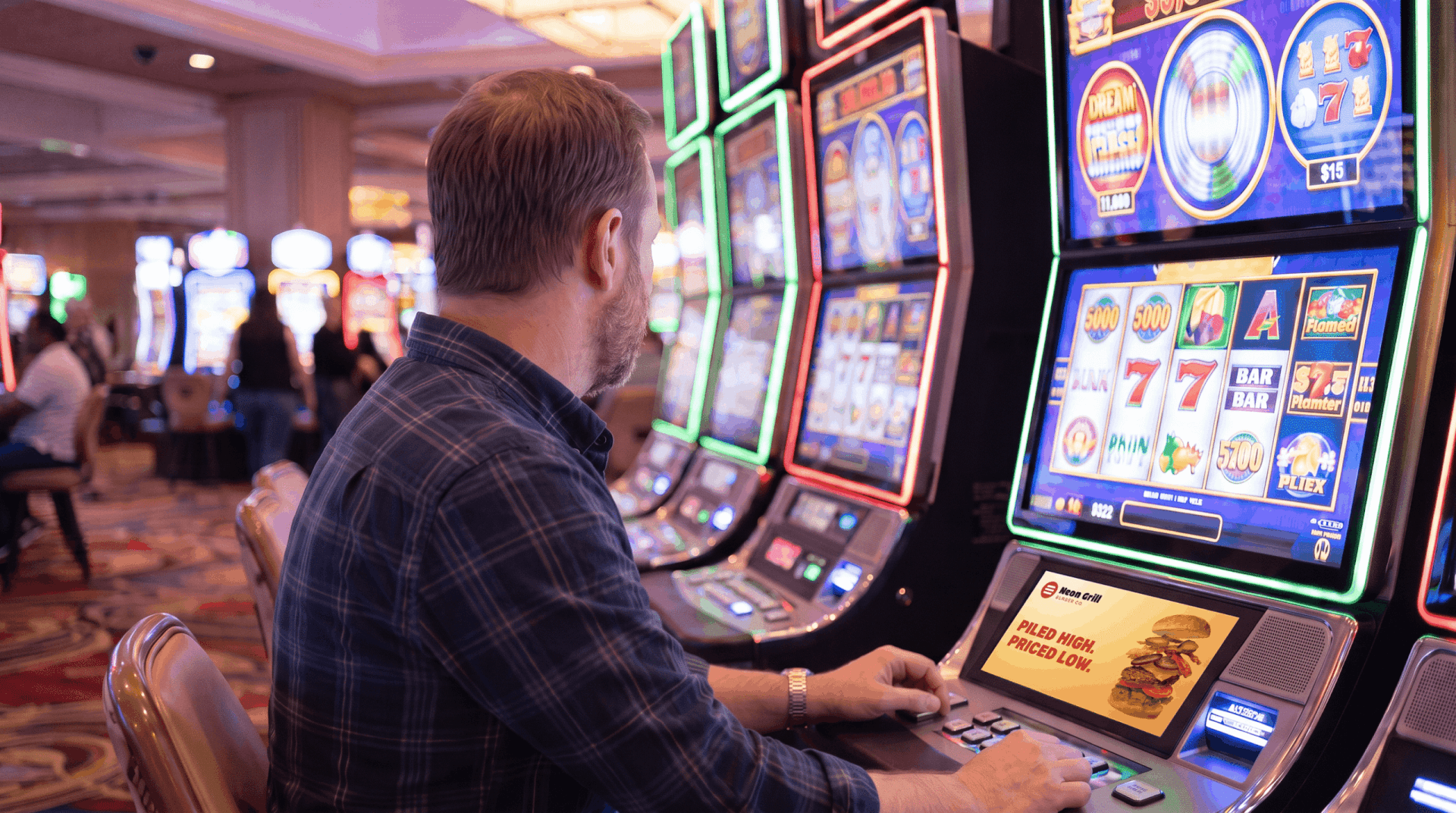
Promotional graphic showing the Broadsign logo over a blurred convenience store interior with snack aisles, coffee, and hot foods signage. A blue-to-purple gradient overlay covers the image, and a white speech bubble on the right contains the text "At Your Convenience" with a convenience store icon and an ellipsis.

Retail media networks are expanding rapidly, with retailers investing in in-store digital infrastructure to create new revenue opportunities and influence shopper decisions closer to the point of purchase. However, deploying screens is only the first step. As the industry matures, retailers face a larger challenge: building networks designed for monetization, measurement, and long-term scalability.

In the latest episode of CSP’s “At Your Convenience” podcast, Drew Walls, Sales Director of Retail Media at Broadsign, joins CSP Vice President of Content Strategy Abby Lewis to discuss what it takes to move beyond infrastructure and build retail media networks that deliver measurable value for retailers, advertisers, and shoppers.

From monetization strategy and ecosystem flexibility to the importance of in-store relevance, Drew shares the operational realities behind building retail media networks that can scale successfully.

Let’s dive in.

Moving beyond screens: Selling the shopper moment

One of the biggest opportunities for in-store retail media is changing how inventory is valued and packaged. Many networks continue to treat screens as standardized placements, applying consistent pricing regardless of shopper context. 

However, in-store environments are dynamic. Drew highlighted that the industry needs to move beyond pricing the screen itself and focus on understanding the value of the shopper moment behind it.

“We are still pricing the screen and not necessarily the moment. My 7 a.m. coffee run looks very different from a cold vault visit after I get off work at 5:30. Those media units are very different because my mission is different.”- Drew Walls, Sales Director of Retail Media at Broadsign

These moments reflect different shopper behaviours, purchase intent, and advertiser opportunities. To capture their value, retailers need the right technology foundation to package and activate inventory based on real-time signals such as location, time of day, and shopper context. By turning these moments into measurable media opportunities, retailers can move beyond generic screen placements and deliver more relevant value to advertisers.

Building the right foundation: Control, flexibility, and monetization

As retailers build their media networks, one of the biggest strategic decisions is determining what they should own versus where they should leverage specialized partners.

The conversation is often framed as a choice between closed ecosystems and fully open models. However, Drew explained that the right approach depends on the retailer’s goals, maturity, and ability to scale over time. Fully closed systems can limit flexibility by tying retailers to a single vendor roadmap, while fully in-house approaches require significant resources, expertise, and operational investment. A hybrid approach allows retailers to maintain control over critical assets while leveraging specialized partners across areas such as technology, infrastructure, and demand access.

For retailers looking to build a true media business, the technology foundation matters. Hardware and content management systems may enable screen deployment, but they are not designed to manage the complexities of monetizing media inventory. An ad server provides the capabilities needed to manage campaign delivery, pacing, advertiser commitments, and multiple demand sources, helping retailers turn available inventory into measurable revenue opportunities.

When evaluating partners, Drew noted that retailers should consider whether their technology ecosystem can grow alongside the business. “The real question for a retailer is: will my partner grow with me, or am I eventually going to outgrow my partner?”

A regional retailer launching its first network will have different needs than a national retailer managing thousands of locations. The right architecture should provide flexibility as the business evolves without creating unnecessary constraints.

Defining control: What retailers must own

As retail media networks scale, maintaining control over critical components becomes essential to long-term success.

Three areas, in particular, should remain firmly within the retailer’s control:

  1. Audience data forms the foundation of targeting, personalization, and performance insights. Retaining ownership ensures that retailers can fully leverage their unique customer relationships.
  2. Direct advertiser relationships are central to revenue growth and margin expansion. These relationships enable retailers to build demand strategically and sustain long-term investment from brand partners.
  3. Measurement methodology plays a decisive role in establishing credibility. Whether through closed-loop attribution, lift studies, or control-store testing, the ability to define and validate performance metrics is critical. Retailers must ensure that measurement frameworks are transparent, trusted, and not solely controlled by platform vendors.

Other components, including hardware, content management systems, and ad tech infrastructure, can be effectively managed through external partners, provided they are integrated in a way that preserves flexibility and interoperability.

Designing for monetization from the start

One of the biggest misconceptions in retail media is that monetization can be addressed after a network is deployed. In reality, the foundations for revenue generation are established much earlier.

Many retailers begin with infrastructure because screens are the most visible first step. However, building a successful retail media business requires investment beyond hardware, including sales capabilities, advertiser relationships, measurement frameworks, and operating models.

Drew highlighted that monetization should be considered before deployment, not added later as a layer on top of an existing network. Retailers that design their networks around demand generation and measurable outcomes from the beginning will be better positioned to build sustainable revenue streams.

Unlocking demand through relevance and access

Inventory alone does not create a successful retail media network. Retailers must also build accessible pathways for advertisers and ensure their inventory is valuable, measurable, and easy to buy.

Direct sales remain an important foundation, allowing retailers to build relationships with endemic advertisers and demonstrate value. At the same time, programmatic access should be considered early to support future scalability. Drew encouraged retailers to build direct relationships today while ensuring their networks are positioned for future demand opportunities.

Beyond demand access, retailers must also consider how they create relevance inside the store. Unlike onsite or offsite media, in-store media reaches shoppers at a unique point in the journey: when decisions are actively being made.

The unique value of in-store relevance

In-store media offers a different type of value than onsite or offsite channels because it operates at the intersection of shopper mission, physical context, and purchase intent.

Drew explained that in-store relevance is not simply about better measurement. It is about reaching shoppers closer to the decision point. “Someone is three feet from a shelf, not three clicks and a day away from making that decision.” This proximity creates a powerful opportunity for retailers and advertisers, but unlocking that value requires stronger measurement, more thoughtful inventory packaging, and a better understanding of shopper behaviour.

What does this mean for retailers?

Building a retail media network that performs requires more than deploying infrastructure. It demands a deliberate approach to monetization, control, and relevance, supported by an architecture that can evolve over time.

As the industry continues to mature, the distinction between networks that scale and those that plateau will become increasingly clear. The most successful retailers will be those that design for performance from the outset, align their operating models with demand, and fully leverage the unique advantages of the in-store environment.

Screens create the opportunity. Strategy, data, and technology turn that opportunity into revenue. Retailers building in-store media networks need more than digital displays. They need the right tech foundation to manage inventory, unlock demand, and deliver measurable value for advertisers.

Ready to move beyond screens? Connect with our team to see how Broadsign helps retailers transform in-store media into scalable revenue-generating networks.


Product News | October 11, 2021

How Exterior Plus is driving Spain’s programmatic DOOH growth with Broadsign

While some advertising channels have seen slower growth in recent years, out-of-home (OOH) has emerged as one of the key drivers of growth in the Spanish advertising market. This is because OOH combines elements that few other channels offer: massive reach, immediate visibility, and a physical presence in the real world. 

Moreover, the expansion of digital OOH (DOOH) in Spain has ushered in a transformative period for the medium, introducing data, contextualization, flexibility, and new measurement capabilities that have strengthened its strategic role in the media mix. One media owner at the forefront of this transformation is Exterior Plus, having recently launched programmatic DOOH (pDOOH) buying at Spain’s two main airports, Madrid-Barajas (MAD) and Barcelona-El Prat (BCN), via Broadsign’s supply-side platform (SSP). 

A premium network built for the digital age

Exterior Plus’ network reaches about 95% of the Spanish audience, with over 30,000 static faces and 2,000 DOOH screens in airports, shopping malls, parking garages, and street furniture environments. In recent years, they have focused on digitizing their network to make pDOOH buying more widely available. 

Media buyers choose to advertise with Exterior Plus’ network because it combines the high visibility of OOH with the precision of modern technology to deliver data-driven campaigns. With audience and mobility data integrated, their network makes it easy to leverage dynamic creative optimization (DCO) and contextual triggers to ensure brands reach their desired audiences at the most impactful moment. 

Exclusive pDOOH inventory at MAD and BCN airports via Broadsign

One standout feature of Exterior Plus’ network is its new programmatic inventory at Spain’s two busiest airports, Madrid-Barajas (MAD) and Barcelona-El Prat (BCN), which cumulatively served over 125 million passengers in 2025. This inventory is now available for programmatic buying through Broadsign, giving advertisers access to an exclusive, diverse audience with significant purchasing power, including business travellers and international and domestic tourists. 

Airports offer a unique advertising opportunity due to their long dwell times, allowing brands to engage the same audience across multiple touchpoints throughout their journey in the airport. For instance, a brand could use a high-impact large-format display in the check-in hall to build awareness, display targeted messaging on gate screens where passengers wait to board to drive consideration, and finally leverage screens near shops to drive action. 

Why the Broadsign Platform was the right fit for Exterior Plus

An out-of-home platform capable of keeping up with their ambitions

Exterior Plus needed an OOH platform that could keep up with its fast-paced network digitization growth. Broadsign was the clear choice due to the platform’s recognized reliability when it comes to seamless network operations and management at scale. With a platform that runs on rules rather than playlists, Exterior Plus can maximize operational efficiency through automated workflows tailored to its network. 

Broadsign’s Place Exchange SSP also provides Exterior Plus with the necessary capabilities to expand its pDOOH offering to more environments. They now have access to the largest programmatic demand ecosystem in OOH with over 55 connected demand-side platforms (DSPs), and header bidding technology to consolidate demand from multiple supply partners, ensuring seamless access to inventory for all demand sources.

“Broadsign enables us to work with the standards required by modern DOOH: automation, operational efficiency, flexibility and integration with the leading DSPs on the market.” – Juan Luis Jiménez, Head of Programmatic, Exterior Plus. 

Programmatic revenue that doesn’t compete with direct sales

To date, Exterior Plus has integrated 99% of its main digital displays onto Broadsign’s Place Exchange SSP. Since making their DOOH inventory programmatically available, Exterior Plus has attracted new buyers to advertise on their network, including those who previously did not purchase OOH, as well as purely digital players that have entered OOH through programmatic buying. 

To ensure that its pDOOH sales do not compete with its direct sales, Exterior Plus leverages a hybrid sales strategy. Directly sold DOOH campaigns are used when advertisers want a guaranteed strategic and creative presence, while programmatic DOOH campaigns are used when advertisers are looking for flexibility, data and the ability to activate campaigns in real-time. 

What’s next for Exterior Plus

As programmatic DOOH will continue to be a primary driver of OOH growth in Spain, the focus will be on greater automation, more dynamic creative content, improved measurement capabilities, and increasingly seamless integrations with mobile, retail media, and CTV. To stay ahead of these trends, Exterior Plus is focusing on further digitizing its network, with an emphasis on expanding its digital street furniture and increasing its programmatic reach across more environments. 

Ready to scale your network without scaling your workload?

Learn more about the Broadsign Platform here.

Product News | October 11, 2021

Broadsign and Mirakl Ads Announce Strategic Partnership to Unify Online and In-Store Retail Media

Cannes, France – June 24, 2026 — At the 73rd Cannes Lions International Festival of Creativity, Mirakl, the Operating System for Intelligent Commerce, and Broadsign, the leading global platform for managing and monetising out-of-home (OOH) media, today announced a strategic partnership that bridges the gap between digital retail media channels and in-store advertising. The collaboration will enable more retailers and brands to activate, manage, and measure campaigns across the entire shopper journey through a single platform.

As retail media continues to mature, advertisers are increasingly demanding omnichannel solutions that better reflect how consumers shop: researching online, then purchasing in-store. However, executing retail media campaigns across online, offline, and in-store channels today typically involves separate vendor management, fragmented planning processes, and siloed reporting. This partnership sets out to change that by integrating Mirakl Ads’ retail media solution for eCommerce and digital marketplaces with Broadsign’s in-store media platform.

For Mirakl’s Retail customers, leveraging the integration will ensure a unified buying experience for their advertisers: one campaign brief and one point of contact, covering both e-commerce placements and in-store digital screens. The partnership opens a new path to monetizing physical in-store assets alongside existing online inventory. It unlocks incremental revenue while giving advertisers omnichannel reach. 

As the two companies build the integration, retailer control will be central: Mirakl Ads will power the retail media network, while the Broadsign Platform manages the technical delivery of in-store content. Retailers retain full ownership of their data, shopper experience, inventory, and pricing decisions, while maintaining the flexibility to build on existing technology investments. Advertisers benefit from a consolidated view of campaign performance across online and in-store channels, so every dollar spent can be measured, compared, and optimized across the full shopper journey. 

“Retail media has evolved rapidly, but online, offline, and in-store are often still treated as separate channels, leading to missed opportunities and revenue,” said Mats Klevjer, Director of Partnerships for Retail Media, Broadsign. “Our work with Mirakl Ads on this integration breaks down those barriers, helping retailers give advertisers the ability to transact on in-store screens with the same ease and performance metrics they expect of digital campaigns.”

“Retailers are asking for solutions that maximize the value of every customer touchpoint, both digital and physical,” said Octavie Gosselin, Vice President of Mirakl Ads. “By partnering with Broadsign, we are setting out to build a truly unified omnichannel retail media platform. Brands will be able to benefit from a single campaign brief covering both their online and in-store presence, and the opportunity ahead, for retailers, advertisers, and the broader ecosystem, is significant.”

Both companies are actively bringing this omnichannel vision to life, with phased capabilities expected to expand. The integration is anticipated to launch in Q3, with beta testing already underway. 

About Broadsign

Broadsign develops the leading global platform for managing and monetizing out-of-home (OOH) media. The company, which also operates Place Exchange by Broadsign, the largest independent SSP for Digital OOH, empowers media owners, media buyers, and retailers to harness the power and reach of out-of-home to connect with audiences in ways unlike any other advertising channel. More than 2.8 million static and digital signs along roadways and in airports, shopping malls, grocery and convenience stores, health clinics, transit systems, and more run on Broadsign.

About Mirakl

Founded in 2012, Mirakl has been at the forefront of marketplace innovation, empowering every business to compete in the platform economy.

Today, Mirakl’s operating system combines an enterprise marketplace solution (Mirakl Platform) that enables retailers and B2B organizations to launch, scale, and operate marketplaces and dropship, AI-powered multichannel selling (Mirakl Connect), retail media (Mirakl Ads) and an agentic commerce infrastructure (Mirakl Nexus).

With dual headquarters in Boston and Paris, Mirakl helps a global ecosystem of 450+ marketplaces (B2C and B2B) and a network of over 100k third-party marketplace sellers. Brands like Macy’s, Decathlon, Carrefour, Asos, and Airbus Helicopters use Mirakl to grow their businesses in new and remarkable ways. Contact: press@mirakl.com