Product News | October 11, 2021

Digital out-of-home strategies for healthcare and pharmaceutical advertising
Advertising in the healthcare and pharmaceutical space can be challenging. Privacy regulations, skeptical consumers, and the personal nature of medical decisions make it difficult to reach patients through digital channels without crossing ethical lines.

By combining privacy-compliant targeting with contextual, location-based messaging, digital out-of-home (DOOH) advertising delivers relevant healthcare messages when and where they matter most, building the trust needed for medical decision-making.

How to reach health and pharma consumers with DOOH

Healthcare brands are doubling down on marketing—spending over $2.9B in 2024 alone among the top 10 pharma companies—to better connect with professionals and patients. But in a crowded, cautious market, relevance and credibility are key. Success depends on delivering transparent, contextually relevant messaging.

Many still face challenges: creating cohesive cross-channel experiences, breaking down data silos, and accessing real-time insights to reach audiences at the right moment. That’s where DOOH excels. It enables measurable, privacy-conscious campaigns powered by contextual signals and location behaviour—instead of cookies—helping healthcare brands reach the right audience, in the right place, at the right time.

Build awareness and drive consideration across the patient journey

Healthcare and pharma ads can face skepticism—but the right context can make all the difference. In fact, 45% of patients trust healthcare messaging more when it includes OOH, and over half are more likely to act on ads seen in a doctor’s office.

To position your brand as a credible health resource, focus on delivering accurate, relevant content in high-traffic, health-conscious environments. From early research to treatment consideration, OOH meets patients at every stage:

  • Audience-driven screens: Reach your ideal audience across retail, wellness, and community spaces that over-index for health-conscious consumers.
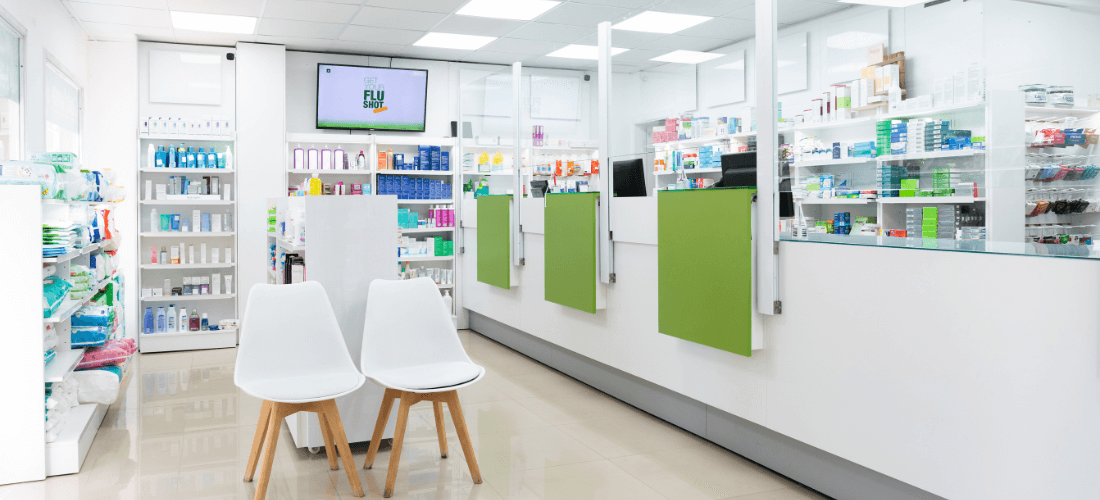
  • Place-based environments: Hospitals, pharmacies, and doctor’s offices provide built-in credibility and keep health messaging contextually grounded.
  • Outdoor placements: Billboards, urban panels, and transit shelters near care centers keep your brand visible during key decision-making moments.

When patients begin evaluating care options, they’re especially receptive to messaging that informs rather than sells. In fact, 36% of consumers pay attention to OOH ads that introduce new healthcare products and programs in a timely, educational way.

OOH can also guide patients at critical decision points—like choosing where to get care. Location-based targeting is especially effective, with 37% of consumers interested in ads for local care facilities. Point-of-care placements further boost impact: 59% of patients notice brand ads in medical settings, and 84% are more likely to discuss them with their doctor.

For added relevance, tailor creative to real-time conditions—like flu season or allergy alerts—to ensure your messaging stays timely and helpful.

See how Tonic Media Network powers wellness-focused content across Australia’s largest health and well-being screen network.

Target the right audience in everyday moments

Out-of-home advertising gives healthcare and pharma brands a unique opportunity to connect with high-intent, health-conscious audiences throughout their daily routines.

  • Parents are often on the go, navigating busy schedules with kids in tow. OOH placements near schools, family attractions, or retail centers can help reach this group when they’re outside the home and in decision-making mode.
  • Family caretakers frequently engage with local pharmacies, discount retailers, and community clinics, making targeted signage in these locations especially effective.
  • Pharmacy patrons, especially those 55+, regularly visit retail locations where in-store displays and nearby screens can drive awareness at the point of care and purchase.
  • Health & fitness enthusiasts tend to engage with wellness-related messaging in environments that align with their lifestyles, like gym screens, fitness studio lobbies, and urban walking routes.
  • Healthcare professionals attending industry conferences or commuting to and from medical hubs can be reached through airport DOOH, hotel screens, and venue signage. Tailor creative to match conference themes or specialty topics for added impact.

Promote telehealth and drive omnichannel engagement

As telehealth adoption increases, 17% of consumers are most interested in OOH ads that promote virtual offerings or provide information on mobile apps. Use DOOH to drive traffic to your digital platforms. Include clear calls-to-action that encourage app downloads or website visits, then retarget these audiences across mobile and digital channels, delivering branded impressions at each audience touchpoint.

To make campaigns even more actionable, incorporate interactive elements like QR codes, social prompts, or touch-enabled displays. A quick scan can direct viewers to a microsite, product page, or mobile wallet offer—bridging the gap between physical exposure and digital engagement. These saved offers can trigger timely reminders based on location or expiration, keeping your brand top of mind and driving follow-through.

Case study: Boehringer Ingelheim’s DOOH success story

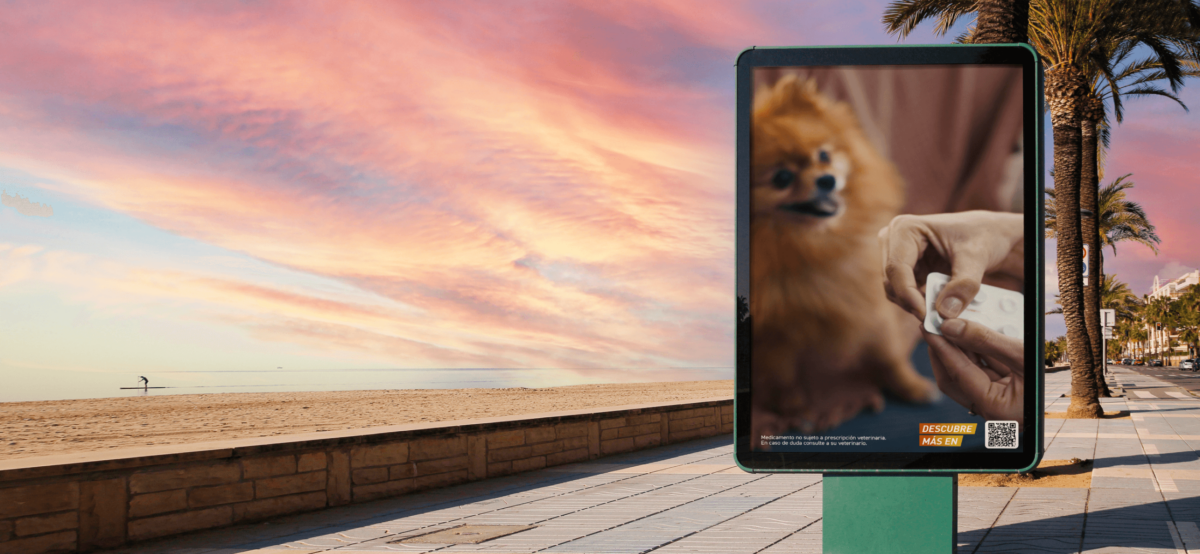
Global pharmaceutical company Boehringer Ingelheim turned to programmatic DOOH to increase brand awareness and sales of its pet antiparasitic product. 

With Broadsign’s help, Boehringer Ingelheim launched a programmatic DOOH campaign targeting dog lovers with static and dynamic creative featuring QR codes placed at malls and outdoor screens near pet stores. The DOOH campaign worked in tandem with TV, radio, digital, and CTV ads for omnichannel reach.
The Results:

  • 105% boost in purchase consideration (39% vs. 19% for non-exposed audiences)
  • 254% increase in positive brand image (46% of ad recallers had positive impressions)
  • Strong ad recall (53% remembered seeing ads multiple times)
Ready to maximize your digital out-of-home investment? Explore curated audiences in our Healthcare & Pharma package here!

Product News | October 11, 2021

A sneak peek at the data-backed findings in our 2026 Programmatic DOOH Trends Report

Cover of the "Programmatic DOOH Trends 2026 Report" featuring a nighttime cityscape with digital billboards in Times Square and Broadsign branding.

Programmatic digital out-of-home (pDOOH) is thriving, bringing digital speed and accountability to a medium built on real-world reach. But as the channel’s capabilities expand and campaigns become more sophisticated, so do the investment strategies behind them. 

To better understand the trends and shifts defining today’s programmatic OOH marketplace, we analyzed aggregated transaction data from the Broadsign and Place Exchange SSPs — together representing the world’s largest independent programmatic OOH ecosystem, with more than 1.7 million programmatically-enabled screens and over 1.5 trillion available impressions each month. 

The result is Broadsign’s new 2026 Programmatic DOOH Trends Report: a comprehensive global snapshot of programmatic digital out-of-home activity. Drawing on full-year 2025 and Q1 2026 internal transaction data, it surfaces useful signals about what today’s buyers value — and how media owners can use those signals to inform inventory positioning and packaging strategies.

Read on for a sneak peek of some of the key findings you’ll find inside.

The programmatic digital out-of-home market is maturing

Programmatic DOOH is no longer limited to a small group of early adopters. Today’s advertiser mix reflects a channel that has proven its value across a wide range of business contexts and use cases — a clear sign of a maturing market.

Top Spending Advertiser Categories

Global, full-year 2025 | Categorized by IAB category

Food & Drink, at 18.5%, remained the largest advertiser category by spend share in 2025, followed by Shopping at 11.8% — reinforcing the channel’s strong fit for brands looking to influence consumer decisions close to the point of purchase. Meanwhile, Personal Finance (10.5%) and Technology (8.9%), the third- and fourth-largest categories, together accounted for nearly a fifth of all programmatic OOH spend last year, highlighting OOH’s appeal among categories with longer consideration cycles.

A diverse mix of demand is a strategic advantage for media owners. It reduces dependence on any single industry’s budget cycles while creating more opportunities to grow revenue across a range of advertiser categories and campaign objectives.

Programmatic DOOH spend extends beyond core outdoor environments

The broad-reach outdoor environments that out-of-home has long been known for continue to anchor programmatic OOH spend. But advertisers are also investing across a diverse range of other context-rich venue types, indicating strong demand to reach audiences in relevant moments throughout the physical world.

Spend distribution by venue category

Global, full-year 2025

Outdoor accounted for nearly half (48.4%) of all 2025 spend, reflecting its unmatched ability to deliver wide coverage and cost-effective reach. Retail (18.5%) also occupies a distinct position in the mix thanks to its proximity to real-world purchase decisions. Transit (12.7%) and Entertainment (10.4%) venues followed, demonstrating strong buyer demand for high-dwell environments.

Reach is still the foundation of programmatic DOOH, but buyers aren’t taking a one-size-fits-all approach. They’re investing across a wide mix of venues to support different marketing objectives, making it more important than ever for media owners to highlight what makes each environment unique. The clearer the value proposition, the more opportunities to win new campaigns.

The market is rallying around a few key formats

Programmatic OOH creative — both video and display — is converging around a relatively small number of dominant formats, making cross-network activation (and cross-channel repurposing of creative assets) more straightforward for buyers and giving media owners a clear picture of what creative specs to prioritize.

For example, just two asset sizes — 1080×1920 (vertical portrait) and 1920×1080 (landscape) — collectively accounted for 77% of all programmatic video spend in 2025. Similarly, the top three display ad sizes — 1080×1920 (31.4%), 1920×1080 (23.3%), and 1400×400 (24.2%) — made up 79% of total display spend.

Increasing standardization around creative specifications gives media owners a clear benchmark for the creative capabilities their network should support. Clearly communicating those capabilities — including supported formats, resolutions, and dynamic triggers — can simplify campaign activation and strengthen inventory positioning.

Buyers want curated, negotiated access to premium inventory

Similar to other programmatic channels, private marketplaces are the dominant transaction mechanism in programmatic OOH.

Global, full-year 2025 | Place Exchange transactions only

Custom Private Marketplace (PMP) deals — offering buyers the ability to construct deals against specific inventory and audience criteria — were the dominant transaction type in 2025, accounting for 65.8% of all programmatic OOH spend. Always-on PMP deals represented the second-highest share of overall spend (20.5%), highlighting strong demand for turnkey access to curated inventory without the need to establish new agreements.

While open auction remains an efficient way for media owners to make inventory broadly available to programmatic demand, buyers have shown a clear preference for negotiated exchanges and more controlled buying. To remain competitive, media owners should offer inventory through a range of transaction models — including Custom PMPs, Always-on PMPs, and Programmatic Guaranteed deals — to support different campaign requirements.

Explore more in-depth findings in our 2026 Programmatic DOOH Trends Report

Access additional benchmarks, regional trends, and category-level insights drawn from aggregated transaction data from the world’s largest independent programmatic OOH ecosystem.

Download the 2026 Programmatic DOOH Trends Report

Product News | October 11, 2021

Cinema advertising is back. Here’s why it’s more valuable than ever

Moviegoers seated in a cinema watching a film on a large theatre screen.

If you’ve been following the box office lately, you’ve probably noticed that movie theatres are packed again. Cinema is on track for its strongest year since before the pandemic, fueled by a steady stream of blockbuster releases and renewed demand for premium movie-going experiences.

Christopher Nolan’s The Odyssey is the latest example, generating more than $264 million globally during its opening weekend. More than half of its domestic box office revenue came from premium large format theatres, while IMAX alone generated over $51 million worldwide. And The Odyssey is just one of many films driving cinema’s resurgence. This year’s strong lineup of releases, including The Mandalorian and Grogu, Toy Story 5, Project Hail Mary, and The Super Mario Galaxy Movie, is bringing audiences back to theatres and keeping the momentum going.

The numbers reinforce the trend. Cinema attendance has reached 154 million tickets sold across the U.S. and Canada this year, up nearly 16% over 2025. Domestic box office revenue is also running 23% ahead of last year and is on pace to surpass $10 billion for the first time since 2019.

For advertisers, the resurgence represents more than a box office success story. It signals the return of a premium, high-attention environment where brands can reach large, engaged audiences at scale—and, thanks to programmatic buying, more easily integrate cinema into modern omnichannel campaigns.

Today’s cinema experience extends beyond the big screen

Many cinemas now offer luxury seating, expanded dining options, full-service bars, and upgraded lobby spaces, encouraging visitors to arrive early and stay longer. Reserved seating has also shifted more of the experience outside the auditorium, giving audiences additional time to browse concessions, socialize, and engage with digital screens before the movie begins.

For advertisers, that means more opportunities to connect with moviegoers beyond the big screen. According to the Fortune Business Insights Movie Theater Market Report, multiplexes account for 72.94% of the global cinema market. Because these large-format theatres are typically located in regional shopping malls and lifestyle centres, brands can extend their campaigns beyond the auditorium and engage consumers throughout high-traffic retail environments.

Cinema advertising opportunities

From arrival to concessions to the auditorium, advertisers can engage audiences through multiple formats that work together across the cinema journey.

  • Lobby and digital displays reach moviegoers as they arrive and move throughout the theatre. Digital posters, 6-sheets, video walls, and foyer screens capture attention while audiences wait, browse concessions, and socialize before the film.
  • On-screen pre-show advertising remains the flagship format. Played on the main screen before the feature begins, these ads deliver full-screen, distraction-free attention with no skipping or muting. Many cinema networks now make this premium inventory available through programmatic DOOH platforms.
  • Experiential activations take engagement even further through branded installations, concession takeovers, standees, product sampling, and other interactive experiences that connect brands with audiences in memorable ways.
Megaplex Entertainment movie theatre screen in Utah, USA

Premium audiences with undivided attention

In an era of endless scrolling and shrinking attention spans, cinema offers something increasingly rare: an audience that’s fully engaged. Moviegoers aren’t skipping ads, checking notifications, or flipping between channels—they’ve chosen to be there. Combined with large-format screens, immersive audio, and a distraction-free environment, that level of attention helps brands create stronger ad recall and deeper emotional connections than many traditional TV or mobile formats.

Beyond attention, moviegoers also represent a highly valuable audience. They tend to skew younger, more affluent, and more likely to spend on entertainment and experiences. Gen Z continues to lead attendance, with 87% having attended a movie in the past year and 41% going six or more times. For advertisers looking to reach younger consumers beyond increasingly crowded digital channels, cinema offers a rare combination of premium audiences and premium attention.

Cinema belongs in the modern media mix

Cinema’s resurgence is happening alongside a broader shift in the OOH industry. Advertisers are investing more heavily in digital, screen-based environments that deliver the flexibility, measurability, and automation expected from today’s media channels. According to the OAAA’s Q1 report, digital OOH now accounts for 36% of all OOH revenue, while digital place-based media grew 17% year over year—making premium environments like cinemas an increasingly important part of the media mix.

As more theatre inventory becomes available through pDOOH, cinema is no longer a standalone buy. Advertisers can activate campaigns alongside roadside DOOH, retail media, transit, display, CTV, and mobile using the same buying workflows, with unified reporting, attribution, and cross-channel measurement.

That opens up new possibilities for campaign planning. Rather than relying solely on a pre-show ad, advertisers can connect with audiences throughout the theatre experience—from digital screens in parking areas and lobbies to concession spaces and the auditorium—creating a more cohesive brand experience across multiple touchpoints.

Through Broadsign’s Place Exchange SSP, advertisers can access the largest movie theatre network in the U.S., reaching more than 65,900 screens and 1.6 billion four-week impressions. Whether extending an existing DOOH campaign or building a broader omnichannel strategy, cinema is now easier to access, easier to measure, and better connected to the rest of the media plan than ever before.

Ready to plan your next campaign? Access the largest programmatic DOOH network today.

Product News | October 11, 2021

Dynamic creative optimization (DCO) in DOOH: What marketers need to know before launching their first campaign

A busy New York City sidewalk with pedestrians walking past a LinkNYC digital kiosk displaying a Corona beer advertisement. The kiosk stands prominently in the foreground against a backdrop of bright city lights, storefronts, and traffic, illustrating digital out-of-home advertising in a high-footfall urban environment.

Dynamic creative optimization (DCO) is changing what’s possible with digital out-of-home (DOOH), giving advertisers the ability to automatically adapt creative elements — including copy, imagery, and featured products or offers — based on real-world context.

As brands look for new ways to engage audiences with contextually relevant messaging, advertisers are increasingly turning to programmatic DOOH (pDOOH) and dynamic creative to bypass digital ad fatigue and reach target audiences in the physical world. However, while they’re often discussed together, DCO in DOOH introduces its own set of considerations: Which DOOH campaigns are best suited for dynamic creative? How does DCO change the way you approach campaign planning and creative production? And what do you need to launch a dynamic campaign successfully?

Whether you’re experimenting with dynamic DOOH for the first time or exploring how DOOH fits into your broader omnichannel strategy, here’s what to consider before getting started.

When should you use dynamic creative optimization (DCO) in a DOOH campaign?

Use dynamic creative optimization in DOOH when real-time context — like location, weather, time of day, traffic conditions, or product availability — can influence which creative message will be most effective for your campaign goal. 

Instead of telling the same story everywhere, all the time, DCO can dynamically tailor your messaging—an approach that has been shown to increase overall campaign effectiveness by 17% and drive returns up to 2.5x higher

For example:

  • A QSR brand could promote iced drinks when temperatures rise, then automatically switch to warm beverages when colder weather hits.
  • A retailer could feature products based on what’s currently in stock at nearby locations.
  • A car brand could showcase different financing offers or messaging based on current interest rates.
  • A sports brand could update creative with live scores, game results, or messages celebrating key moments in real time.
  • A travel brand could adjust featured destinations based on current deals, availability, or local weather.

While contextual and audience targeting decide which ad to serve and where, DCO changes the ad itself in real time—delivering more relevant creative without building and trafficking hundreds of manual variations.

What creative considerations go into planning a dynamic DOOH campaign?

Planning a dynamic DOOH campaign involves identifying the creative elements that will adapt, defining the triggers and logic that determine when they change, and designing a modular HTML5 template that brings those elements together to create variations based on real-world context.

This changes the way buy-side teams approach DOOH creative planning and production. With DCO, instead of producing separate creative assets for every possible scenario, you design a flexible creative system that adapts messaging based on changing conditions and delivers more relevant variations at scale.

Which creative elements should change?

In DOOH, the best candidates for dynamic creative are the elements whose relevance changes in response to real-world conditions. Depending on your campaign objectives, dynamic elements might include:

  • Text (headlines, messaging, calls to action, etc.)
  • Imagery or video
  • Featured products, services, or offers
  • Location-specific information
  • Live updates (scores, countdowns, availability, wait times, etc.)

Not every creative element needs to be dynamic. Starting with a focused set of dynamic elements keeps your setup simple, while adding more variables creates more possible creative combinations to account for.

READ ALSO: Great dynamic DOOH starts with great creative. Explore our best practices for high-impact OOH creative.

What real-time data triggers should drive creative changes?

The best real-time data triggers for dynamic DOOH campaigns are those that meaningfully influence when a different message is likely to resonate more strongly with the viewer — and, in turn, be more effective in achieving your campaign objective.

For example, food delivery service foodora used multiple dynamic triggers, including weather, time of day, and proximity to restaurants, to tailor its DOOH creative to what was most relevant to consumers in each moment.

What does building a modular HTML5 template involve?

Dynamic DOOH relies on a modular template, typically in HTML5, composed of interchangeable components that can be assembled into different variations based on predefined triggers and rules. 

Instead of producing dozens or even hundreds of separate finished ads, the template serves as a master creative asset, combining your chosen dynamic elements and predefined logic to generate multiple creative variations without requiring separate files for every possible scenario. This allows scaling creative variation without increasing production at the same rate.

The more creative variations your campaign requires, the greater the value of a modular production approach.

READ ALSO: Preparing creative for your campaign? Check out our DOOH creative specifications guide for media buyers and planners.

What else should you confirm before committing to a dynamic DOOH campaign?

Creative planning is only one part of a successful dynamic DOOH campaign. Before investing in dynamic creative production, it’s equally important to think through both the capabilities required from your media partners and technology and how you’ll measure the performance of different creative variations.

Do your media partners and technology support dynamic DOOH creative?

Not every media partner and technology solution supports the same dynamic DOOH capabilities.

  • Do media partners and technology solutions support the data sources, triggers, creative formats, and activation approach your dynamic DOOH campaign requires?
  • What creative approval workflows are available?
  • Are there any technical or implementation limitations that could affect your campaign design?
  • Does your SSP platform support dynamic creative campaign reporting, including detailed data on creative variations, impressions, spend, and more?

Support for DCO in digital OOH can also vary depending on how a campaign is bought: some setups only enable dynamic creative through programmatic activation, while others can also support it on direct-bought inventory. Understanding these capabilities early can help you identify potential limitations before launch and choose partners and technology that align with your campaign goals.

Can your measurement setup prove which creative variations worked?

One of DCO’s biggest advantages is the ability to test the effectiveness of different creative variations under different conditions — meaning success should be measured at the variation level, not just overall campaign performance. 

  • Do certain messages perform better in specific contexts?
  • Do some creative variations drive stronger outcomes than others?
  • Which triggers produce the greatest lift?

The DOOH metrics you prioritize should reflect your campaign goals, and they should also influence the partners and technology you choose. Confirm that your planned setup can provide the reporting and insights needed to answer those questions once your campaign is live.

Does running dynamic creative cost more than a standard DOOH campaign?

Not necessarily. While more advanced dynamic campaigns can involve additional production considerations — including template development, data integrations, or support from a dynamic creative technology partner — DCO can also reduce the need to manually create and manage large numbers of individual creative variations.

The key is using dynamic creative when the added relevance and flexibility support your campaign goals — not adding complexity where a single strong message already does the job.

Ready to explore more? Browse our inventory catalog to discover premium digital screens worldwide.