Product News | October 11, 2021

Getting the most out of your DOOH inventory: Introducing the optimization engine for Broadsign Direct
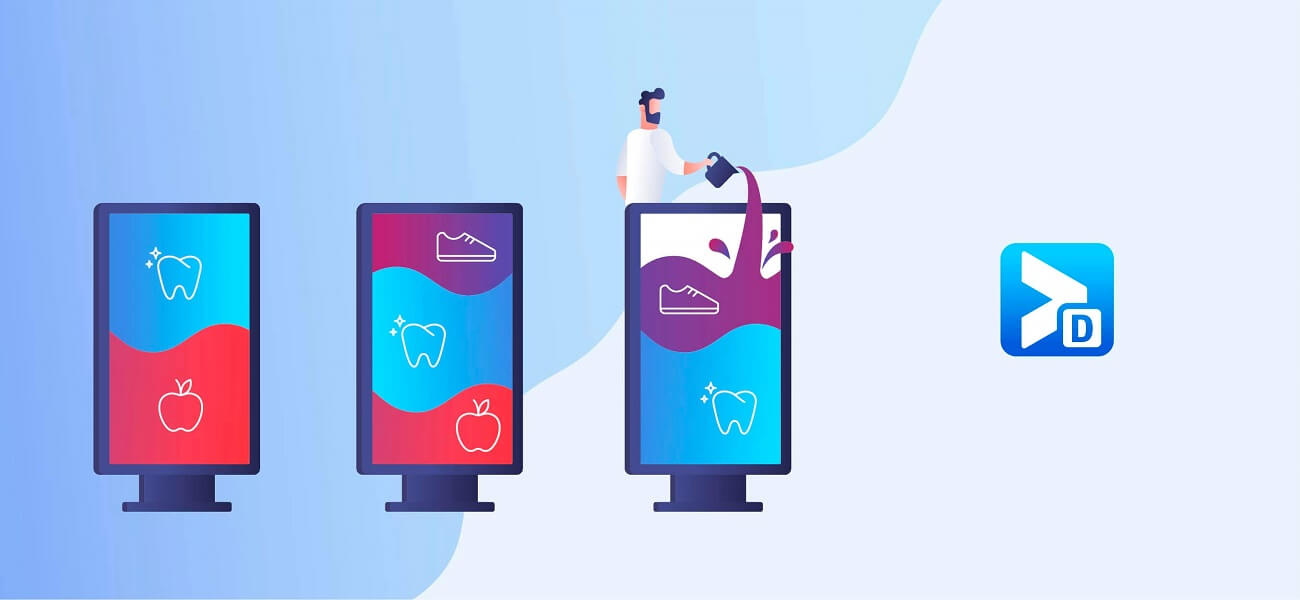
Spring is finally on the way, so perhaps the spirit of the season can inspire you to breathe new life into campaign management. To help you in that mission, we’re pleased to unveil the optimization engine, a new feature for Broadsign Direct.

This new feature enables your business to accept more campaigns than it previously could, working in the background to redistribute new and existing campaigns in ways that make optimal use of your inventory while still respecting targeting parameters.

Let’s walk you through how it works.

Ready to get started with the optimization engine (also known as “Reallocation”)?
Check out our documentation!

Solutions for DOOH management

The OOH industry’s digital transformation is expected to continue on its growth trajectory in 2022. Given the format’s momentum, media owners who are looking to meet the increased demand for digital campaigns may want to consider solutions for more efficient network management. As we’re seeing more media buyers allocate a greater share of their budgets to DOOH campaigns, manual solutions like spreadsheets can’t cut it for handling the complexities and specificities of campaign goals.

This is where the optimization engine shines. Sometimes, multiple campaigns are vying for the same slot in your inventory. But they can’t all fit, and as a result, you might be forced to say “no” to a customer even though your inventory hasn’t entirely sold out. This leads to gaps in scheduling, which amounts to missed revenue opportunities for you.

The optimization engine resolves issues like this by reallocating ads to different slots, while respecting targeting parameters, so that you can maximize network yield. Best of all, it does it all for you – no need to lift a finger. Even if your juggling skills are second to none, rebalancing network availability can be a complex and daunting task, but it’s something that you’ll find our intelligent algorithm can accomplish with ease.

How the optimization engine delivers on what it promises

The optimization engine intelligently analyzes your network’s inventory to check for availability. All priority settings and parameters are considered in this process. Designed to make inventory management smoother and more efficient, the tool is continuously running in the background, even overnight, to optimally organize the following day’s schedule.

Let’s say, for example, you have four screens in your network and are looking to book some campaigns. The first campaign (campaign A) is currently booked to play on all four screens from the 5th and 10th of the month, with a goal of 288,000 impressions. This booking totals a 50% fill rate on all four screens. Then, at the same time, the sales team is busy negotiating a new deal (Campaign B) and to see if there’s space for a second campaign, they run an availability check on the network.

Campaign B is also expected to run the same month as campaign A but between the dates of the 1st to the 7th on your first and third screens. The buyer is looking to obtain a 70% fixed Share of Voice on those screens. The dilemma? Together, campaigns A and B exceed the max fill rate on their shared screens on the days they overlap. Without the optimization engine running, the availability check would generate a result of being partially or completely unavailable. But when the algorithm kicks in, it redistributes campaigns wherever possible to make enough space for both.

In this scenario, campaign A’s 288,000 impressions will be redistributed in a way that also allows campaign B to run on the days with overlap. This is something that couldn’t have been achievable without the optimization engine.

What about fixed campaigns?

For now, the optimization engine can only shuffle permissible campaigns, or when the system deems there is potential to increase or decrease saturation. Fixed campaigns won’t budge.

Who benefits?

Everyone! Ultimately, this feature’s goal is to help maximize revenue for media owners by filling up as much used space as possible. But advertisers equally benefit, as the algorithm always considers campaign parameters before making adjustments to scheduling. It’s all about maximizing opportunities.

Questions? We’ve got you covered.

Want to learn more? Reach out to your Broadsign rep to schedule a personalized demo.
Product News | October 11, 2021

Cinema advertising is back. Here’s why it’s more valuable than ever

Moviegoers seated in a cinema watching a film on a large theatre screen.

If you’ve been following the box office lately, you’ve probably noticed that movie theatres are packed again. Cinema is on track for its strongest year since before the pandemic, fueled by a steady stream of blockbuster releases and renewed demand for premium movie-going experiences.

Christopher Nolan’s The Odyssey is the latest example, generating more than $264 million globally during its opening weekend. More than half of its domestic box office revenue came from premium large format theatres, while IMAX alone generated over $51 million worldwide. And The Odyssey is just one of many films driving cinema’s resurgence. This year’s strong lineup of releases, including The Mandalorian and Grogu, Toy Story 5, Project Hail Mary, and The Super Mario Galaxy Movie, is bringing audiences back to theatres and keeping the momentum going.

The numbers reinforce the trend. Cinema attendance has reached 154 million tickets sold across the U.S. and Canada this year, up nearly 16% over 2025. Domestic box office revenue is also running 23% ahead of last year and is on pace to surpass $10 billion for the first time since 2019.

For advertisers, the resurgence represents more than a box office success story. It signals the return of a premium, high-attention environment where brands can reach large, engaged audiences at scale—and, thanks to programmatic buying, more easily integrate cinema into modern omnichannel campaigns.

Today’s cinema experience extends beyond the big screen

Many cinemas now offer luxury seating, expanded dining options, full-service bars, and upgraded lobby spaces, encouraging visitors to arrive early and stay longer. Reserved seating has also shifted more of the experience outside the auditorium, giving audiences additional time to browse concessions, socialize, and engage with digital screens before the movie begins.

For advertisers, that means more opportunities to connect with moviegoers beyond the big screen. According to the Fortune Business Insights Movie Theater Market Report, multiplexes account for 72.94% of the global cinema market. Because these large-format theatres are typically located in regional shopping malls and lifestyle centres, brands can extend their campaigns beyond the auditorium and engage consumers throughout high-traffic retail environments.

Cinema advertising opportunities

From arrival to concessions to the auditorium, advertisers can engage audiences through multiple formats that work together across the cinema journey.

  • Lobby and digital displays reach moviegoers as they arrive and move throughout the theatre. Digital posters, 6-sheets, video walls, and foyer screens capture attention while audiences wait, browse concessions, and socialize before the film.
  • On-screen pre-show advertising remains the flagship format. Played on the main screen before the feature begins, these ads deliver full-screen, distraction-free attention with no skipping or muting. Many cinema networks now make this premium inventory available through programmatic DOOH platforms.
  • Experiential activations take engagement even further through branded installations, concession takeovers, standees, product sampling, and other interactive experiences that connect brands with audiences in memorable ways.
Megaplex Entertainment movie theatre screen in Utah, USA

Premium audiences with undivided attention

In an era of endless scrolling and shrinking attention spans, cinema offers something increasingly rare: an audience that’s fully engaged. Moviegoers aren’t skipping ads, checking notifications, or flipping between channels—they’ve chosen to be there. Combined with large-format screens, immersive audio, and a distraction-free environment, that level of attention helps brands create stronger ad recall and deeper emotional connections than many traditional TV or mobile formats.

Beyond attention, moviegoers also represent a highly valuable audience. They tend to skew younger, more affluent, and more likely to spend on entertainment and experiences. Gen Z continues to lead attendance, with 87% having attended a movie in the past year and 41% going six or more times. For advertisers looking to reach younger consumers beyond increasingly crowded digital channels, cinema offers a rare combination of premium audiences and premium attention.

Cinema belongs in the modern media mix

Cinema’s resurgence is happening alongside a broader shift in the OOH industry. Advertisers are investing more heavily in digital, screen-based environments that deliver the flexibility, measurability, and automation expected from today’s media channels. According to the OAAA’s Q1 report, digital OOH now accounts for 36% of all OOH revenue, while digital place-based media grew 17% year over year—making premium environments like cinemas an increasingly important part of the media mix.

As more theatre inventory becomes available through pDOOH, cinema is no longer a standalone buy. Advertisers can activate campaigns alongside roadside DOOH, retail media, transit, display, CTV, and mobile using the same buying workflows, with unified reporting, attribution, and cross-channel measurement.

That opens up new possibilities for campaign planning. Rather than relying solely on a pre-show ad, advertisers can connect with audiences throughout the theatre experience—from digital screens in parking areas and lobbies to concession spaces and the auditorium—creating a more cohesive brand experience across multiple touchpoints.

Through Broadsign’s Place Exchange SSP, advertisers can access the largest movie theatre network in the U.S., reaching more than 65,900 screens and 1.6 billion four-week impressions. Whether extending an existing DOOH campaign or building a broader omnichannel strategy, cinema is now easier to access, easier to measure, and better connected to the rest of the media plan than ever before.

Ready to plan your next campaign? Access the largest programmatic DOOH network today.

Product News | October 11, 2021

Dynamic creative optimization (DCO) in DOOH: What marketers need to know before launching their first campaign

A busy New York City sidewalk with pedestrians walking past a LinkNYC digital kiosk displaying a Corona beer advertisement. The kiosk stands prominently in the foreground against a backdrop of bright city lights, storefronts, and traffic, illustrating digital out-of-home advertising in a high-footfall urban environment.

Dynamic creative optimization (DCO) is changing what’s possible with digital out-of-home (DOOH), giving advertisers the ability to automatically adapt creative elements — including copy, imagery, and featured products or offers — based on real-world context.

As brands look for new ways to engage audiences with contextually relevant messaging, advertisers are increasingly turning to programmatic DOOH (pDOOH) and dynamic creative to bypass digital ad fatigue and reach target audiences in the physical world. However, while they’re often discussed together, DCO in DOOH introduces its own set of considerations: Which DOOH campaigns are best suited for dynamic creative? How does DCO change the way you approach campaign planning and creative production? And what do you need to launch a dynamic campaign successfully?

Whether you’re experimenting with dynamic DOOH for the first time or exploring how DOOH fits into your broader omnichannel strategy, here’s what to consider before getting started.

When should you use dynamic creative optimization (DCO) in a DOOH campaign?

Use dynamic creative optimization in DOOH when real-time context — like location, weather, time of day, traffic conditions, or product availability — can influence which creative message will be most effective for your campaign goal. 

Instead of telling the same story everywhere, all the time, DCO can dynamically tailor your messaging—an approach that has been shown to increase overall campaign effectiveness by 17% and drive returns up to 2.5x higher

For example:

  • A QSR brand could promote iced drinks when temperatures rise, then automatically switch to warm beverages when colder weather hits.
  • A retailer could feature products based on what’s currently in stock at nearby locations.
  • A car brand could showcase different financing offers or messaging based on current interest rates.
  • A sports brand could update creative with live scores, game results, or messages celebrating key moments in real time.
  • A travel brand could adjust featured destinations based on current deals, availability, or local weather.

While contextual and audience targeting decide which ad to serve and where, DCO changes the ad itself in real time—delivering more relevant creative without building and trafficking hundreds of manual variations.

What creative considerations go into planning a dynamic DOOH campaign?

Planning a dynamic DOOH campaign involves identifying the creative elements that will adapt, defining the triggers and logic that determine when they change, and designing a modular HTML5 template that brings those elements together to create variations based on real-world context.

This changes the way buy-side teams approach DOOH creative planning and production. With DCO, instead of producing separate creative assets for every possible scenario, you design a flexible creative system that adapts messaging based on changing conditions and delivers more relevant variations at scale.

Which creative elements should change?

In DOOH, the best candidates for dynamic creative are the elements whose relevance changes in response to real-world conditions. Depending on your campaign objectives, dynamic elements might include:

  • Text (headlines, messaging, calls to action, etc.)
  • Imagery or video
  • Featured products, services, or offers
  • Location-specific information
  • Live updates (scores, countdowns, availability, wait times, etc.)

Not every creative element needs to be dynamic. Starting with a focused set of dynamic elements keeps your setup simple, while adding more variables creates more possible creative combinations to account for.

READ ALSO: Great dynamic DOOH starts with great creative. Explore our best practices for high-impact OOH creative.

What real-time data triggers should drive creative changes?

The best real-time data triggers for dynamic DOOH campaigns are those that meaningfully influence when a different message is likely to resonate more strongly with the viewer — and, in turn, be more effective in achieving your campaign objective.

For example, food delivery service foodora used multiple dynamic triggers, including weather, time of day, and proximity to restaurants, to tailor its DOOH creative to what was most relevant to consumers in each moment.

What does building a modular HTML5 template involve?

Dynamic DOOH relies on a modular template, typically in HTML5, composed of interchangeable components that can be assembled into different variations based on predefined triggers and rules. 

Instead of producing dozens or even hundreds of separate finished ads, the template serves as a master creative asset, combining your chosen dynamic elements and predefined logic to generate multiple creative variations without requiring separate files for every possible scenario. This allows scaling creative variation without increasing production at the same rate.

The more creative variations your campaign requires, the greater the value of a modular production approach.

READ ALSO: Preparing creative for your campaign? Check out our DOOH creative specifications guide for media buyers and planners.

What else should you confirm before committing to a dynamic DOOH campaign?

Creative planning is only one part of a successful dynamic DOOH campaign. Before investing in dynamic creative production, it’s equally important to think through both the capabilities required from your media partners and technology and how you’ll measure the performance of different creative variations.

Do your media partners and technology support dynamic DOOH creative?

Not every media partner and technology solution supports the same dynamic DOOH capabilities.

  • Do media partners and technology solutions support the data sources, triggers, creative formats, and activation approach your dynamic DOOH campaign requires?
  • What creative approval workflows are available?
  • Are there any technical or implementation limitations that could affect your campaign design?
  • Does your SSP platform support dynamic creative campaign reporting, including detailed data on creative variations, impressions, spend, and more?

Support for DCO in digital OOH can also vary depending on how a campaign is bought: some setups only enable dynamic creative through programmatic activation, while others can also support it on direct-bought inventory. Understanding these capabilities early can help you identify potential limitations before launch and choose partners and technology that align with your campaign goals.

Can your measurement setup prove which creative variations worked?

One of DCO’s biggest advantages is the ability to test the effectiveness of different creative variations under different conditions — meaning success should be measured at the variation level, not just overall campaign performance. 

  • Do certain messages perform better in specific contexts?
  • Do some creative variations drive stronger outcomes than others?
  • Which triggers produce the greatest lift?

The DOOH metrics you prioritize should reflect your campaign goals, and they should also influence the partners and technology you choose. Confirm that your planned setup can provide the reporting and insights needed to answer those questions once your campaign is live.

Does running dynamic creative cost more than a standard DOOH campaign?

Not necessarily. While more advanced dynamic campaigns can involve additional production considerations — including template development, data integrations, or support from a dynamic creative technology partner — DCO can also reduce the need to manually create and manage large numbers of individual creative variations.

The key is using dynamic creative when the added relevance and flexibility support your campaign goals — not adding complexity where a single strong message already does the job.

Ready to explore more? Browse our inventory catalog to discover premium digital screens worldwide. 

Product News | October 11, 2021

Broadsign x ALOOH 2026: Insights from Leading LATAM OOH Media Owners

ALOOH 2026 x Broadsign Webinar insights from leading LATAM media owners

Ahead of the 2026 ALOOH annual forum happening in Lima in September, Broadsign held a webinar in partnership with ALOOH Latam, inviting out-of-home (OOH) media owners of the region to learn how they can turn their static and digital OOH assets into a unified revenue engine. Broadsign’s Sales Director, Jose Delgado, and Head of Sales for Latin America, Manuel Ameneiros, provided a comprehensive overview of the Broadsign Platform and how it can help media owners grow their network and scale their revenue across static, digital and programmatic OOH. 

The session was followed by a customer panel, moderated by Jacobo Gomez, Sr. Account Manager at Broadsign, with guest speakers Paulo Cesar Queiroz, Chief Executive Officer at RZK Digital, and Andrea Mereghetti, Chief Technology Officer at Proxymo. They answered questions about how they grew their revenue across direct and programmatic OOH channels, simplified network and inventory management, and seamlessly scaled their network with Broadsign. Read the summary of the customer panel below. 

How RZK Digital is driving digital innovation in Brazil’s OOH landscape with Broadsign

Founded in 2021, RZK Digital has achieved a 54% annual growth rate by focusing exclusively on urban bus terminals in Brazil. With the Broadsign Platform, the company efficiently manages 850 synchronized digital screens across 54 terminals, reaching nearly 3.2 million people daily. This streamlined operational model enables a team of just two people to maintain high-impact advertising campaigns across their entire network.

What strategic value does your network hold for your advertisers? What would be your elevator pitch to advertisers? 

In Brazil, the OOH market has long been dominated by established giants with massive networks. In a highly regulated city like São Paulo, outdoor advertising in public spaces is subject to strict regulations. Access to advertising spaces at transportation terminals is granted through public concessions, which are long-term contracts. We focused our growth on bus terminals, which was the first time such a large-scale initiative had been undertaken here in Brazil. 

However, we quickly realized that the true value wasn’t in the screens themselves, but in the audience. Our challenge was to shift the market mindset from ‘buying screens’ to ‘buying audiences.’ To achieve this, Broadsign’s partnership with Quividi was essential, as the use of Broadsign’s proof-of-play and Quividi’s computer-vision cameras’ real-time measurement capabilities enabled us to offer advertisers real-time outdoor advertising audiences across countless bus terminals. Audience data is also audited by a national agency, the IVC (Instituto Verificador de Comunicación), which is directly connected to RZK Digital’s systems, enabling it to monitor the collected data in real time.

The first-party data we’ve structured became our key differentiator. By offering free public Wi-Fi at our terminals, we have built a massive data taxonomy. When people connect to the Wi-Fi, they answer three or four questions that help us determine how often they return to bus terminals, allowing us to build a comprehensive understanding of their habits. By automating the collection of this information, we were able to gather data from 1.5 million respondents.

This data advantage, paired with Broadsign’s technology, gives our clients unmatched operational agility. They don’t face restricted launch dates; they can pivot instantly, run dynamic creative tests, or adapt campaigns based on real-time factors like weather. We’ve effectively brought best practices from technologically advanced markets like London, Singapore, and Hong Kong to Brazil, making data-driven advertising our core differentiator.

Could you tell us about the complex Casas Bahía use case and how Broadsign helped facilitate the deployment?

Casa Bahía is a major brick-and-mortar retailer with stores across Brazil. To build greater loyalty with them, we pushed the boundaries of our network capabilities, and the Broadsign Platform proved to be the ideal partner to help us do so. On the day of a new Casa Bahía store’s opening, we broadcast the live event in which company executives presented details about the new store via the terminals in our network. Following this success, another large retailer, Magalu, requested a similar live commerce activation via YouTube, which we executed with equal ease. These innovations and the simplicity with which Broadsign enables them have become powerful tools for captivating new and existing clients.

How Proxymo is scaling and monetizing digital OOH with Broadsign

Founded in 2008, Proxymo is one of the largest digital media companies in Mexico, with over 1,200 digital screens nationwide, distinguishing itself through a unique blend of media reach and technological innovation. With the Broadsign Platform, they deliver cutting-edge solutions and engaging experiences for their diverse audience.

What are your biggest technical challenges in integrating and, above all, monetizing a network as large and diverse as Proxymo?

The biggest challenge is having the right tool to integrate the different formats. We are constantly expanding our digital presence, from our well-established kiosks in shopping malls to our new Smart City kiosks with 4K resolution and LCD screens on public streets. To scale efficiently, we focused on finding a solution, such as Broadsign, that made managing varying graphic resolutions seamless and eliminated the friction of manual creative adaptation. Another key factor was access to a supply-side platform (SSP) that offers a holistic view of our inventory and the flexibility to integrate either third-party metrics or our own data. 

How does Broadsign help Proxymo optimize operations and ensure transparency in the delivery of its campaigns to its clients?

The primary advantage is the platform’s exceptional flexibility and stability. With a CMS that integrates seamlessly across Linux, Windows, and IoT environments, we can scale confidently without worrying about system failures. Additionally, Broadsign’s Proof-of-Performance (PoP) data, which we cross-reference with our internal audience measurement, allows us to deliver highly reliable reports. On top of that, there are incredible API integrations. I believe Broadsign is one of the few platforms that offer all these capabilities in addition to an incredible Support team that is very attentive to its customers. 

Proxymo has a clear vision of how programmatic advertising is a sales channel that complements direct sales. What advice would you give other media owners in the region looking to balance their strategy across both revenue streams?

The primary challenge for many media owners is internal education. Sales teams must understand that not only are the budgets for programmatic and direct sales different, but so is the approach to selling them. Direct sales requires a high-touch, consultative approach to deliver maximum value, while programmatic enables you to capture omnichannel budgets, such as those originating from TV and radio. Educating your sales team on how to leverage both channels strategically ensures that you don’t miss out on these revenue opportunities. Another aspect is investing in a robust SSP that simplifies technical connections and provides access to a large demand ecosystem. 

Discover the platform that powers out-of-home here.