Product News | October 11, 2021

Media Frankfurt Chooses Broadsign International’s Digital Signage Software-as-a-Service
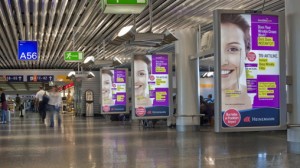
Major German airport DOOH operator makes a safe bet on the future by converting its entire network to Broadsign’s platform.

FRANKFURT, GERMANY – Media Frankfurt GmbH, Germany’s largest OOH advertising media owner in airports has converted all of its 161 digital locations to Broadsign International’s digital signage software platform.

Media Frankfurt’s network is currently comprised of 238 large-format LCD panels, strategically placed to capture the attention of over 57 million passengers annually. A number of large LED screens will be added in the near future.

The technical aspects of network operations for Media Frankfurt and managed services are supported by Neo Solutions, a full-service digital signage systems integrator, who is already managing several thousand screens running on Broadsign SaaS.

Media Frankfurt’s Director of Operations, Christian Brauch said that the company selected Broadsign following some high-profile referrals and a period of extensive research and testing. “Since the switch we find that the software makes it easy for us to configure the networks as well as schedule and execute campaigns of any complexity,” he added.

“The German-speaking digital signage market is rapidly expanding and we are honored to be selected by such a prominent operator as Media Frankfurt. We are confident that their investment in Broadsign as an emerging standard will help make their media more efficient and compatible with the many other European networks thanks to our platform,” states Broadsign’s Vice President of Sales, Skip Beloff.

About Broadsign

Broadsign International LLC is the leading global provider of software-as-a-service for digital signage networks. Its software allows networks to target out-of-home audiences, place advertising or promotional campaigns, play back scheduled content on each screen and account for campaign performance. Some of the world’s largest and most successful digital signage networks run on Broadsign’s platform. They take advantage of its comprehensive functionality, reliability and virtually unlimited capacity for growing networks without adding personnel. Broadsign is consistently ranked among the top 3 global digital signage software suppliers and received the 2012 Global Growth Leadership Award in the Digital Signage Software market from Frost & Sullivan. For more information about Broadsign, visit https://broadsign.com.

About Media Frankfurt

Media Frankfurt GmbH is the exclusive marketing agency for advertising space at Frankfurt Airport. Thanks to its connection to the JCDecaux network (the world-market leader for airport advertising) with 152 airports around the globe, Media Frankfurt is also the point of contact for German companies planning international airport campaigns. With over 2,000 advertising media, Media Frankfurt reaches about 60 million passengers at Frankfurt Airport, the home base of Lufthansa and an important hub of the entire Star Alliance. The product portfolio of Media Frankfurt ranges from Citylightposters, via digital media, light boxes and large-scale billboards, to customised airport marketing solutions. The spectrum of services provided by Media Frankfurt includes not only the marketing of advertising space but also the development of products and concepts. http://www.media-frankfurt.de
Product News | October 11, 2021

Cinema advertising is back. Here’s why it’s more valuable than ever

Moviegoers seated in a cinema watching a film on a large theatre screen.

If you’ve been following the box office lately, you’ve probably noticed that movie theatres are packed again. Cinema is on track for its strongest year since before the pandemic, fueled by a steady stream of blockbuster releases and renewed demand for premium movie-going experiences.

Christopher Nolan’s The Odyssey is the latest example, generating more than $264 million globally during its opening weekend. More than half of its domestic box office revenue came from premium large format theatres, while IMAX alone generated over $51 million worldwide. And The Odyssey is just one of many films driving cinema’s resurgence. This year’s strong lineup of releases, including The Mandalorian and Grogu, Toy Story 5, Project Hail Mary, and The Super Mario Galaxy Movie, is bringing audiences back to theatres and keeping the momentum going.

The numbers reinforce the trend. Cinema attendance has reached 154 million tickets sold across the U.S. and Canada this year, up nearly 16% over 2025. Domestic box office revenue is also running 23% ahead of last year and is on pace to surpass $10 billion for the first time since 2019.

For advertisers, the resurgence represents more than a box office success story. It signals the return of a premium, high-attention environment where brands can reach large, engaged audiences at scale—and, thanks to programmatic buying, more easily integrate cinema into modern omnichannel campaigns.

Today’s cinema experience extends beyond the big screen

Many cinemas now offer luxury seating, expanded dining options, full-service bars, and upgraded lobby spaces, encouraging visitors to arrive early and stay longer. Reserved seating has also shifted more of the experience outside the auditorium, giving audiences additional time to browse concessions, socialize, and engage with digital screens before the movie begins.

For advertisers, that means more opportunities to connect with moviegoers beyond the big screen. According to the Fortune Business Insights Movie Theater Market Report, multiplexes account for 72.94% of the global cinema market. Because these large-format theatres are typically located in regional shopping malls and lifestyle centres, brands can extend their campaigns beyond the auditorium and engage consumers throughout high-traffic retail environments.

Cinema advertising opportunities

From arrival to concessions to the auditorium, advertisers can engage audiences through multiple formats that work together across the cinema journey.

  • Lobby and digital displays reach moviegoers as they arrive and move throughout the theatre. Digital posters, 6-sheets, video walls, and foyer screens capture attention while audiences wait, browse concessions, and socialize before the film.
  • On-screen pre-show advertising remains the flagship format. Played on the main screen before the feature begins, these ads deliver full-screen, distraction-free attention with no skipping or muting. Many cinema networks now make this premium inventory available through programmatic DOOH platforms.
  • Experiential activations take engagement even further through branded installations, concession takeovers, standees, product sampling, and other interactive experiences that connect brands with audiences in memorable ways.
Megaplex Entertainment movie theatre screen in Utah, USA

Premium audiences with undivided attention

In an era of endless scrolling and shrinking attention spans, cinema offers something increasingly rare: an audience that’s fully engaged. Moviegoers aren’t skipping ads, checking notifications, or flipping between channels—they’ve chosen to be there. Combined with large-format screens, immersive audio, and a distraction-free environment, that level of attention helps brands create stronger ad recall and deeper emotional connections than many traditional TV or mobile formats.

Beyond attention, moviegoers also represent a highly valuable audience. They tend to skew younger, more affluent, and more likely to spend on entertainment and experiences. Gen Z continues to lead attendance, with 87% having attended a movie in the past year and 41% going six or more times. For advertisers looking to reach younger consumers beyond increasingly crowded digital channels, cinema offers a rare combination of premium audiences and premium attention.

Cinema belongs in the modern media mix

Cinema’s resurgence is happening alongside a broader shift in the OOH industry. Advertisers are investing more heavily in digital, screen-based environments that deliver the flexibility, measurability, and automation expected from today’s media channels. According to the OAAA’s Q1 report, digital OOH now accounts for 36% of all OOH revenue, while digital place-based media grew 17% year over year—making premium environments like cinemas an increasingly important part of the media mix.

As more theatre inventory becomes available through pDOOH, cinema is no longer a standalone buy. Advertisers can activate campaigns alongside roadside DOOH, retail media, transit, display, CTV, and mobile using the same buying workflows, with unified reporting, attribution, and cross-channel measurement.

That opens up new possibilities for campaign planning. Rather than relying solely on a pre-show ad, advertisers can connect with audiences throughout the theatre experience—from digital screens in parking areas and lobbies to concession spaces and the auditorium—creating a more cohesive brand experience across multiple touchpoints.

Through Broadsign’s Place Exchange SSP, advertisers can access the largest movie theatre network in the U.S., reaching more than 65,900 screens and 1.6 billion four-week impressions. Whether extending an existing DOOH campaign or building a broader omnichannel strategy, cinema is now easier to access, easier to measure, and better connected to the rest of the media plan than ever before.

Ready to plan your next campaign? Access the largest programmatic DOOH network today.

Product News | October 11, 2021

Dynamic creative optimization (DCO) in DOOH: What marketers need to know before launching their first campaign

A busy New York City sidewalk with pedestrians walking past a LinkNYC digital kiosk displaying a Corona beer advertisement. The kiosk stands prominently in the foreground against a backdrop of bright city lights, storefronts, and traffic, illustrating digital out-of-home advertising in a high-footfall urban environment.

Dynamic creative optimization (DCO) is changing what’s possible with digital out-of-home (DOOH), giving advertisers the ability to automatically adapt creative elements — including copy, imagery, and featured products or offers — based on real-world context.

As brands look for new ways to engage audiences with contextually relevant messaging, advertisers are increasingly turning to programmatic DOOH (pDOOH) and dynamic creative to bypass digital ad fatigue and reach target audiences in the physical world. However, while they’re often discussed together, DCO in DOOH introduces its own set of considerations: Which DOOH campaigns are best suited for dynamic creative? How does DCO change the way you approach campaign planning and creative production? And what do you need to launch a dynamic campaign successfully?

Whether you’re experimenting with dynamic DOOH for the first time or exploring how DOOH fits into your broader omnichannel strategy, here’s what to consider before getting started.

When should you use dynamic creative optimization (DCO) in a DOOH campaign?

Use dynamic creative optimization in DOOH when real-time context — like location, weather, time of day, traffic conditions, or product availability — can influence which creative message will be most effective for your campaign goal. 

Instead of telling the same story everywhere, all the time, DCO can dynamically tailor your messaging—an approach that has been shown to increase overall campaign effectiveness by 17% and drive returns up to 2.5x higher

For example:

  • A QSR brand could promote iced drinks when temperatures rise, then automatically switch to warm beverages when colder weather hits.
  • A retailer could feature products based on what’s currently in stock at nearby locations.
  • A car brand could showcase different financing offers or messaging based on current interest rates.
  • A sports brand could update creative with live scores, game results, or messages celebrating key moments in real time.
  • A travel brand could adjust featured destinations based on current deals, availability, or local weather.

While contextual and audience targeting decide which ad to serve and where, DCO changes the ad itself in real time—delivering more relevant creative without building and trafficking hundreds of manual variations.

What creative considerations go into planning a dynamic DOOH campaign?

Planning a dynamic DOOH campaign involves identifying the creative elements that will adapt, defining the triggers and logic that determine when they change, and designing a modular HTML5 template that brings those elements together to create variations based on real-world context.

This changes the way buy-side teams approach DOOH creative planning and production. With DCO, instead of producing separate creative assets for every possible scenario, you design a flexible creative system that adapts messaging based on changing conditions and delivers more relevant variations at scale.

Which creative elements should change?

In DOOH, the best candidates for dynamic creative are the elements whose relevance changes in response to real-world conditions. Depending on your campaign objectives, dynamic elements might include:

  • Text (headlines, messaging, calls to action, etc.)
  • Imagery or video
  • Featured products, services, or offers
  • Location-specific information
  • Live updates (scores, countdowns, availability, wait times, etc.)

Not every creative element needs to be dynamic. Starting with a focused set of dynamic elements keeps your setup simple, while adding more variables creates more possible creative combinations to account for.

READ ALSO: Great dynamic DOOH starts with great creative. Explore our best practices for high-impact OOH creative.

What real-time data triggers should drive creative changes?

The best real-time data triggers for dynamic DOOH campaigns are those that meaningfully influence when a different message is likely to resonate more strongly with the viewer — and, in turn, be more effective in achieving your campaign objective.

For example, food delivery service foodora used multiple dynamic triggers, including weather, time of day, and proximity to restaurants, to tailor its DOOH creative to what was most relevant to consumers in each moment.

What does building a modular HTML5 template involve?

Dynamic DOOH relies on a modular template, typically in HTML5, composed of interchangeable components that can be assembled into different variations based on predefined triggers and rules. 

Instead of producing dozens or even hundreds of separate finished ads, the template serves as a master creative asset, combining your chosen dynamic elements and predefined logic to generate multiple creative variations without requiring separate files for every possible scenario. This allows scaling creative variation without increasing production at the same rate.

The more creative variations your campaign requires, the greater the value of a modular production approach.

READ ALSO: Preparing creative for your campaign? Check out our DOOH creative specifications guide for media buyers and planners.

What else should you confirm before committing to a dynamic DOOH campaign?

Creative planning is only one part of a successful dynamic DOOH campaign. Before investing in dynamic creative production, it’s equally important to think through both the capabilities required from your media partners and technology and how you’ll measure the performance of different creative variations.

Do your media partners and technology support dynamic DOOH creative?

Not every media partner and technology solution supports the same dynamic DOOH capabilities.

  • Do media partners and technology solutions support the data sources, triggers, creative formats, and activation approach your dynamic DOOH campaign requires?
  • What creative approval workflows are available?
  • Are there any technical or implementation limitations that could affect your campaign design?
  • Does your SSP platform support dynamic creative campaign reporting, including detailed data on creative variations, impressions, spend, and more?

Support for DCO in digital OOH can also vary depending on how a campaign is bought: some setups only enable dynamic creative through programmatic activation, while others can also support it on direct-bought inventory. Understanding these capabilities early can help you identify potential limitations before launch and choose partners and technology that align with your campaign goals.

Can your measurement setup prove which creative variations worked?

One of DCO’s biggest advantages is the ability to test the effectiveness of different creative variations under different conditions — meaning success should be measured at the variation level, not just overall campaign performance. 

  • Do certain messages perform better in specific contexts?
  • Do some creative variations drive stronger outcomes than others?
  • Which triggers produce the greatest lift?

The DOOH metrics you prioritize should reflect your campaign goals, and they should also influence the partners and technology you choose. Confirm that your planned setup can provide the reporting and insights needed to answer those questions once your campaign is live.

Does running dynamic creative cost more than a standard DOOH campaign?

Not necessarily. While more advanced dynamic campaigns can involve additional production considerations — including template development, data integrations, or support from a dynamic creative technology partner — DCO can also reduce the need to manually create and manage large numbers of individual creative variations.

The key is using dynamic creative when the added relevance and flexibility support your campaign goals — not adding complexity where a single strong message already does the job.

Ready to explore more? Browse our inventory catalog to discover premium digital screens worldwide.