Product News | October 11, 2021

Broadsign has been named one of Montreal’s Top Employers for a sixth year. Here’s why.
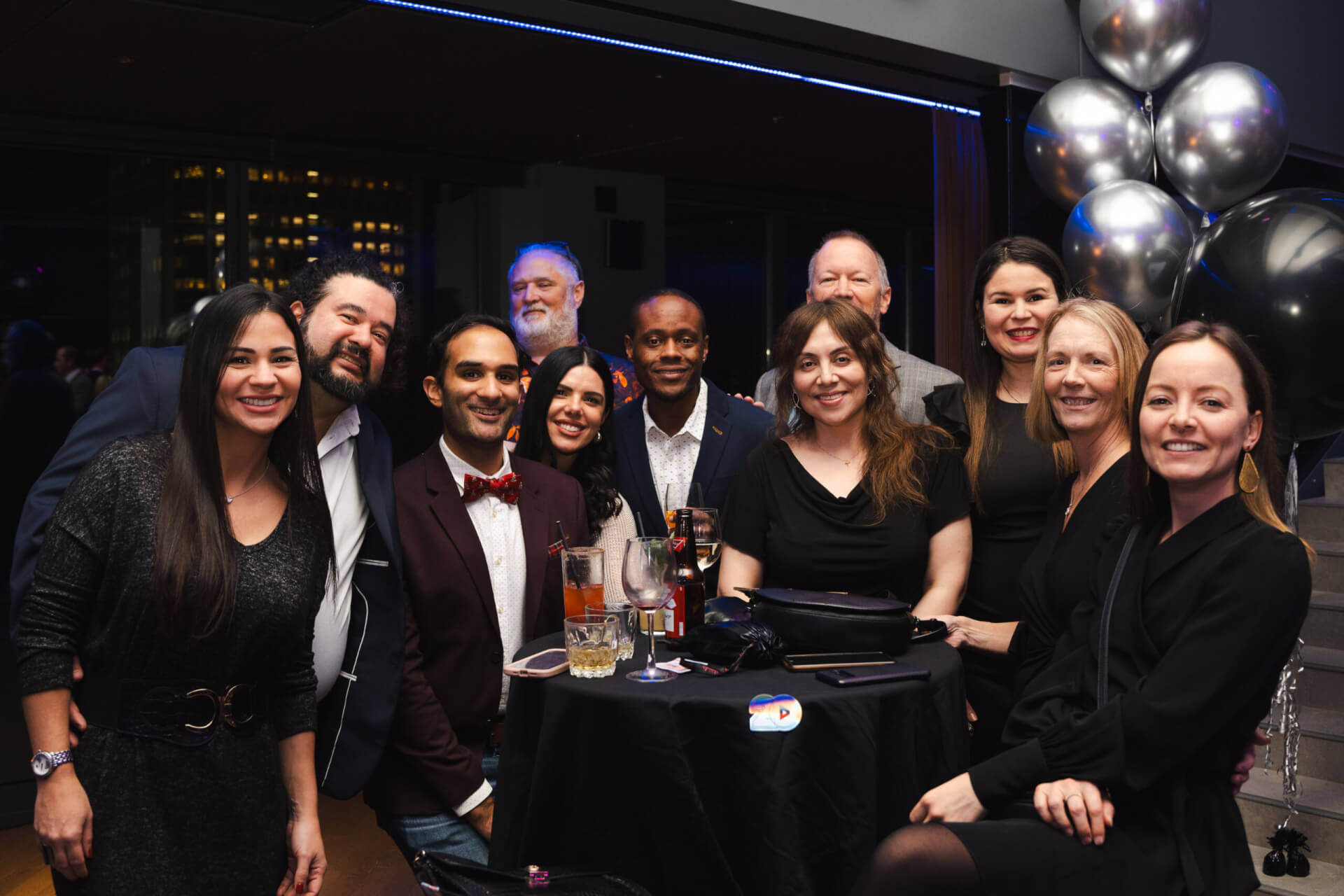
It’s that time of year again. The complete list of finalists from the 20th annual Montreal’s Top Employers competition has been unveiled, and for the sixth consecutive year, we’ve made the grade.

Fun fact: The average Broadsign employee stays with us for over five years—well above the tech industry average of under three years. That speaks volumes about our corporate culture, the values we uphold, and the opportunities we create for our team. With this latest recognition, we’re excited to highlight the key initiatives and values that have helped us build a workplace where people want to stay and grow.

About Montreal’s Top Employers

Montreal’s Top Employers is an annual editorial competition recognizing small and medium-sized businesses in Greater Montréal that offer exceptional places to work thanks to forward-thinking human resources policies. Every year, winners are chosen by a panel of judges who evaluate companies on specific criteria: work atmosphere, social, health and family benefits, vacation time, employee communications, training and skills development, and community involvement. 

A focus on outcomes, not oversight

For over 20 years, creating a positive workplace has been an area of focus for Broadsign. As we’ve grown from a startup-sized team to over 250+ employees globally, so has the need to adapt our workspace.

That’s why in 2024, our head office in downtown Montreal underwent a total redesign to better serve the needs of the modern workforce. The now-open concept encourages cross-departmental collaboration and a stronger sense of community among employees. Comfortable seating areas, ample meeting rooms and office pods are other modernizations. The ultimate goal is, of course, flexibility.

We value flexibility beyond the office with our work-from-home and remote-friendly policies. Broadsigners design their workdays around their lives because we trust them to get the job done—wherever they are. While others push for full office returns, Broadsign remains committed to hybrid work.

The freedom to work from (almost) anywhere

Being an international company means we have employees working all over the globe. That’s why we’ve introduced a “work from anywhere” policy. Employees can request to work beyond their typical workplace for up to 60 days.

Our Marketing Operations Analyst, Andrés Garcia Cureño, recently spent time with his family beyond Canadian borders. “With Broadsign’s Work from Anywhere Policy, I can spend time visiting friends and family for longer than a vacation,” he says. “It allows me to spend time with loved ones outside of working hours without feeling pressured.” 

Having the chance to spend time working from their family home or take an extended trip to a part of the world, they’ve long wanted to visit. So long as the employee has a steady and stable internet connection, works standard working hours, and complies with all travel advisors and other regulatory requirements before booking travel, the policy applies. 

Another Broadsigner, Carolina Torres Moens, Senior Designer, agrees. “With [this policy], I was able to  spend a month in Venezuela with my dad and grandmother—who I hadn’t seen in years.” 

Offline get-togethers

“At Broadsign, there’s a camaraderie between departments, between seniority and junior positions. Broadsign’s a perfect environment to be able to thrive in,” says Karoliina Paukku, Broadsign’s Director of Program Management.

As a company, we operate with a “work hard, play hard” mentality. During working hours, the team is driven and goal-oriented. But after work, we unwind with monthly happy hours, trivia and game nights, and occasional regional parties. More than a good time, these activities are important for building colleague connections.

Health and family benefits

“Well-being is a priority at Broadsign. To ensure that employees are well-supported, we offer an annual wellness program and a health savings account,” says Meghan Hastings, Vice President, Human Resources. 

Broadsign understands the importance of supporting employees through life’s biggest milestones. For growing families, the company offers top-up pay for parental leave, easing the transition into parenthood.

For Technical Account Manager David Muraca, these benefits have made all the difference in achieving a work-life balance that suits his and his family’s needs. “I have two small kids at home because I can choose to manage my schedule accordingly. I do find that Broadsign is quite competitive in terms of benefits, flexibility, work-from-home, or work-life balance.”

We also know how valuable a little R&R can be. As part of our health benefits, Broadsign offers an annual wellness subsidy that employees can put towards various activities and purchases, like gym memberships, ski passes, and more! That said, we also encourage our employees to take time off. Our time-off policy, which includes a three-week starting vacation allowance—plus additional paid time off between Christmas and New Year’s—means Broadsigners can relax and unwind.

Training and skills development

There’s a strong focus on professional development and continuous learning at our company. To support this, we’ve introduced a training and skills development program—because as industry leaders, growth and learning never stop. Our Continuous Improvement Plan enables team members to collaborate with their managers to identify training opportunities that align with their career goals.

Additionally, everyone receives an annual training budget, which covers up to three paid training days, helping them expand their skills and advance in their roles.
Commitment and involvement 

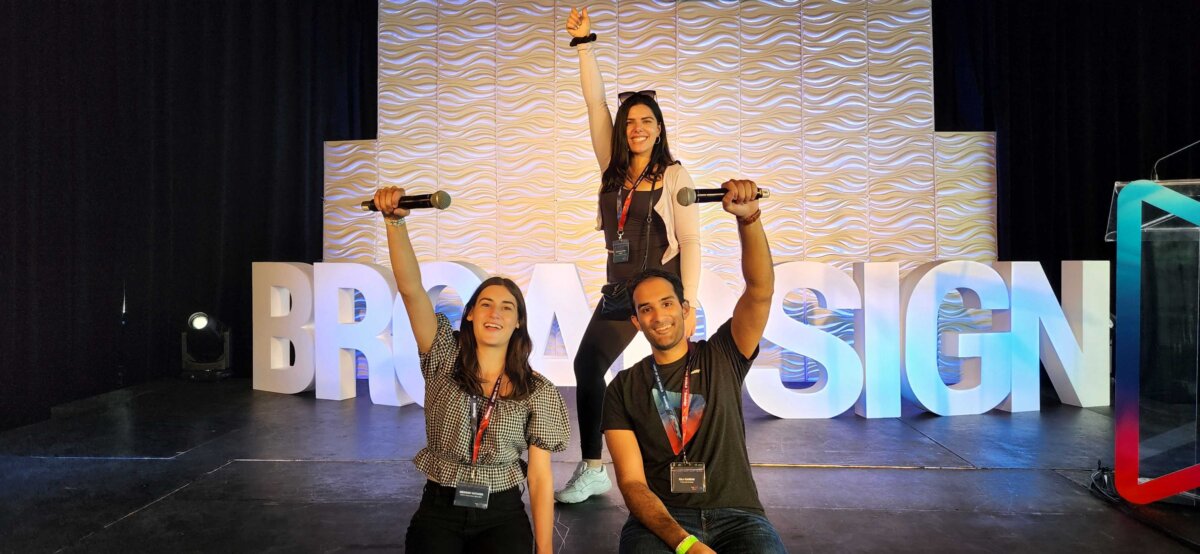
Of course, being recognized as a Top employer comes with the responsibility of fostering an inclusive and supportive work environment. Every day, we take steps to create a workplace where everyone can feel seen, heard and, most importantly, valued.

Whether in the form of sensitivity training, women-led and women-focused workshops, internal Lean In Circle programs, or unconscious bias training for managers, senior leadership, and decision-makers, we are committed to fostering an inclusive and equitable workplace. These initiatives ensure that every team member is supported and empowered to thrive.

  • Paid volunteer days: We offer our employees the chance to volunteer at organizations they are passionate about for two days per calendar year, and often match their donations. 
  • Sustainability efforts: We’re serious about our commitment to sustainability. We’ve already set ambitious goals and are continuing to look for new ways to make the out-of-home industry a greener one. If you’re interested in reading more about the progress we’ve already made, read our sustainability statement.
  • Diversity, Equity, and Inclusion: Our commitment to DEI is more than words. We’re continually taking steps to encourage a culture of diversity and equity in all aspects of our business, ensuring that all of our employees and partners feel valued, heard and comfortable to bring their whole selves to work every day.
If you’re looking for a workplace that empowers, supports, and inspires, we’d love to hear from you. Explore our job openings here.

Product News | October 11, 2021

Digital out-of-home for holiday marketing: How to win high-intent shopping moments

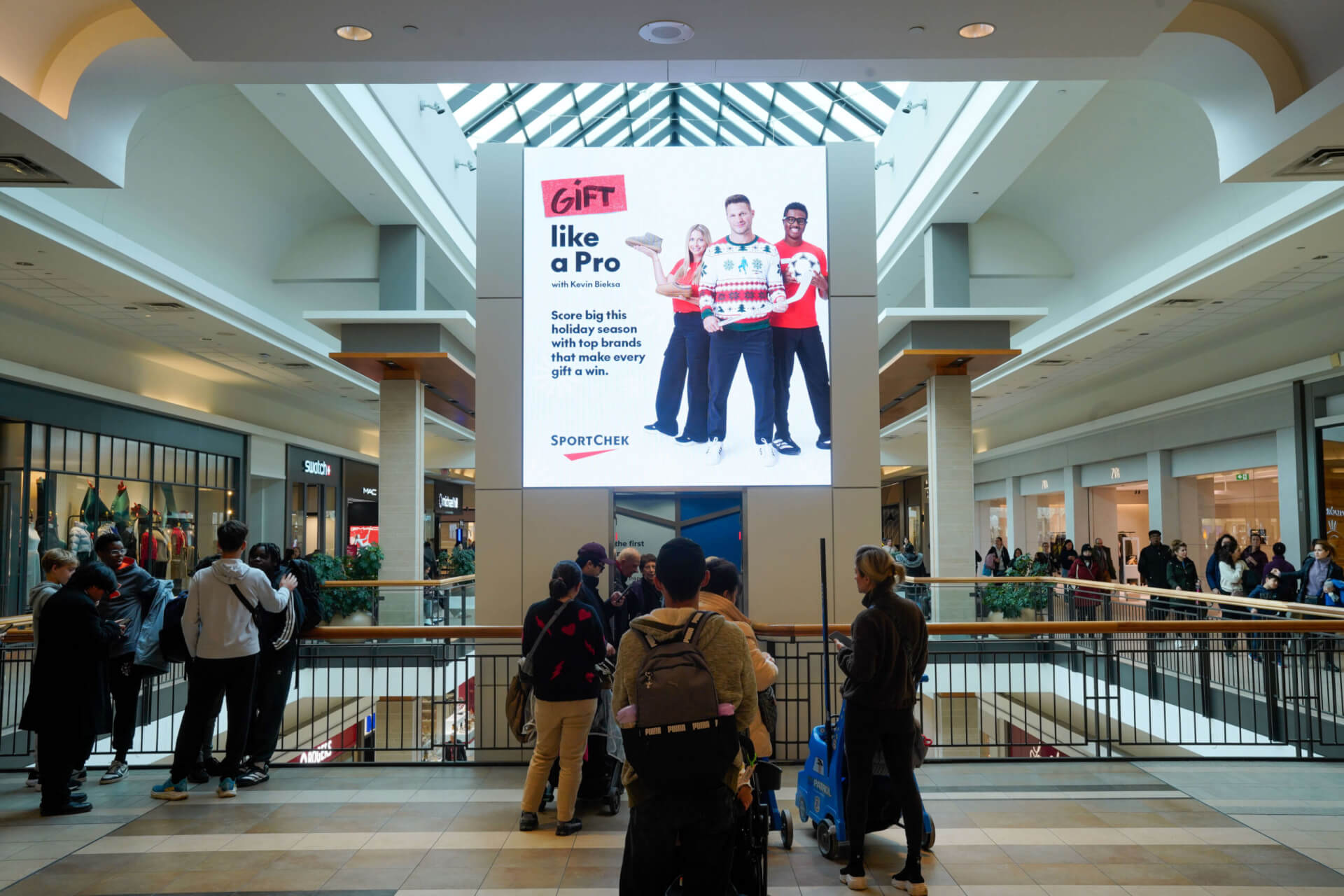
A busy two-level shopping mall atrium with shoppers gathered along the upper-floor railing. A large digital billboard dominates the center, displaying a SportChek holiday advertisement beneath a glass skylight.

If your holiday marketing strategy is still built around the same playbook from a few years ago, you’re already behind. 

In 2026, consumer trends point to a more deliberate, hybrid holiday shopper: one who starts deal hunting months before decorations go up, takes more time to research and compare options, and routinely moves between mobile devices, AI tools, and physical stores before making a purchase. As a result, the path to purchase is becoming longer and more fragmented, creating dozens of high-intent micro-moments where brands have an opportunity to inform or influence what shoppers do next.

As agencies and marketers seek ways to connect digital discovery with brick-and-mortar purchasing behaviour, digital out-of-home (DOOH) inventory offers them a unique opportunity to reach consumers at key moments throughout their IRL holiday shopping journey. And with programmatic making campaigns faster and easier to launch and adjust, DOOH can play a vital role in an omnichannel holiday strategy — with the flexibility to meet campaign needs as they evolve.

Why holiday shopping micro-moments matter in 2026 — and how DOOH can help

Major sales events like Black Friday and Cyber Monday remain at the centre of the holiday shopping calendar, but they represent just a few moments in a purchase journey that now starts earlier and moves fluidly between digital and physical touchpoints. According to new Microsoft research, the average holiday conversion journey now takes 52 days, with 63% of U.S. shoppers starting before Halloween. That journey is also increasingly hybrid: per Salesforce, 42% of shoppers visit stores to buy products they previously researched online, while 79% use smartphones while shopping in-store. 

It’s within this extended, omnichannel journey that holiday shopping micro-moments occur: reflexive, high-intent windows when consumers turn to a device or their surroundings to act on an immediate need, like:

  • Comparing gift ideas or researching products
  • Looking for a nearby store or point of sale
  • Seeking inspiration for holiday hosting, decorating, or gifting
  • Checking local product availability, promotions, or seasonal offers
  • Making a last-minute purchase

For advertisers, these moments create opportunities to reach shoppers with messages that reflect what they need in that moment. And because DOOH combines broad reach and repeated exposure with the ability to deliver relevant messaging in real-world contexts — often close to the point of purchase — it’s particularly well suited to making those moments count.

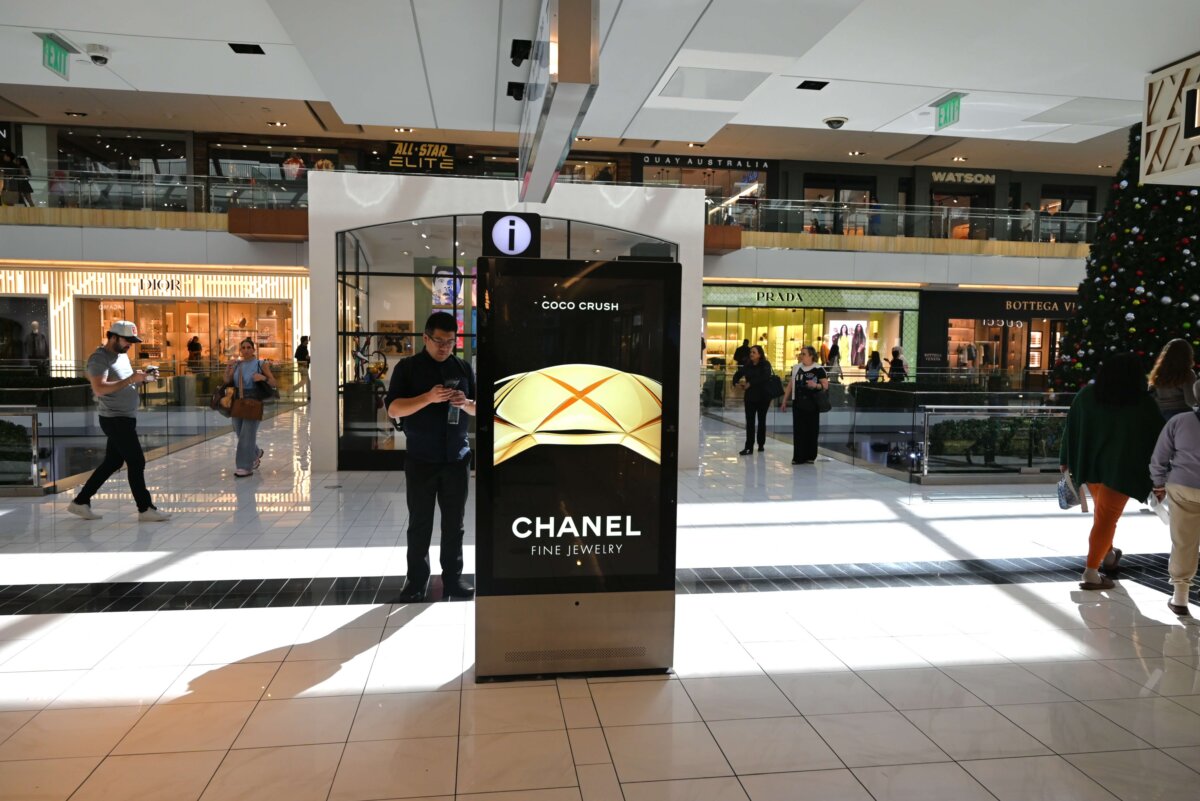
Chanel campaign displayed on Simon Media’s DOOH inventory at The Galleria in Houston, Texas

Strategy #1: Leverage advanced targeting to reach holiday shoppers at high-intent moments

Use advanced DOOH targeting to activate screens in and around the physical locations where your target customers are most likely to be — particularly when proximity to a store, venue, or other destination signals stronger purchase intent.

Depending on the campaign objective, advertisers can narrow their inventory using:

  • Location targeting: Go broad with nationwide or city-level campaigns, or get more granular with zip codes, POIs, custom geofences, and individual screens. A retailer promoting a Black Friday sale, for example, could prioritize screens within walking or driving distance of its stores.
  • Audience targeting: Use first-party data and third-party audience segments to identify screen locations where target customers are most likely to be present — whether that’s parents shopping for toys, beauty buyers looking for gifts, or travellers heading home for the holidays.
  • Venue and asset targeting: Match placements to the activity happening around them, from gift shopping at malls and stocking up at grocery stores to dining, celebrating, and travelling over the holidays.
  • Dayparting: Adjust when ads appear to align with relevant shopping and travel behaviours throughout the day.
  • Layered targeting: Combine multiple signals to get more precise. For example, target mall-adjacent inventory within a specific New York City geofence during peak afternoon and evening shopping hours.

De’Longhi recently put this kind of high-intent targeting into practice with a programmatic DOOH campaign promoting its Eletta Explore coffee machine during the competitive holiday shopping season in Poland. By activating inventory in high-traffic shopping malls, reaching gift-seekers close to the point of purchase, and using dayparting to align ad delivery with peak shopping hours, the campaign ultimately drove a 121% lift in brand preference and a 190% lift in intent to interact with the brand or visit its website.

For holiday campaigns focused on purchase-ready micro-moments, targeting can extend all the way into the store. According to Salesforce, 77% of consumers plan to shop in physical stores this holiday season, making in-store advertising a particularly valuable way to reach shoppers when they’re most likely to make a purchase. The same targeting principles still apply: advertisers can prioritize the stores, audiences, locations, and times most relevant to what they’re selling rather than treating all retail foot traffic equally.

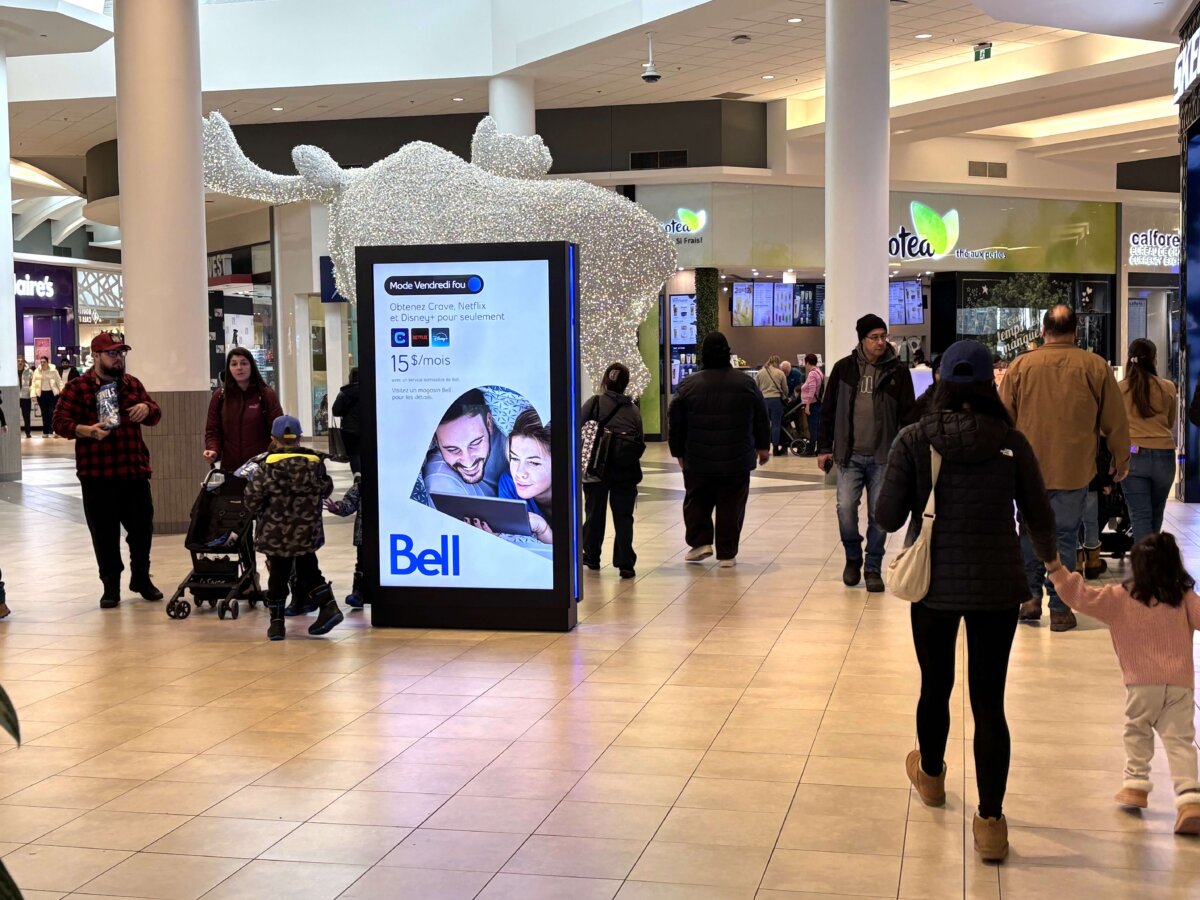
Cineplex Media DOOH screen at CF Carrefour Laval in Quebec, Canada, directs shoppers to nearby Bell stores

Strategy #2: Use dynamic creative and contextual triggers to match DOOH messaging to the moment

Targeting can help put a holiday ad in the right place at the right time. Dynamic creative in DOOH takes that relevance a step further by adapting the ad itself based on what’s happening in that moment. Using signals like time, weather, location, proximity, product availability, or other live data, advertisers can automatically serve the creative variation that best fits the current context. 

For holiday campaigns, that opens up practical ways to make creative more useful and timely:

  • React to the weather: Promote coats, hot drinks, delivery, or indoor activities when temperatures drop, then switch creative as conditions change.
  • Make proximity useful: On screens near a store, dynamically show the closest location, distance, or a directional call to action.
  • Adapt as shipping deadlines approach: Shift from standard delivery messaging to expedited shipping, pickup, immediate availability, or digital gift cards as Christmas gets closer.
  • Build urgency around key sales moments: Use live countdowns to Black Friday, Cyber Monday, promotional deadlines, or other limited-time offers.
  • Respond to inventory levels: Feature products or offers based on what’s currently available at nearby locations rather than promoting something shoppers can’t buy. 

The most effective dynamic DOOH creative strategies are built around signals that meaningfully change what’s useful or relevant to the shopper, allowing advertisers to adapt messaging at scale without manually building and trafficking every possible variation. 

READ ALSO: What marketers need to know before launching their first dynamic DOOH campaign

Strategy #3: Pair physical DOOH exposure with mobile activity to extend reach and drive action

Mobile plays a major role in holiday commerce, with eMarketer projecting that nearly 60% of online holiday purchases will happen on mobile devices in 2026. That makes mobile and DOOH a natural pairing, with each channel reinforcing the other across the shopping journey. OAAA research also found that combining DOOH and mobile can increase engagement by up to 30%, while an Ocean Neuroscience study found consumers are 48% more likely to engage with a mobile ad after seeing the same campaign on a DOOH screen.

For holiday campaigns, advertisers can use that relationship in several practical ways:

  • Location-based retargeting: Extend a DOOH campaign with follow-up mobile ads served to audiences who were near campaign screens. A shopper who encounters a holiday campaign while out shopping, for example, could later see a mobile ad featuring the same product or promotion. 
  • Mobile push notifications: For opted-in app users, use location signals like geofencing or beacons to deliver relevant notifications when they’re near a store or campaign location — for example, alerting loyalty members to an offer nearby.
  • Interactive QR codes: Give shoppers a direct path from a DOOH ad to an offer, coupon, product page, store locator, or other mobile experience. Dynamic QR codes are particularly useful on screens where consumers are close enough — and have enough dwell time — to scan.
  • In-app AR experiences: Use DOOH creative as an entry point to augmented reality experiences on a shopper’s phone, like virtual product try-ons, interactive holiday experiences, or content designed for social sharing.

The best approach depends on what you want the shopper to do next. QR codes, push notifications, and AR can encourage action while a shopper is still nearby, while mobile retargeting can reinforce the message later in the purchase journey. 

Read more: 3 reasons why you should combine digital OOH and mobile advertising for maximum impact

Ready to make the most of this year’s holiday shopping micro-moments? Explore our inventory catalog to discover premium digital screens in high-impact locations.

Product News | October 11, 2021

How VAST Billboards is redefining out-of-home in New Zealand

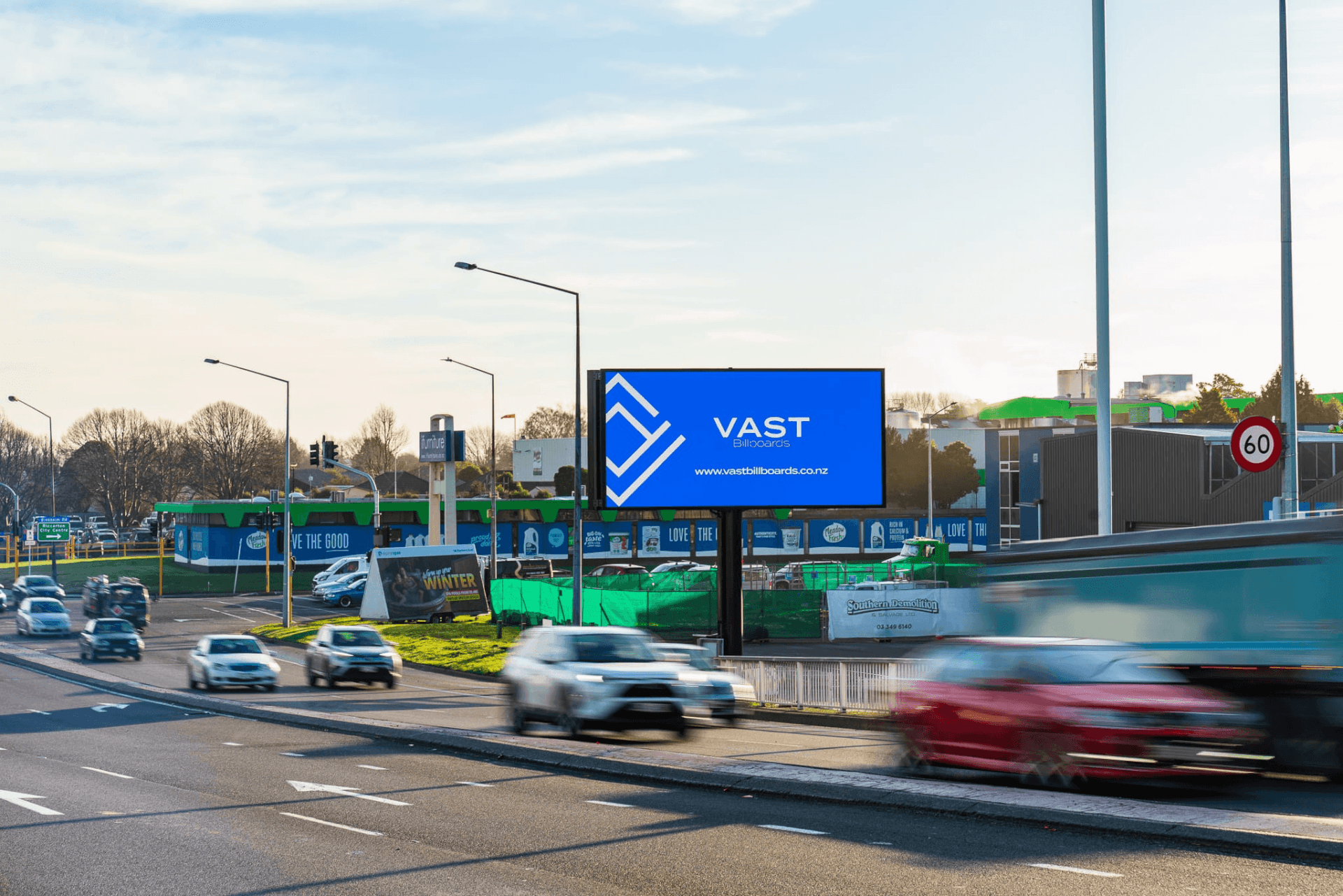
VAST digital billboard beside a busy roadway in Christchurch, New Zealand, displaying the VAST Billboards logo.

In a market long shaped by a handful of dominant players, VAST Billboards has carved out a distinct identity as New Zealand’s independent, Kiwi-owned out-of-home (OOH) network. Headquartered in Christchurch, VAST has built its growth story not by trying to out-scale the biggest networks, but by complementing the broader OOH landscape with a strong presence across regional cities, suburban corridors, and strategically important locations.

We sat down with Gary Rosewarne, Head of Growth Strategy at VAST, to talk about the company’s rapid growth, its programmatic ambitions, and why Broadsign has become a core part of how VAST runs its media operations.

A network built on purposeful growth

VAST’s strategy is built on a simple but deliberate idea: the network doesn’t need to be the whole plan — it needs to be the right complement to it. “We don’t believe VAST needs to be the whole plan,” Rosewarne explains. “In Auckland, for example, we can provide a complementary layer around established networks; in Christchurch, we have significant strength across suburban and arterial environments; and regionally, we give brands access to audiences across a growing number of markets.”

That positioning shapes where VAST builds inventory and how it prices and packages it, with a focus on keeping the network competitively priced and easy to buy. Its predominantly digital, large-format footprint extends beyond New Zealand’s largest cities into regional markets including Tauranga, Hamilton, Napier, Hastings, Taupo, Nelson, Blenheim, Timaru, and Invercargill, across both landscape and portrait formats.

“The objective isn’t simply to accumulate screens, but to add locations that create useful geographic spread, strengthen coverage and give advertisers access to audiences they may not be reaching elsewhere,” says Rosewarne. “That combination of metro, suburban and regional inventory is really what defines the VAST network.”

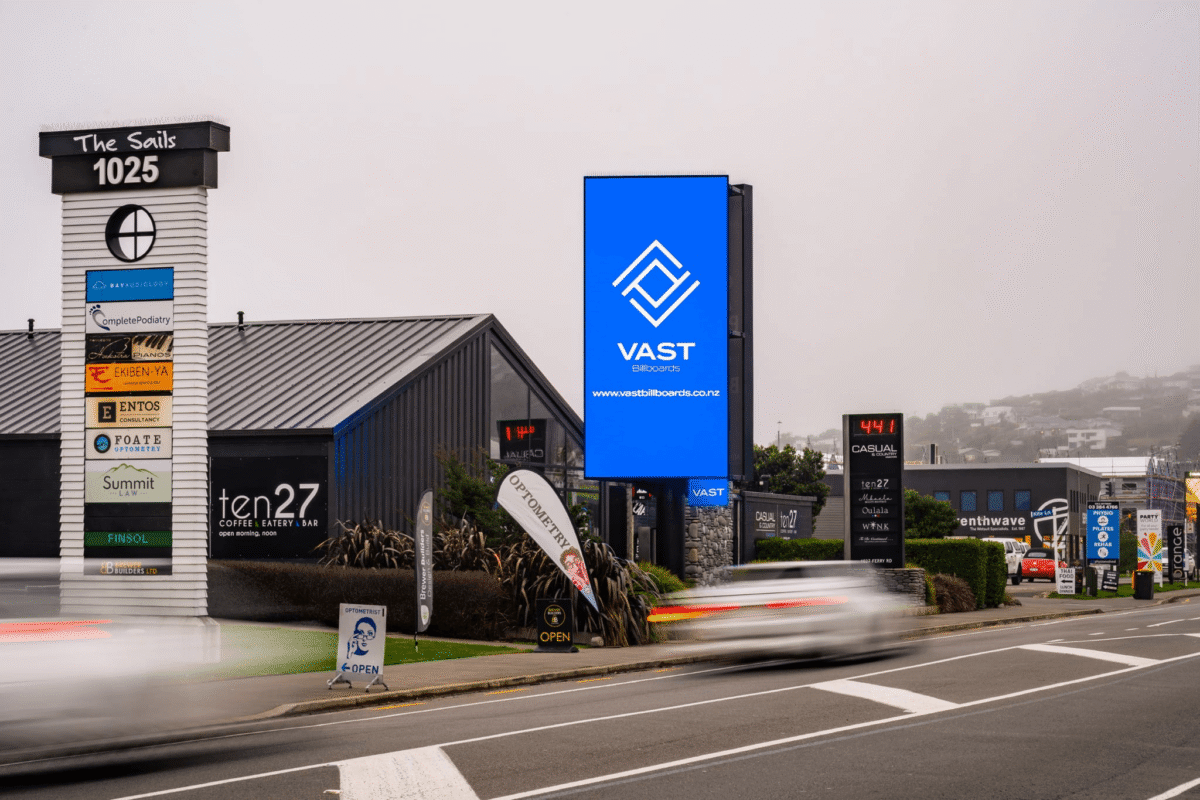
VAST digital billboard on Ferry Road in Christchurch, New Zealand

Serving national brands and local businesses alike

The company’s advertiser base spans national agency clients, major brands, and local direct advertisers. In 2025, its network saw strong growth across these segments, becoming an increasingly important part of national campaign plans while maintaining its strong connection to businesses looking to reach audiences in their local communities.

VAST has also used its own network to experiment with new ways of engaging audiences and demonstrating the potential of OOH. One example is Bill Is Bored, a campaign that used curiosity-driven billboard creative to capture attention and encourage people to continue the experience online. More recently, the Win A Grand – Your Region, Your Voice campaign invited New Zealanders to share what matters most in their local communities. The responses helped inform Beyond the Big Three, a research study examining the scale, value, and audience opportunity of regional New Zealand beyond the country’s three largest cities.

Together, these campaigns have given VAST a way to test ideas, gather audience insights, and demonstrate what OOH can achieve beyond simply delivering impressions. “These projects let us test ideas on our own network, learn from the response and build evidence that can ultimately help advertisers use OOH more creatively and effectively,” Rosewarne says.

That combination of clarity of purpose and consistent execution earned VAST recognition as Beacon’s 2026 Sales Team of the Year—one of New Zealand media’s leading industry awards, and a notable achievement for a relatively small team competing against some of the most established names in OOH.

“In 2025, VAST grew revenue at 5x the pace of the broader market, but the story was bigger than the numbers,” Rosewarne says. “We stopped thinking about ourselves as simply selling billboards and became much more focused on solving planning problems.”

Central to that shift was the “complete, not compete” philosophy, helping agencies see where regional and suburban audiences could add incremental value. Being a smaller, independent player also gave VAST room to move quickly. “Being small probably helped as well: we could be nimble, authentic, try things, have some fun and respond quickly when an opportunity emerged.”

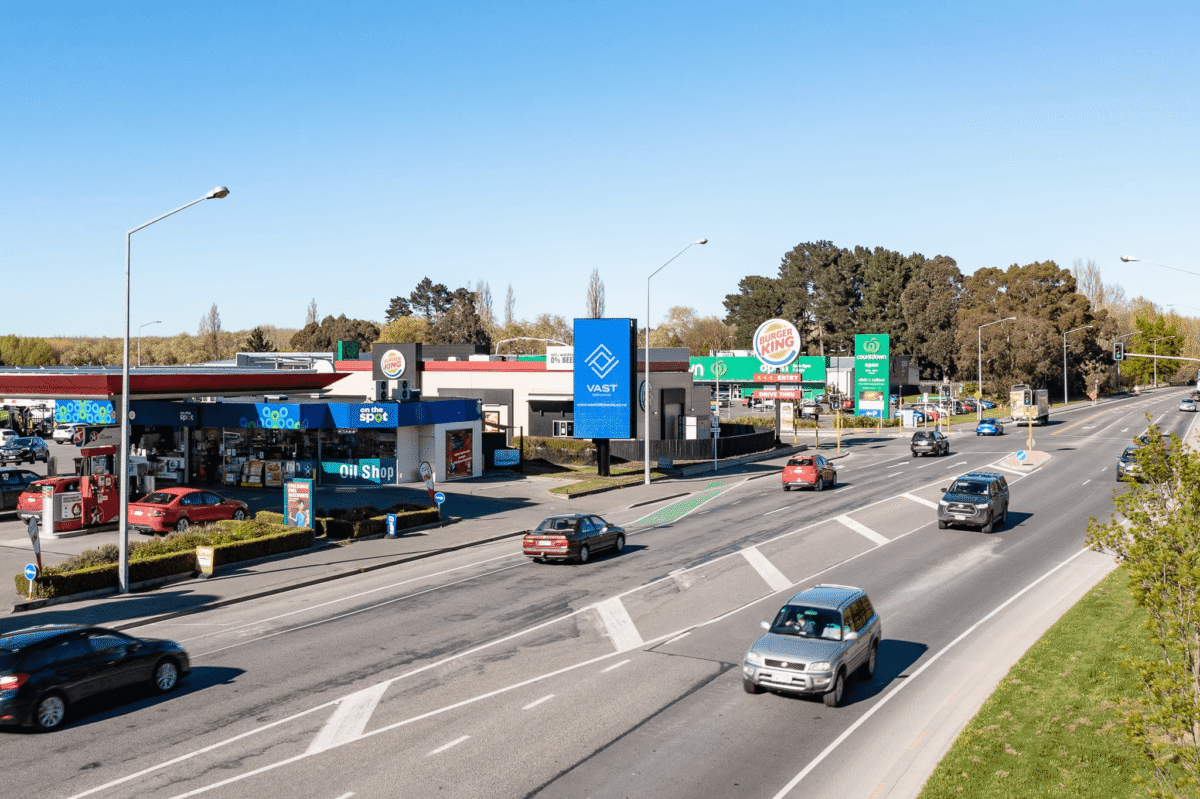
VAST roadside screen in Ashburton, New Zealand

Why VAST chose Broadsign

As both the network and ambitions have grown, so has the need for technology that can scale alongside them. That search led VAST to the Broadsign Platform.

“For us, Broadsign came down to trust, reliability and fit,” Rosewarne says. “We wanted an established platform with deep expertise in OOH, rather than something we would potentially outgrow. As we scale, the technology sitting underneath the network has to be dependable, but it also has to give us the flexibility to keep evolving how we package, manage and monetise inventory.”

Broadsign’s position within the programmatic DOOH ecosystem and its established relationships with major trading platforms and partners were other deciding factors, particularly as programmatic became a larger part of VAST’s business. “Broadsign brings experience, expertise and an established ecosystem that we can grow alongside.”

Programmatic as a new route to market

Programmatic buying has shifted how the media owner thinks about its inventory, moving the conversation beyond locations and weeks toward a more dynamic view of audiences, availability, and demand. “It creates another route into the VAST network and makes it easier for advertisers who may already be buying other digital media programmatically to include OOH within that ecosystem,” Rosewarne explains. “For a challenger network like ours, reducing that friction is particularly valuable.”

That shift has also prompted VAST to rethink how it values and packages inventory for programmatic buyers, treating it as a distinct buying pathway with its own use cases rather than a variation of direct bookings. Just as importantly, programmatic expertise has been embedded across the sales team, helping ensure the right buying approach is recommended for each campaign.

Looking ahead

VAST’s long-term vision centers on purposeful growth, not expansion for its own sake. Rosewarne describes the goal as building “a highly useful independent OOH network that has a clear role within the New Zealand market”, one that continues to strengthen its regional footprint, protect its position in Christchurch, and selectively add metropolitan inventory that creates genuine new audience opportunity.

Looking at the broader industry, Rosewarne sees OOH becoming increasingly measurable, connected, and flexible, with programmatic adoption and audience measurement both continuing to mature. “Our job is to combine those capabilities with the things that still make OOH powerful: great locations, simple creative, local relevance and real-world visibility,” he says. “If we can keep doing that while remaining independent, nimble and easy to work with, we think there is a very exciting future for VAST.”

Ready to scale your network without scaling your workload? Learn more about the Broadsign Platform here.

Product News | October 11, 2021

How Canadian Tire achieved a 64% lift in store visits with programmatic DOOH

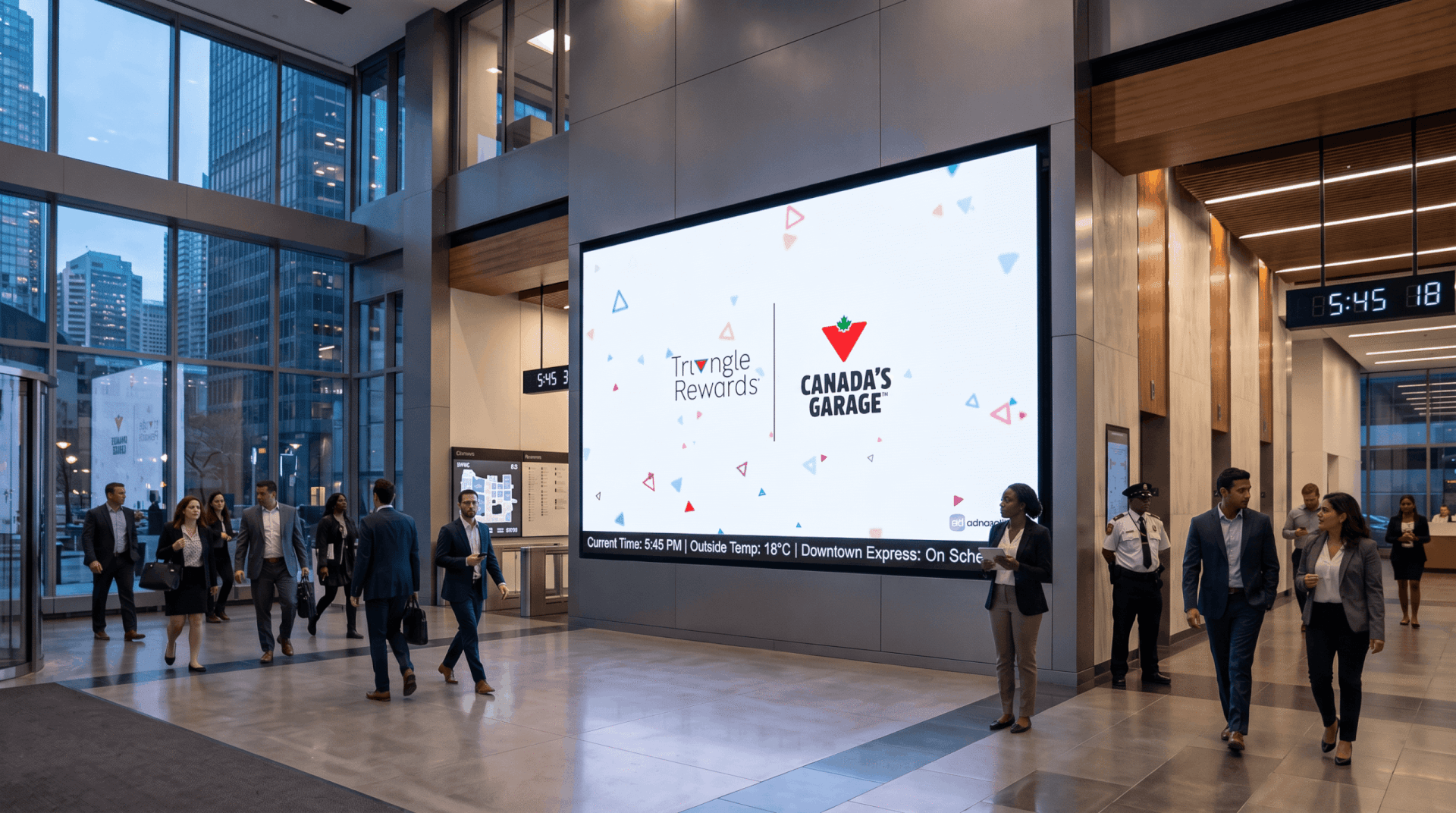
Canadian Tire Canada’s Garage and Triangle Rewards digital billboard displayed in a busy downtown office building.

To support its next phase of service-led growth, Canadian Tire, a staple in the Canadian retail landscape, launched a high-impact programmatic digital out-of-home (pDOOH) campaign to reach its target audience at scale. Specializing in essential mechanical care and seasonal maintenance, the brand sought to strengthen its position as a premier automotive service provider and drive measurable foot traffic to its stores across the country.

Objective

The campaign aimed to drive measurable foot traffic to Canadian Tire Auto Service Centres nationwide. To achieve this, the campaign targeted Canadian car owners, with an emphasis on growth segments including Gen Z, Millennials, and Newcomers to Canada, by highlighting that consumers can both earn and redeem Canadian Tire Money on automotive mechanical services.

Strategy

Partnering with Broadsign, Talon and Touche, the campaign deployed programmatic DOOH alongside Canadian Tire’s national TV, digital, and social media channels. Ads were activated programmatically on digital screens near Canadian Tire Auto Service Centres to reach drivers when vehicle maintenance was a priority.

The campaign ran across multiple placement types, including billboards, transit shelters, shopping malls, fitness centres, and campus environments, to remain highly visible throughout the day. Layering these location and venue parameters with contextual triggers and Canadian Tire’s first-party audience data maximized efficiency, ensuring the messaging reached high-intent drivers in real time.

Results

The campaign delivered a 64% net lift in store visits compared to the unexposed lookalike control group, achieving a 100% confidence level.

Want the campaign highlights? Check out the infographic below.

Product News | October 11, 2021

3 strategies for planning smarter programmatic DOOH campaigns: Data-backed tips from our new industry report

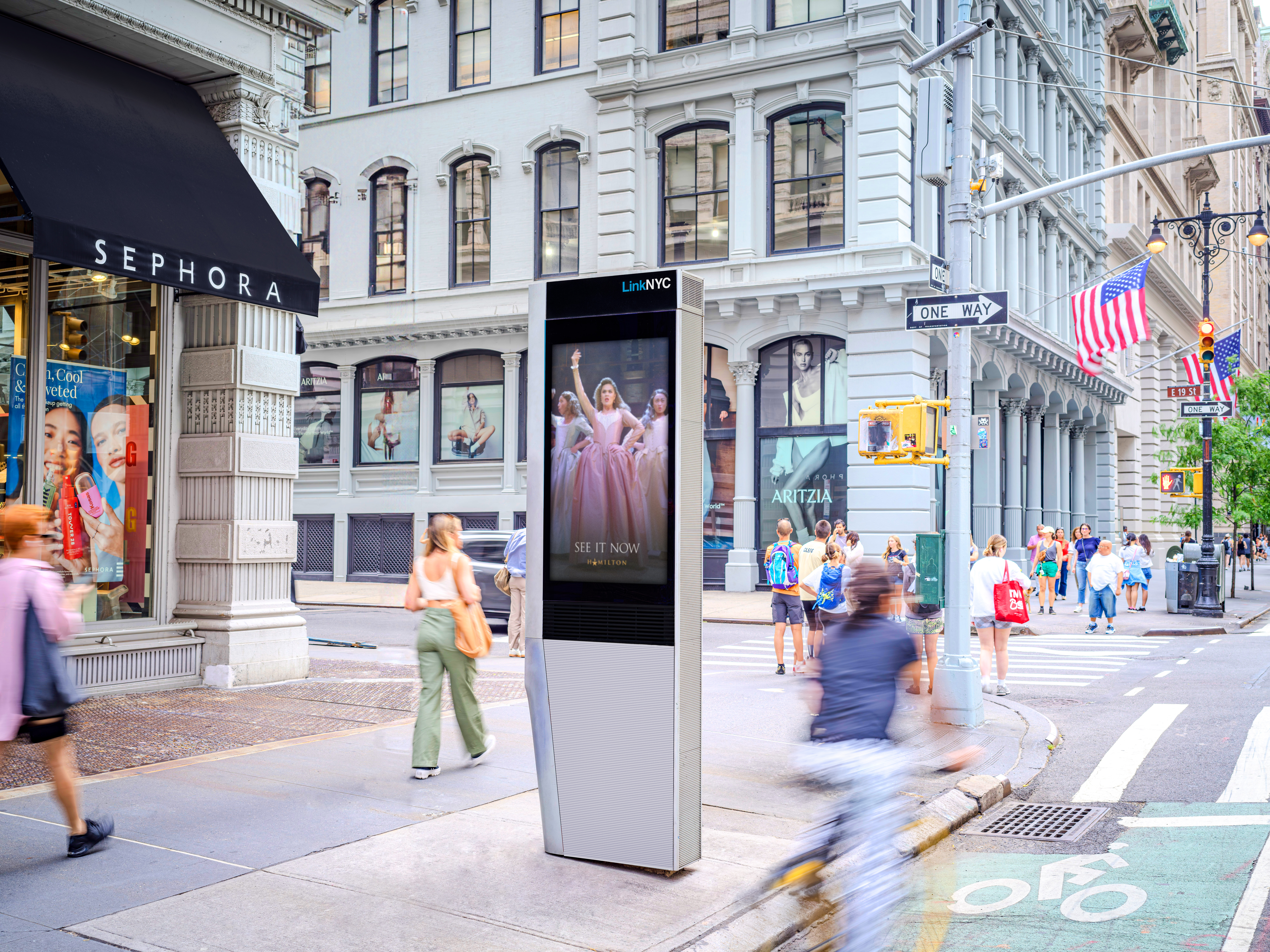
LinkNYC digital advertising kiosk on a busy New York City street corner, surrounded by pedestrians, cyclists, and storefronts.

As the programmatic digital out-of-home (pDOOH) market matures, the question for many advertisers is no longer whether to use it, but how to make it work harder. At the same time, the rise of new targeting signals, creative formats, and deal models means buyers are navigating a more complex landscape — one where maximizing ROAS and aligning DOOH outcomes with broader campaign goals are top of mind.

To better understand how these shifts are shaping advertiser investment and planning strategies, we analyzed aggregated transaction data from the Broadsign and Place Exchange SSPs — together representing the world’s largest independent programmatic OOH ecosystem, with more than 1.7 million programmatically-enabled screens.

Drawing on the findings published in our new 2026 Programmatic DOOH Trends Report, this article highlights three practical strategies buyers can use to plan smarter, allocate budgets more effectively, and get more value from their programmatic DOOH campaigns.

Understanding today’s programmatic DOOH marketplace: Insights for agencies and advertisers

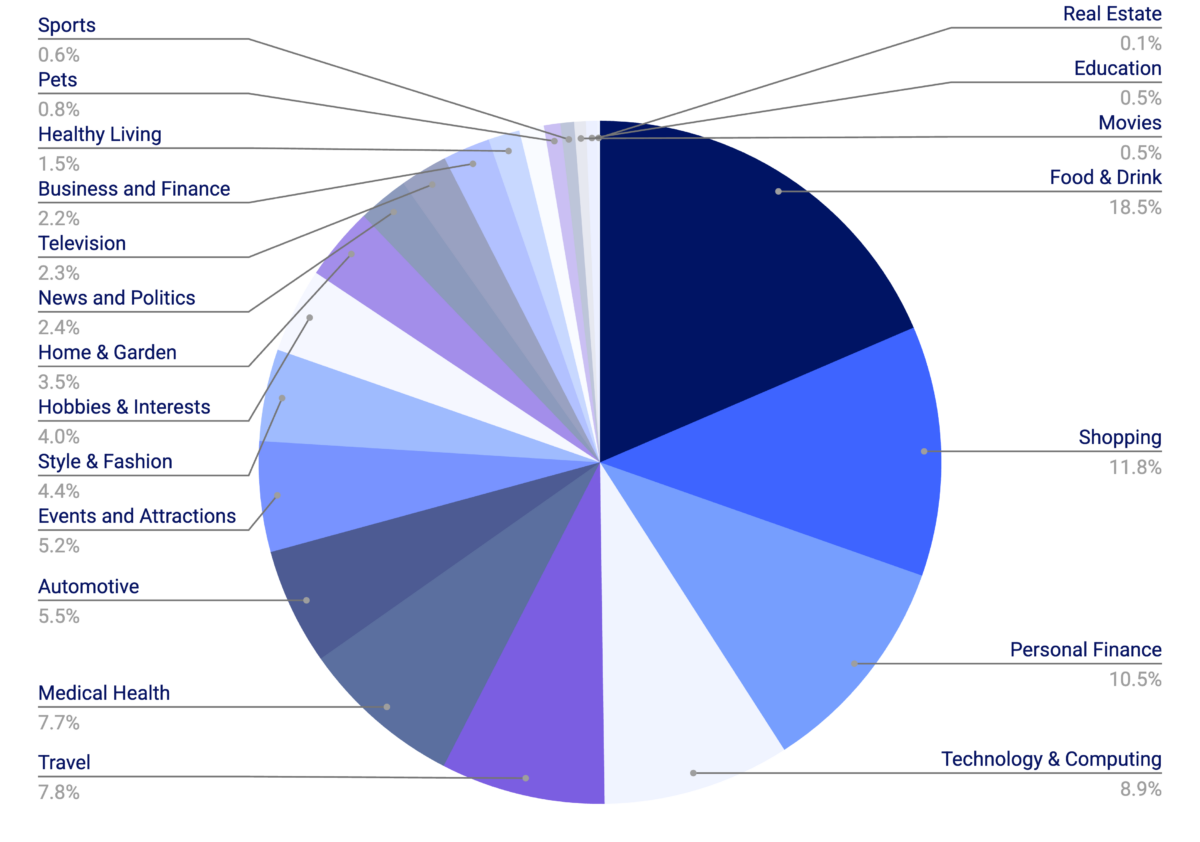
No longer limited to a small group of early adopters, today’s category mix — spanning sectors associated with everyday consumer purchase decisions as well as those with longer consideration cycles — shows programmatic OOH being used across a wide range of business contexts.

Top spending advertiser categories

Global, full-year 2025 | Categorized by IAB category

The diversity of advertiser investment reinforces programmatic DOOH’s growing role as a mainstream media channel rather than a specialist one. It also reflects increasing confidence in the channel’s ability to support a wide range of campaign objectives across different industries. But as the market matures, buyers are navigating a more sophisticated programmatic landscape — one where performance is increasingly shaped by the planning decisions made before a campaign ever goes live.

3 strategies for planning smarter programmatic DOOH campaigns

Whether you’re launching your first programmatic OOH campaign or looking to level up your pDOOH performance at scale, we’ve got you covered with practical insights — backed by real transaction data from activations across the globe.

1. Think beyond core outdoor environments 

Advertisers have long relied on out-of-home to reach audiences in busy public spaces like city centres and along major highways. And digital OOH — especially when transacted programmatically — gives buyers a faster, more flexible way to activate campaigns in those same high-traffic settings. But as digital screens extend into a wider array of everyday environments, buyers have an opportunity to think beyond traditional outdoor settings and choose inventory based not just on visibility, but on its potential to align messaging with audience mindset.

 Spend distribution by venue category

Global, full-year 2025

Our transaction data reflects this reality. Outdoor remains the largest venue category, accounting for nearly half (48.4%) of all programmatic OOH spend. But meaningful investment across other context-rich environments like Retail (18.5%) and Transit (12.7%) points to strong buyer demand to reach audiences in relevant moments throughout the physical world.

Today’s strongest programmatic OOH plans evaluate the role different environments can play in achieving campaign objectives and use those insights to guide more intentional, performance-oriented allocation decisions. In many cases, that means combining high-reach environments for foundational coverage and layering in more targeted or context-driven placements to meaningfully engage audiences as they move about their days.

2. Check whether you can repurpose existing creative before commissioning new assets

Programmatic OOH gives buyers the flexibility to activate campaigns at scale across a growing mix of digital inventory. While different file specs across networks can take a little extra coordination, it’s getting easier as the channel evolves. pDOOH video and display creative is increasingly aligning around a few common formats, making it simpler to activate across networks, repurpose creative from other channels, and spend less time building custom assets.

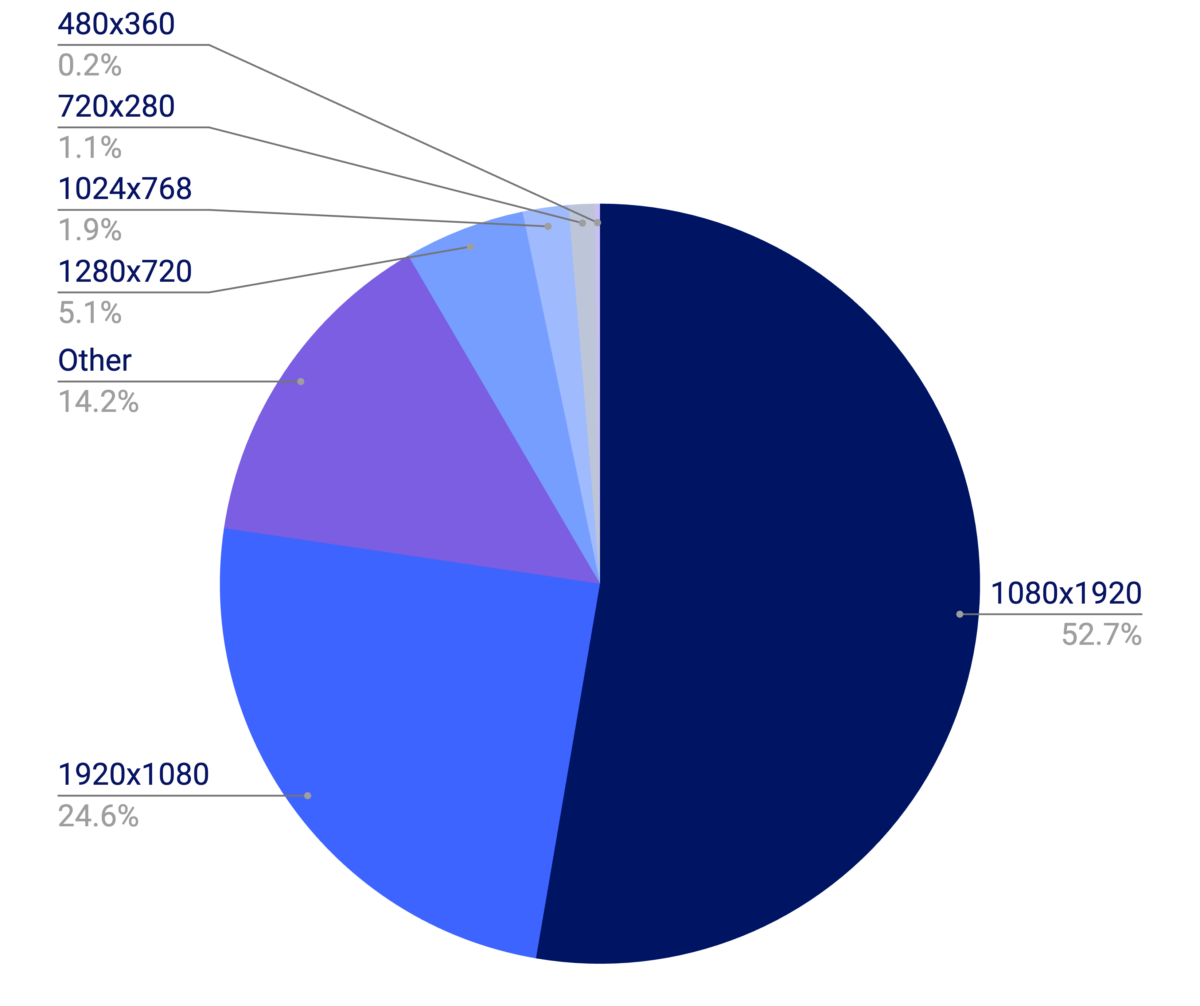
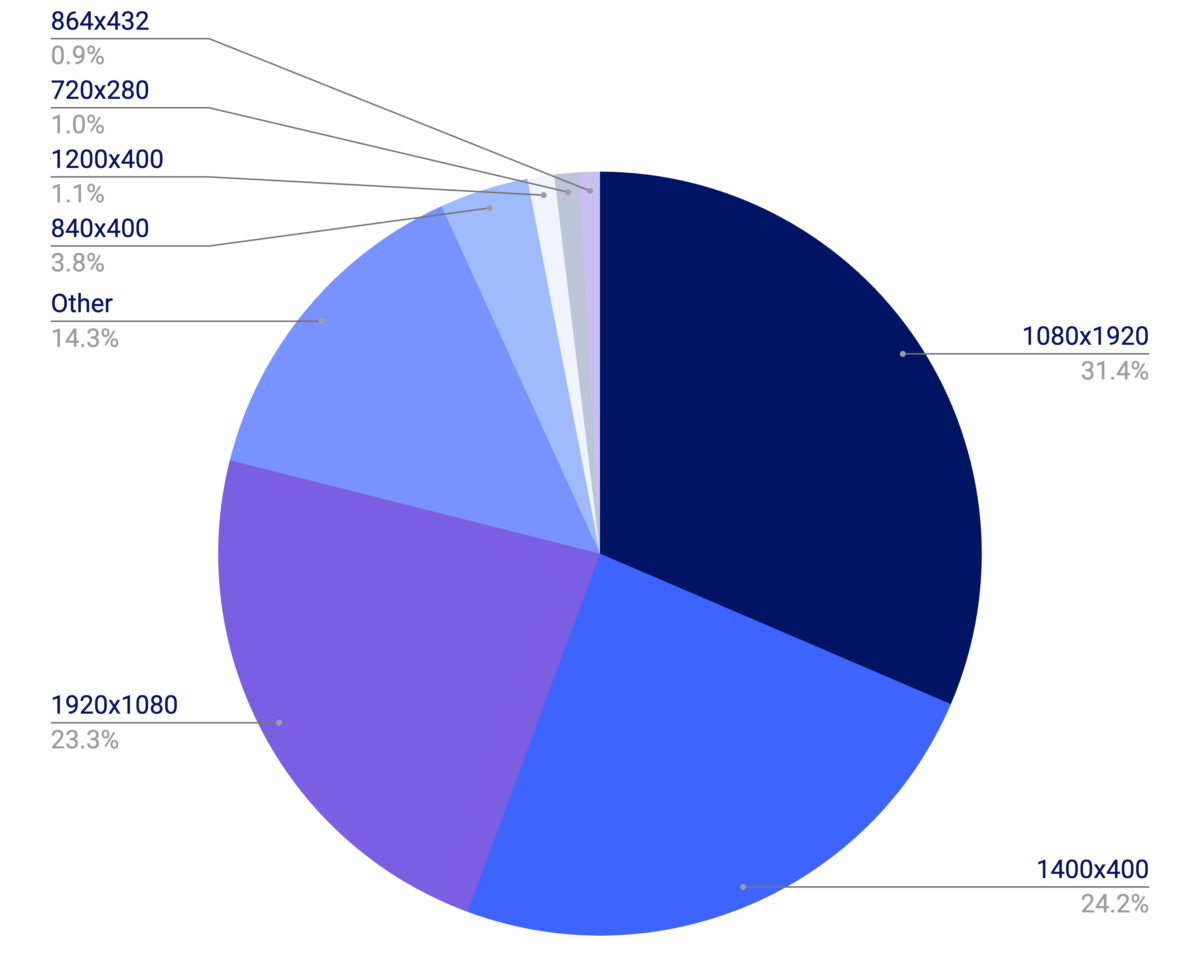
The findings in our Programmatic DOOH Trends Report illustrate just how concentrated creative specifications have become. For example, two asset sizes — 1080×1920 (vertical portrait) and 1920×1080 (landscape) — together accounted for 77% of all programmatic video spend in 2025. And the top three display ad sizes — 1080×1920 (31.4%), 1920×1080 (23.3%), and 1400×400 (24.2%) — made up 79% of total display spend.

For buyers, it’s easier than ever to scale creative across screens, with technology simplifying activation across a wider range of formats through automated reformatting. That gives brands more flexibility to focus their resources where they can have the most impact, whether that’s exploring unique formats or investing in capabilities like dynamic creative optimization (DCO), which allows messaging to adapt automatically based on changing real-world conditions.

3. Match your deal type to your campaign objectives

Advertisers are taking a more considered approach to buying digital out-of-home programmatically, using different transaction models depending on campaign requirements. Real-time bidding via the open exchange (oRTB) provides a fast and flexible way to activate DOOH campaigns at scale, while private marketplace (PMP) deals provide access to curated inventory through pre-established deal structures.

Spend by transaction type

Global, full-year 2025 | Place Exchange transactions only

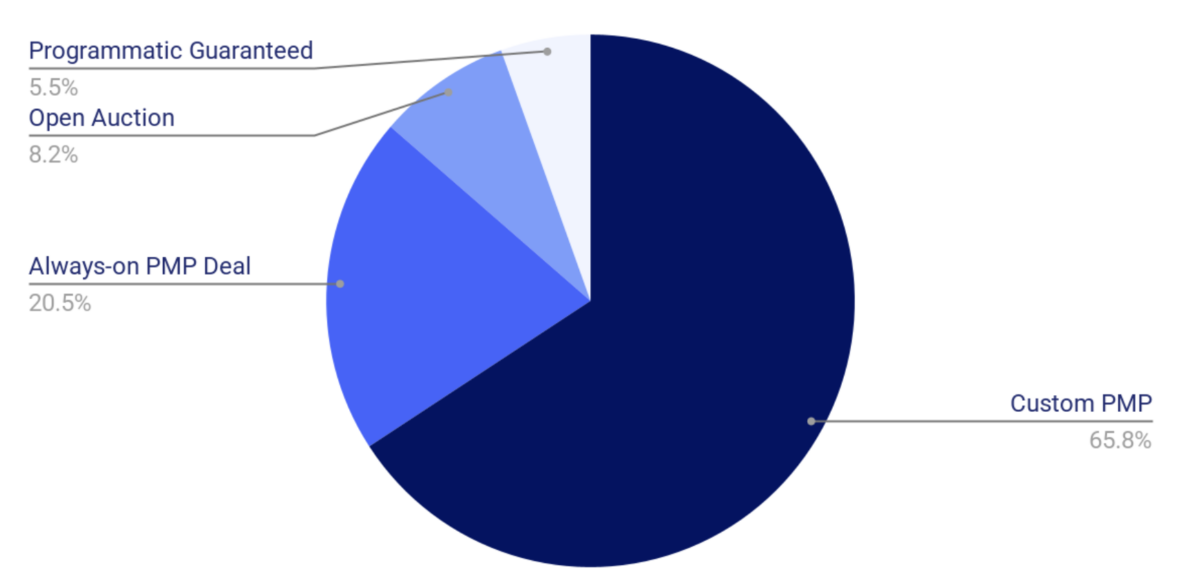
Our data shows that PMP transactions accounted for more than 86% of programmatic OOH spend in 2025. This includes Custom PMPs, which allow buyers to build deals around specific inventory and audience criteria, and Always-on PMPs, which provide turnkey access to curated inventory without requiring new agreements.

This distribution doesn’t suggest that one transaction model is inherently better suited to programmatic DOOH. Each serves a different purpose depending on campaign objectives: open auction can support scale, flexibility and speed; PMPs can address specific inventory, audience or contextual requirements; and programmatic guaranteed can provide delivery commitments or secure specific placements.

Transaction model selection should therefore be driven by campaign requirements as part of the broader planning process, rather than by a preference for one buying method over another.

Explore more data-backed findings in our 2026 Programmatic DOOH Trends Report

Access additional benchmarks, regional trends, and category-level insights drawn from aggregated transaction data from the world’s largest independent programmatic OOH ecosystem.

Download the 2026 Programmatic DOOH Trends Report