Product News | October 11, 2021

Dynamic creative optimization (DCO) in DOOH: What marketers need to know before launching their first campaign
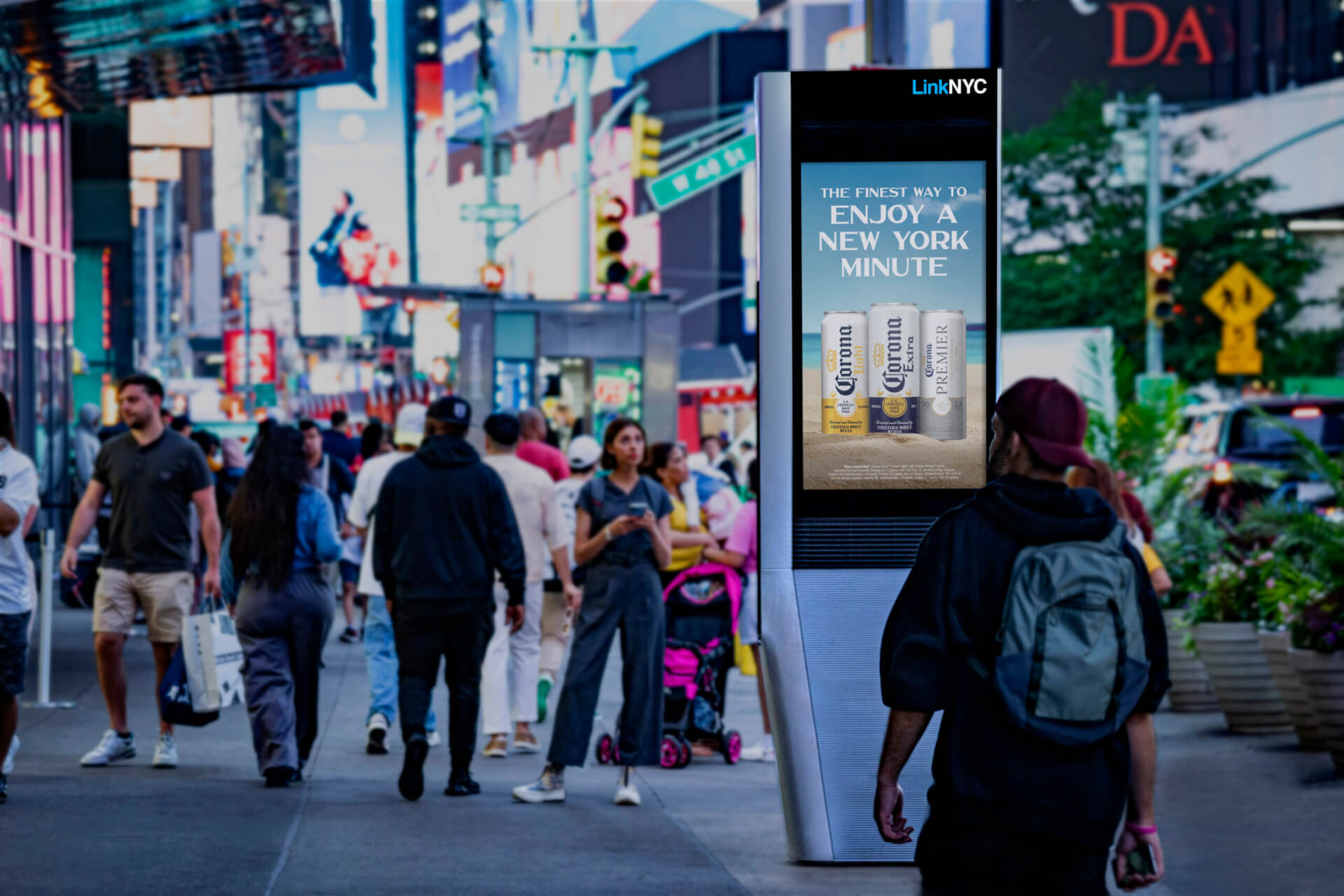
A busy New York City sidewalk with pedestrians walking past a LinkNYC digital kiosk displaying a Corona beer advertisement. The kiosk stands prominently in the foreground against a backdrop of bright city lights, storefronts, and traffic, illustrating digital out-of-home advertising in a high-footfall urban environment.

Dynamic creative optimization (DCO) is changing what’s possible with digital out-of-home (DOOH), giving advertisers the ability to automatically adapt creative elements — including copy, imagery, and featured products or offers — based on real-world context.

As brands look for new ways to engage audiences with contextually relevant messaging, advertisers are increasingly turning to programmatic DOOH (pDOOH) and dynamic creative to bypass digital ad fatigue and reach target audiences in the physical world. However, while they’re often discussed together, DCO in DOOH introduces its own set of considerations: Which DOOH campaigns are best suited for dynamic creative? How does DCO change the way you approach campaign planning and creative production? And what do you need to launch a dynamic campaign successfully?

Whether you’re experimenting with dynamic DOOH for the first time or exploring how DOOH fits into your broader omnichannel strategy, here’s what to consider before getting started.

When should you use dynamic creative optimization (DCO) in a DOOH campaign?

Use dynamic creative optimization in DOOH when real-time context — like location, weather, time of day, traffic conditions, or product availability — can influence which creative message will be most effective for your campaign goal. 

Instead of telling the same story everywhere, all the time, DCO can dynamically tailor your messaging—an approach that has been shown to increase overall campaign effectiveness by 17% and drive returns up to 2.5x higher. 

For example:

  • A QSR brand could promote iced drinks when temperatures rise, then automatically switch to warm beverages when colder weather hits.
  • A retailer could feature products based on what’s currently in stock at nearby locations.
  • A car brand could showcase different financing offers or messaging based on current interest rates.
  • A sports brand could update creative with live scores, game results, or messages celebrating key moments in real time.
  • A travel brand could adjust featured destinations based on current deals, availability, or local weather.

While contextual and audience targeting decide which ad to serve and where, DCO changes the ad itself in real time—delivering more relevant creative without building and trafficking hundreds of manual variations.

What creative considerations go into planning a dynamic DOOH campaign?

Planning a dynamic DOOH campaign involves identifying the creative elements that will adapt, defining the triggers and logic that determine when they change, and designing a modular HTML5 template that brings those elements together to create variations based on real-world context.

This changes the way buy-side teams approach DOOH creative planning and production. With DCO, instead of producing separate creative assets for every possible scenario, you design a flexible creative system that adapts messaging based on changing conditions and delivers more relevant variations at scale.

Which creative elements should change?

In DOOH, the best candidates for dynamic creative are the elements whose relevance changes in response to real-world conditions. Depending on your campaign objectives, dynamic elements might include:

  • Text (headlines, messaging, calls to action, etc.)
  • Imagery or video
  • Featured products, services, or offers
  • Location-specific information
  • Live updates (scores, countdowns, availability, wait times, etc.)

Not every creative element needs to be dynamic. Starting with a focused set of dynamic elements keeps your setup simple, while adding more variables creates more possible creative combinations to account for.

READ ALSO: Great dynamic DOOH starts with great creative. Explore our best practices for high-impact OOH creative.

What real-time data triggers should drive creative changes?

The best real-time data triggers for dynamic DOOH campaigns are those that meaningfully influence when a different message is likely to resonate more strongly with the viewer — and, in turn, be more effective in achieving your campaign objective.

For example, food delivery service foodora used multiple dynamic triggers, including weather, time of day, and proximity to restaurants, to tailor its DOOH creative to what was most relevant to consumers in each moment.

What does building a modular HTML5 template involve?

Dynamic DOOH relies on a modular template, typically in HTML5, composed of interchangeable components that can be assembled into different variations based on predefined triggers and rules. 

Instead of producing dozens or even hundreds of separate finished ads, the template serves as a master creative asset, combining your chosen dynamic elements and predefined logic to generate multiple creative variations without requiring separate files for every possible scenario. This allows scaling creative variation without increasing production at the same rate.

The more creative variations your campaign requires, the greater the value of a modular production approach.

READ ALSO: Preparing creative for your campaign? Check out our DOOH creative specifications guide for media buyers and planners.

What else should you confirm before committing to a dynamic DOOH campaign?

Creative planning is only one part of a successful dynamic DOOH campaign. Before investing in dynamic creative production, it’s equally important to think through both the capabilities required from your media partners and technology and how you’ll measure the performance of different creative variations.

Do your media partners and technology support dynamic DOOH creative?

Not every media partner and technology solution supports the same dynamic DOOH capabilities.

  • Do media partners and technology solutions support the data sources, triggers, creative formats, and activation approach your dynamic DOOH campaign requires?
  • What creative approval workflows are available?
  • Are there any technical or implementation limitations that could affect your campaign design?
  • Does your SSP platform support dynamic creative campaign reporting, including detailed data on creative variations, impressions, spend, and more?

Support for DCO in digital OOH can also vary depending on how a campaign is bought: some setups only enable dynamic creative through programmatic activation, while others can also support it on direct-bought inventory. Understanding these capabilities early can help you identify potential limitations before launch and choose partners and technology that align with your campaign goals.

Can your measurement setup prove which creative variations worked?

One of DCO’s biggest advantages is the ability to test the effectiveness of different creative variations under different conditions — meaning success should be measured at the variation level, not just overall campaign performance. 

  • Do certain messages perform better in specific contexts?
  • Do some creative variations drive stronger outcomes than others?
  • Which triggers produce the greatest lift?

The DOOH metrics you prioritize should reflect your campaign goals, and they should also influence the partners and technology you choose. Confirm that your planned setup can provide the reporting and insights needed to answer those questions once your campaign is live.

Does running dynamic creative cost more than a standard DOOH campaign?

Not necessarily. While more advanced dynamic campaigns can involve additional production considerations — including template development, data integrations, or support from a dynamic creative technology partner — DCO can also reduce the need to manually create and manage large numbers of individual creative variations.

The key is using dynamic creative when the added relevance and flexibility support your campaign goals — not adding complexity where a single strong message already does the job.
Ready to explore more? Browse our inventory catalog to discover premium digital screens worldwide. 

Product News | October 11, 2021

Cotswold Outdoor Group Expands Retail Media Strategy to In-Store with Broadsign and IUF

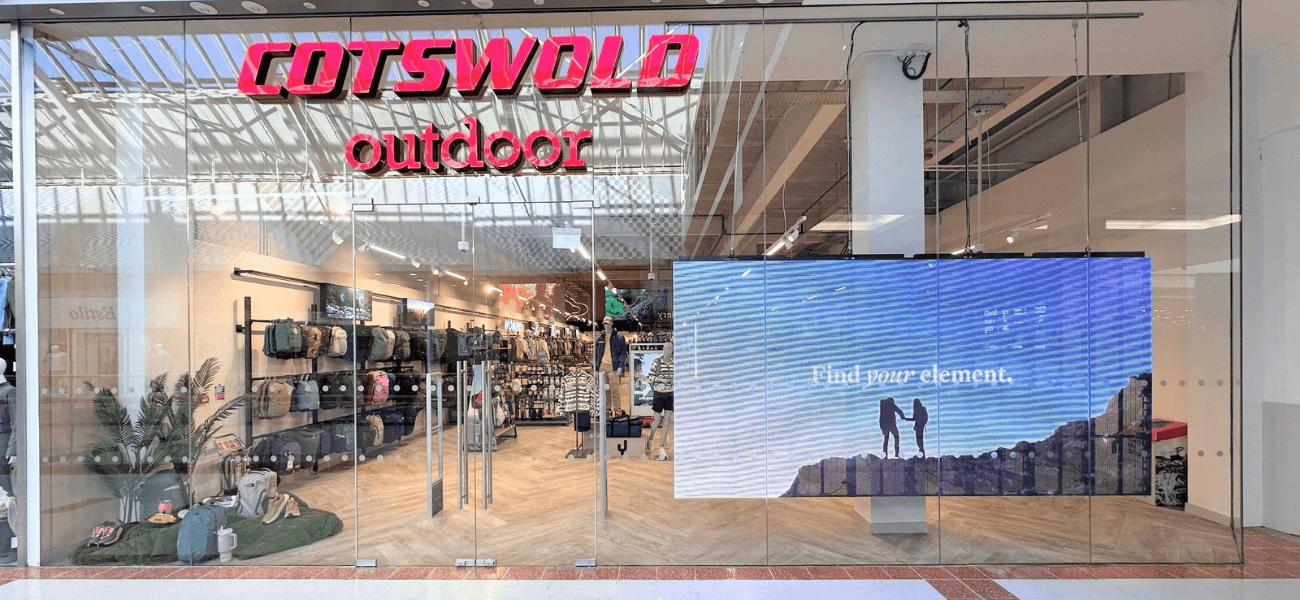
Exterior view of a Cotswold Outdoor store in a shopping centre, featuring a large digital display in the storefront showing an outdoor campaign.

Collaboration delivers scalable display network infrastructure, creating new omnichannel opportunities for advertisers and driving measurable results

MONTREAL – (October 6, 2026) – Retail media technology provider Broadsign and in-store media integrator IUF announced a collaboration with UK retailer, Cotswold Outdoor Group, to expand its retail media network (RMN) with a new scalable in-store advertising infrastructure. The upgrade provides a unified workflow that streamlines media planning, management, and measurement in-store and across onsite and offsite channels. It enables Cotswold’s brand partners to seamlessly execute omnichannel ad campaigns that engage shoppers at the point of purchase and beyond.

Broadsign, Cotswold Outdoor Group, and IUF designed the network with long-term growth in mind. It presently includes 149 till, shelf, totem, large format, and front-of-store displays across 23 stores, which are powered by the Broadsign Platform (specifically the Broadsign CMS and Ad Server) and support a range of media. 

The Broadsign Platform is helping to streamline operations and centralize content management and network health monitoring. The technology is also advancing screen monetization opportunities by scheduling ads, automating yield, and balancing complex campaign rules to help Cotswold Outdoor Group capture optimal revenue. With IUF’s ongoing deployment and support, the infrastructure allows the retailer to manage and scale in-store media operations efficiently while maintaining a reliable shopper and advertiser experience.

Through Broadsign’s omnichannel integration with Zitcha, Cotswold Outdoor Group’s retail media platform, brand partners, and agencies can easily extend omnichannel strategies into the physical store environment. The network is already delivering measurable results for participating brands, like HOKA, ASICS, and Nike. Most recently, a targeted HOKA campaign combining onsite and in-store media placements delivered a 13 percent lift in units sold per store, demonstrating the value of reaching shoppers at multiple touchpoints on the path to purchase. 

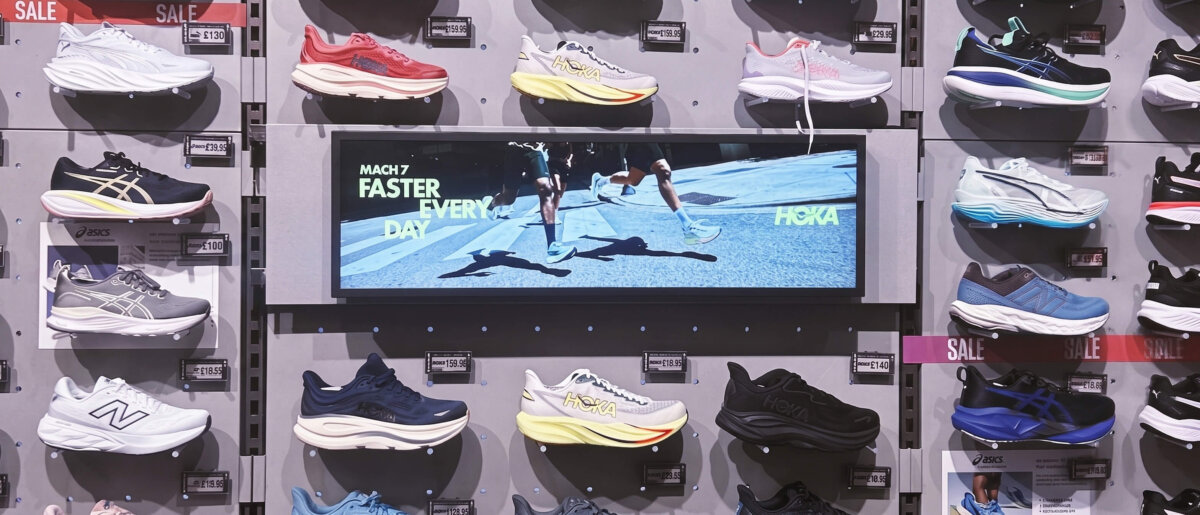
In-store shoe display featuring running footwear from HOKA, ASICS, New Balance and other brands, with a digital screen showing a HOKA advertising campaign.

“At Cotswold Outdoor Group, we’re passionate about helping people get closer to the outdoors — and that starts with creating inspiring moments. Our brand partners are a big part of that journey, and this collaboration with Broadsign and IUF offers a powerful new way to connect with our customers in-store, alongside our onsite and offsite media channels,” explained Mary Antieul, Head of Commercial, Cotswold Outdoor Group. “It means we can bring the right messages to shoppers at the right moment, with less friction for brands and a more connected experience for customers. The early results have been really encouraging, and we’re excited to build on that momentum as we expand the network and explore future programmatic opportunities.”

“Retail media is evolving fast, and partnering with IUF, we’ve delivered an in-store media infrastructure for Cotswold that can scale rapidly. Together, we’ve designed a network that makes it easy for its team to add, manage, control, and monetize new screens and integrate programmatic trading capabilities down the line,” explained Frank Vallenga, Vice President, Platform Sales, EMEA and SEA, Broadsign. “By leveraging our integration with Zitcha, Cotswold has been able to connect audiences across their various retail media channels, which is a challenge many retailers have yet to solve.” 

“This project went from tender to a live network generating revenue within twelve weeks which demonstrates the expertise of all of the technical partners involved,” said Josh Bunce, CEO, IUF.  “Together we were able to deliver a cohesive customer journey so that Cotswold Outdoor Group can maximize its in-store retail proposition today but also ensure that it can scale easily into the future. The in-store channel is proving to be a competitive differentiator when advertisers start mapping out budgets with brands already seeing impressive results from the in-store activations.”

About Broadsign

Broadsign develops the leading global platform for managing and monetizing out-of-home (OOH) media. The company, which also operates Place Exchange by Broadsign, the largest independent SSP for Digital OOH, empowers media owners, media buyers, and retailers to harness the power and reach of out-of-home to connect with audiences in ways unlike any other advertising channel. More than 2.8 million static and digital signs along roadways and in airports, shopping malls, grocery and convenience stores, health clinics, transit systems, and more run on Broadsign.

About IUF 

Making spaces perform, IUF is a leading technology solutions partner that delivers seamless, future-ready digital solutions across retail, stadiums, transport, DOOH, live events, attractions, workplaces and more. IUF designs, delivers and manages end-to-end digital signage, experiential and large-scale LED, transforming physical environments into intelligent, revenue-driving destinations. Founded in 2008 in Bristol UK, IUF is now active in over 30 countries. 

Product News | October 11, 2021

A conversation with JB Hi-Fi: Why the future of in-store retail media is hyperphysical

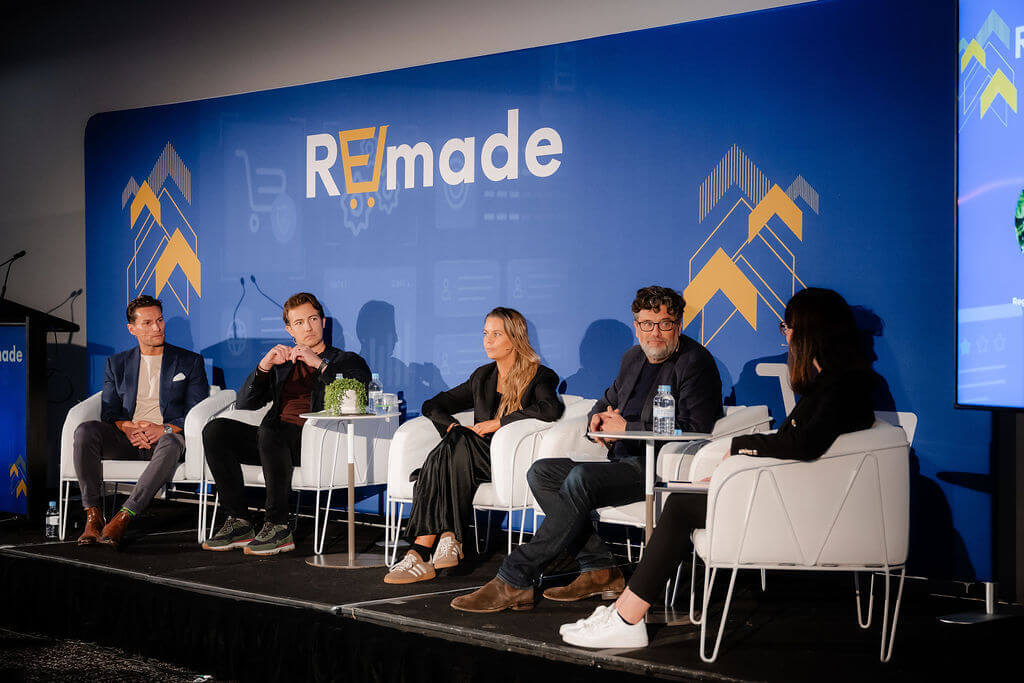
Panel discussion at Mumbrella REmade 2026, with five speakers seated on stage in front of a blue REmade backdrop.

In-store retail media is moving beyond screens.

At Mumbrella’s REmade event in Australia this month, Broadsign joined JB Hi-Fi, a leading Australian consumer electronics retailer, Retail Media Works, a retail media consultancy, and Criteo, a global commerce media company, on stage to unpack what it takes to build a retail media network that connects the physical store with the wider shopper journey.

With more than 200 stores forming its retail media network, JB Hi-Fi is taking a distinctly “hyperphysical” approach, exploring how its stores can create value for shoppers, suppliers and advertisers while staying true to the experience that makes the retailer unique.

The conversation offered a look at where in-store retail media is heading, and more importantly, what retailers need to consider as they build and grow their networks.

Start with the shopper

For JB Hi-Fi, retail media starts with the store itself. Scott Browning, General Manager, Strategy & Insights at JB Hi-Fi, spoke about the role the physical store has always played in the brand and the importance of keeping the customer experience at the centre of its retail media strategy.

“The store has always been the face of the brand. The website is actually the hidden face of the brand because you actually don’t see it in the real world until you arrive.”

That perspective is central to how JB Hi-Fi approaches retail media. The opportunity isn’t simply to add advertising to an existing retail environment. It is to understand how media can work within that environment in a way that feels natural to the shopper and stays true to the brand. 

As Scott put it: “The way in which we position our brand, the way in which JB Hi-Fi is famous for what it does, we have to make sure that authenticity still comes through.”

That means thinking about the store as more than a collection of screens. It is a physical environment with its own customer journey, context and moments where media can add value. For JB Hi-Fi, retail media needs to build on that experience, not compete with it.

The screen is only the starting point

One of the key themes from the discussion was that creating an in-store media network requires more than installing digital screens. As Ben Allman, VP Platform Sales at Broadsign, explained, the physical screen itself doesn’t necessarily need to change. What changes is what happens behind it.

For a retailer operating hundreds of stores, that means having the infrastructure to manage inventory, campaigns, priorities and reporting across the network, while also being able to tailor content and campaigns to different locations and audiences. All while supporting the day-to-day needs of the retail business.

For JB Hi-Fi, the Broadsign Platform provides the technology to manage its in-store media environment across more than 200 stores. This allows the retailer to build on its existing digital footprint and bring those screens into a broader retail media network, rather than treating retail media as a completely separate business.

Measurement is key to making in-store a media channel

Another major theme of the conversation was measurement. As in-store media continues to grow, retailers need to give advertisers greater visibility into what they’re buying and how their campaigns deliver. That means bringing more accountability and measurability that advertisers expect from other media channels into the physical store.

The panel discussed the opportunity to make the store increasingly behave like a digital environment from a measurement perspective, while recognizing that measuring physical environments comes with its own considerations.

For JB Hi-Fi, this is part of building a network that can offer meaningful value to suppliers and advertisers while creating a better understanding of how media performs within the shopping environment.

Retail media goes beyond digital screens

The conversation also expanded beyond digital signage. Static placements, physical store assets, sponsored search, online channels and off-site media can all play a role in the broader retail media ecosystem.

That creates an important opportunity for retailers: rather than defining their media network around a particular format, they can think about how different touchpoints work together across the shopper journey.

For JB Hi-Fi, its physical footprint is a significant part of that opportunity. The store can work alongside digital channels to create a more connected experience for shoppers and more opportunities for brands to engage them.

Build, test and learn

Perhaps one of the most practical takeaways from the discussion was that retail media networks don’t need to be built perfectly from day one.

The panel spoke about the importance of testing, learning what works in the physical environment and evolving the offering based on shopper and advertiser needs. That mindset is particularly important as retailers continue to establish what in-store retail media looks like within their own businesses. Every store environment is different, and the most effective approach needs to reflect the retailer, its shoppers and its commercial model.

JB Hi-Fi’s approach is a strong example of this in action: taking an established physical network and building the media capabilities around it, while continuing to learn and evolve.

Looking ahead to the next phase of in-store retail media

The conversation at REmade made one thing clear: the future of retail media isn’t about choosing between physical and digital. It’s about connecting the two.

JB Hi-Fi is showing what that can look like in practice by bringing its physical stores into a broader retail media strategy, while keeping the shopper experience at the centre.

For Broadsign, we’re proud to support that journey by providing the technology infrastructure behind JB Hi-Fi’s in-store network and helping bring its vision for retail media to life across its stores.

Interested in turning your in-store environment into a measurable media channel? Connect with our team to see how Broadsign helps retailers grow their in-store media networks while keeping the shopper experience front and centre.