How Pepsi Max used programmatic digital out-of-home to retarget fans
the challenge
Tesla and Edison, Sherlock and Moriarty, Star Wars and Star Trek; the world is packed with epic rivalries, but perhaps none as iconic as Pepsi and a certain red rival. Wanting to settle things once and for all, Pepsi MAX needed a marketing campaign that truly set them apart.
In a two-step campaign, Pepsi MAX started by setting up stations across the Netherlands where people were encouraged to take a blind taste test comparing two beverages. This classic and immersive campaign was a hit and great for brand awareness. Yet Pepsi MAX wanted to extend their reach and push their creativity a step further.
the solution
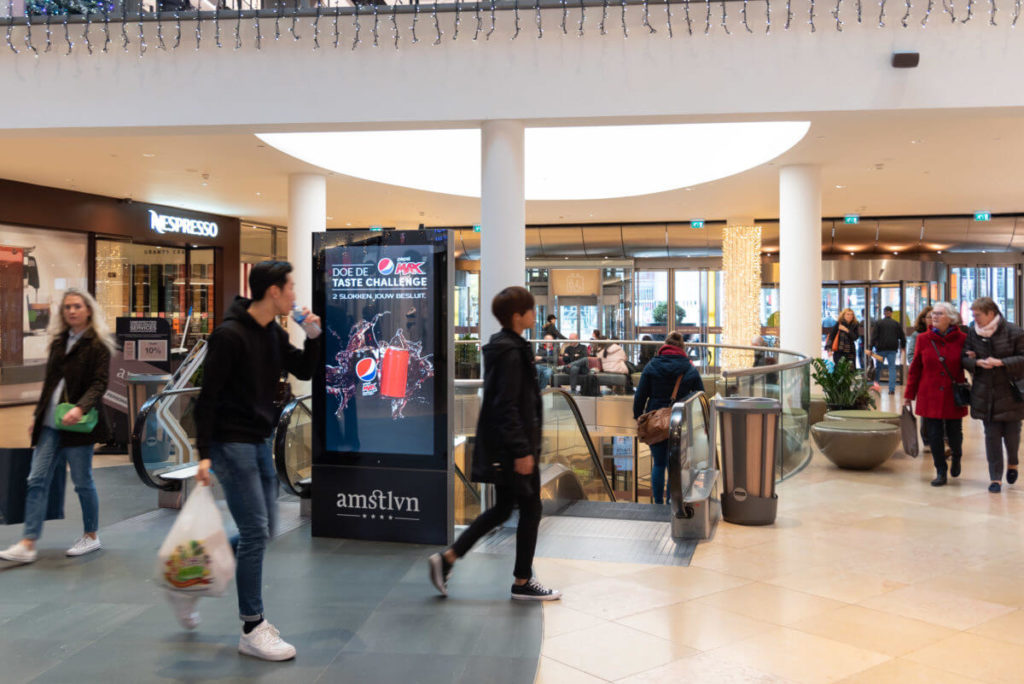
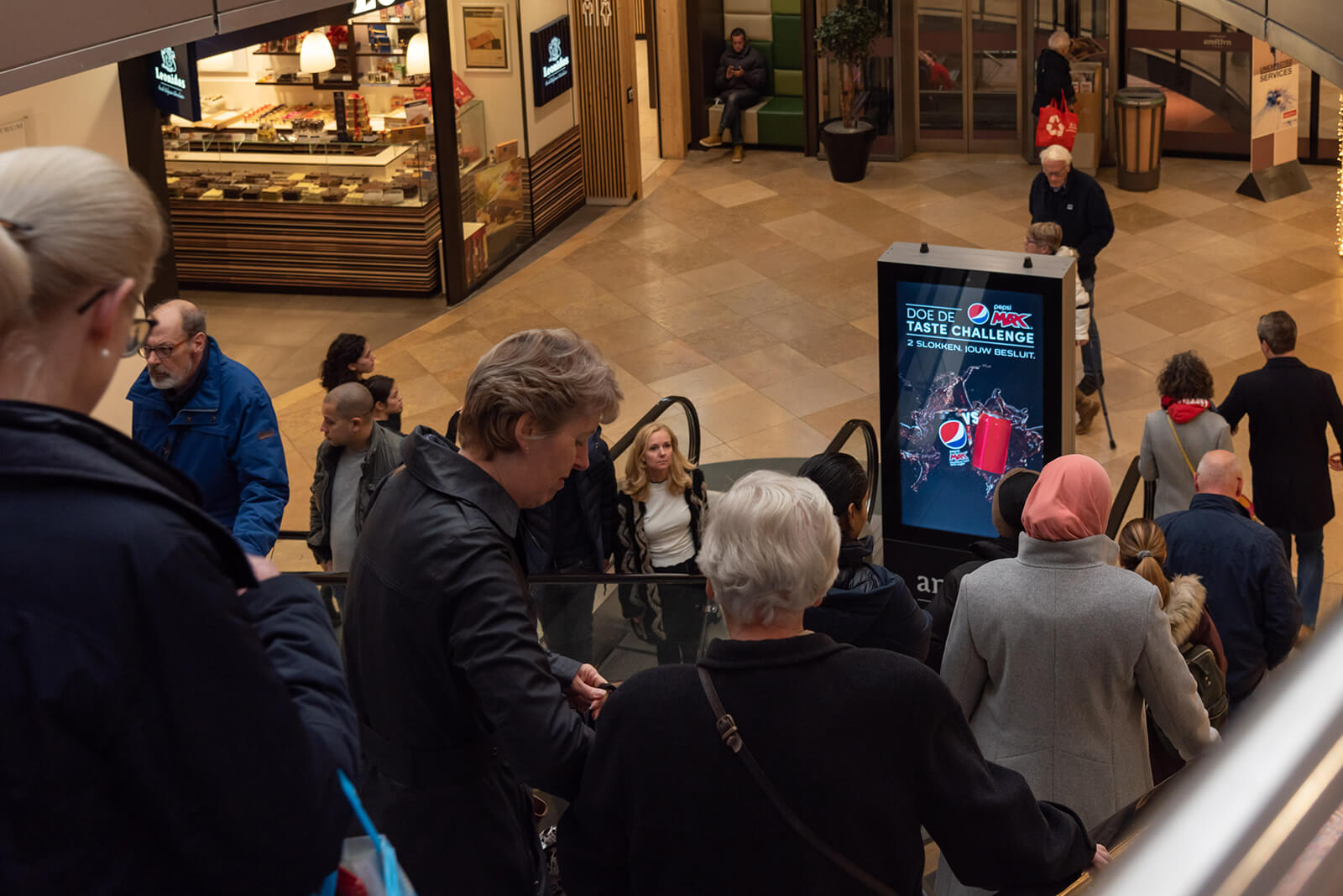
Using their innovation budget and working with international marketing agency Omnicom, Pepsi devised a plan to retarget taste testers using digital out-of-home. The campaign ran on Exterion Media screens in six malls in Amsterdam, Utrecht, the Hague and Rotterdam. These locations were specifically selected because the malls had a supermarket in them, increasing the relevance of the ad and the likelihood of triggering a purchase.
However, rather than booking every mall screen at all times, the brand tapped into Broadsign DSP partner, Platform 161, for a hyper-targeted and contextual programmatic digital out-of-home approach. When people participated in the tasting challenge, a unique ID was logged from several apps using Resono beacon technology. The digital out-of-home campaign was then triggered instantly when one of these taste testers walked into the mall.
As this took place programmatically, Pepsi MAX only paid for the ad placement when the creative played, making it a targeted and extremely efficient media buy. The moment the ad was triggered, the entire mall network displayed a Pepsi MAX ad for an impactful takeover view.
“The flexibility provided by buying digital out-of-home programmatically enabled us to look at retargeting in a whole new way. The screens were a fresh and creative addition to Pepsi MAX’s campaign.” – Danique Steur, senior programmatic specialist, Omnicom
the results
The result was a highly effective campaign that caught viewers’ attention.
“With programmatic digital out-of-home, we were able to be extremely relevant to our audience without having to spend huge amounts. We’re definitely going to continue to innovate with this type of campaign going forward.” – Michiel Otten, brand manager beverages, PepsiCo.
While mass awareness digital out-of-home campaigns are still an important part of a brand’s marketing strategy, data-driven programmatic campaigns are becoming more frequent, as buyers look to find more efficient and creative ways to share their brand stories.
Product News | October 11, 2021
From brief to activation: Inside the first fully agentic AI-powered OOH campaign
Out-of-home advertising has long been one of the strongest value propositions in the media mix. While programmatic has completely transformed how digital OOH inventory is bought and sold — bringing it on par with other digital channels — direct sales of OOH inventory still require significant manual effort. From developing media plans and evaluating inventory options to negotiating pricing, trafficking creatives, executing buys, and managing reporting and invoicing, the process can be very time-consuming, especially when campaigns involve multiple venue categories, inventory types, and publishers across the highly fragmented OOH landscape.
But that process just got a lot faster.
Broadsign’s sell-side AI agent and digital marketing agency Draft Digital’s buy-side agent recently enabled the first end-to-end OOH media buy, transforming what would otherwise have been a complex operational effort into a seamless, rapid, and efficient experience. The campaign was for Lot of Happiness and ran on Global Netherlands premium inventory. It marked the first time an OOH media buy has been powered by agentic AI from beginning to end, using the brand’s campaign goals to inform audience and venue targeting, media selection, campaign setup, and execution. Together, the buy-side and sell-side agents coordinated complex tasks across parties, with human oversight and guardrails in place to ensure alignment with campaign objectives and compliance with local regulations and restrictions.
Read on to learn more about how the process unfolded — and what it means for the future of OOH.
Meet the campaign that made history
Lot of Happiness is a purpose-driven lottery based in the Netherlands with a straightforward premise: every ticket purchase benefits a cause chosen by the buyer, with roughly 50% of every sale going directly to charities like Make-A-Wish Nederland and the ALS Foundation Netherlands. As a growing organization without the deep media budgets of commercial lottery players, Lot of Happiness has built its growth strategy around operational creativity and innovation rather than outspending competitors. That orientation made them a natural early mover on this kind of experiment.
The campaign ran with a “Win-Win” message — rooted in the idea that every ticket purchase supports a charitable cause while giving participants the chance to win prizes. — delivering more than 830,000 impressions across screens inside supermarkets, shopping malls, gas stations, and on city streets throughout the Netherlands.
But as compelling as their social mission is, it’s not the creative that made this execution notable. It’s how the buy happened.
What typically required days to weeks of email-based coordination moved from brief to booked plan — with human approval — in less than 15 minutes. To understand how this came about, it’s worth taking a closer look at the agentic solutions involved and what they did.
A media plan built in minutes
On our end, we built a new sell-side AI agent layer on top of the existing infrastructure for Broadsign In-Advance — an automated booking capability that allows advertisers to reserve guaranteed DOOH ad space months in advance. The sell-side agent acted as an automated query and negotiation layer: when Draft Digital submitted the Lot of Happiness campaign brief through their buy-side agent, our agent returned available inventory from our In-Advance-enabled ecosystem of media owners that matched the campaign’s targeting criteria.
On the buy side, Draft Digital used Claude.ai to build the campaign brief and drive the planning process, translating campaign goals into targeting criteria, querying Broadsign’s available inventory, and generating a media plan for the buyer to review and approve.
Once the buyer reviewed and approved the plan, the booking was activated through the Broadsign SSP and delivered programmatically on Global Netherlands’ screens.
The Ad Context Protocol (AdCP) — an emerging open standard for enabling AI agents to communicate across the advertising supply chain — served as the connective tissue, providing a standardized way for the two agents to communicate across organizational boundaries.
Human review remained part of the process at key stages. On the agency side, that review followed what Jasmijn Kruis, Digital Marketing Consultant at Draft Digital, calls the “four-eye principle”: the buyer checks the plan, and then a second person checks the buyer’s work. “You don’t want an extra zero showing up where it’s not supposed to,” she explains. Creative was submitted through the standard approval workflow, ensuring compliance requirements remained fully intact throughout.
Crucially, agentic AI in media buying isn’t about removing human judgment; it’s about drastically reducing the manual labour surrounding it.
Why OOH is a natural fit for agentic AI
The case for agentic AI in OOH is, in many ways, even stronger than in other channels. As a context-driven medium, OOH is rich in data that goes beyond the audience, the creative, and the screen. Success depends on understanding how a brand’s message connects to a particular audience in a particular place at a particular time. With hundreds of thousands of campaigns to learn from, AI can help surface those patterns and apply them at scale.
“Overlaying AI atop our global static and digital OOH supply, together with advanced data and execution capabilities — such as screen-level audience indexes, dynamic creative, and guaranteed in-advance buying — opens the door to new possibilities for OOH planning and activation,” explains Broadsign CTO Bryan Mongeau. “This innovative collaboration is only the beginning.”
For Global Netherlands, what stood out about the collaboration was the sum of its parts: no single party could have done this alone. “By combining Broadsign’s infrastructure with buy-side intelligence, Draft Digital’s ambition, and our diverse digital out-of-home offering, we’ve shown how AI-driven planning can enhance the speed, precision, and flexibility of direct buys, mirroring the benefits of programmatic OOH,” says Mink Zwolsman, Business Development Director at Global Netherlands. “For us, this is a meaningful step toward making our inventory even more accessible to buyers who want seamless, omnichannel campaigns.”
The Lot of Happiness buy illustrates what that looks like in practice. Because the campaign ran alongside the client’s first television buy, Draft Digital designed the OOH targeting to synchronize with TV viewership patterns and reinforce the messaging — placing ads in areas with high concentrations of TV-viewing audiences, timed to appear before broadcast slots so viewers would see the OOH ads before seeing them on the living room screen. “We tested different types of pacing to see how the system would react,” explains Kruis, “and because we were also running on TV, we wanted the OOH ads to appear in areas with high concentrations of TV-watching audiences — at times before they would watch — so there would be a connection.”
That kind of multi-variable precision — layering viewership patterns, proximity patterns, and time-based targeting across an entire country — is exactly the kind of planning at which agentic AI excels. What would take a human planner days of data aggregation and analysis was built into the brief and surfaced instantaneously.
Getting ahead of the shift
This campaign was a first, but it won’t be the last. Whether you’re on the buy side or the sell side, agentic AI is going to transform OOH — here’s what to expect and how to embrace that shift.
If you’re an agency or media buyer
Follow the audience. OOH is traditionally bought by selecting locations, but locations are really just proxies for the audiences that advertisers want to reach. AI-driven plans can select the inventory that indexes highest against a target audience, choosing from all available options — including niche placements and underutilized formats that humans may miss when trying to limit the buy to a few networks to reduce complexity. AI can handle the complexity and surface the best options to reach any desired audience.
Embrace contextual targeting. Whether it’s a billboard during the morning commute, a screen at the grocery checkout, an office building elevator screen during lunchtime, or a TV behind the bar on gameday, the power of OOH lies in context: delivering a message in a particular place at a particular time. Connecting audiences to locations and times can be a labour-intensive process, but with the right data inputs, AI can make those connections quickly and help ensure the right context for every impression.
Elevate from task execution to strategic orchestration. AI agents can absorb the burden of low-level tasks, freeing up humans to focus on the end-to-end process — ensuring brief quality, defining campaign objectives, directing creative, designing learning agendas, and gleaning campaign insights.
If you’re a media owner or publisher
Expect a broader pool of buyers. AI will expose your inventory to a larger pool of demand, creating opportunities for more revenue — but it also means publishers will need to meet that demand with intelligent inventory allocation and yield optimization, as well as capabilities like competitive separation and timely advertiser and creative approvals. AI tools can help with all of the above.
Improve discoverability. Buy-side agents evaluate inventory against a wide variety of criteria — including location, screen characteristics, supported ad formats, venue type, and screen-level audience indexing. The more comprehensive and accurate your screen-level data, the more likely your inventory is to be surfaced as a potential match when those criteria align.
Maintain human oversight and control. AI will make buying and selling media smarter, faster, and more effective, but publishers remain in control. Identify the key decision points in your sales engine — pricing, approvals, restrictions — and define the processes, guardrails, monitoring, and reporting that ensure everything operates within your business parameters.
Whether you’re on the buy side or the sell side, success will depend on choosing the right partners who understand your goals and can help design and implement solutions that fit your needs.
What comes next
Broadsign powers close to three million static and digital signs globally — including the largest single source of programmatically enabled OOH supply in the world. While this pilot focused on Broadsign In-Advance-enabled inventory, the next phase will extend to all programmatically enabled screens. Our mission is to bring innovative technology to media owners to help them power their business — and agentic AI is the next chapter in that story.
Global OOH ad spend reached $37.18 billion in 2025 and is expected to reach $56.1 billion by 2030, driven in large part by digitization, programmatic maturation, and a growing appetite for real-world presence amid continued screen fatigue. As buying workflows continue to evolve, AI will give OOH media owners the opportunity to ensure their inventory is positioned for the next evolution of media planning and activation.
The question is no longer whether agentic workflows will play a role in media buying, but how quickly the industry will adapt to capitalize on the opportunity. Here at Broadsign, we’re already working with OOH media owners to help them prepare for what comes next.
Media owners interested in making their inventory discoverable to agentic buyers can reach out to Broadsign to explore what’s possible.
Product News | October 11, 2021
DOOH specs guide: What media buyers and planners need to know before launching a campaign
Digital out-of-home (DOOH) specs follow different rules from other digital formats — and buyers who don’t know where those differences lie tend to find out the hard way, through rejected files, stalled approvals, and delayed campaign delivery.
Whether you’re setting up a digital OOH campaign for the first time or a seasoned pro troubleshooting an approval issue, this guide covers the key creative specs you need to know to create a DOOH campaign that gets results: common display and video dimensions, accepted file types and technical requirements, and other digital OOH specs best practices and considerations before trafficking.
Working closely with our global network of media owners and publisher partners, we’ve gained first-hand insight into what they actually require from incoming DOOH creative — and the specs and requirements in this guide reflect those real-world standards. Consider this your cheat sheet for getting your campaign approved for launch the first time.
Why DOOH specs differ from other digital ad formats
Digital OOH operates within a closed-screen ecosystem, where media owners approve every creative before it runs on their screens. As a result, DOOH has technical requirements that don’t exist in web-based environments.
Unlike web or social advertising, DOOH doesn’t rely on open exchanges where compliant creatives run automatically without publisher review. Even when digital OOH campaigns are bought programmatically through oRTB (Open Real-Time Bidding), every creative still requires publisher approval. That process ultimately dictates accepted file types, restricted tags, and how creative rotation is managed.
The practical implication: getting DOOH specs wrong isn’t just a technical inconvenience. It triggers a revision-and-resubmission loop that stalls the approval process and delays campaign delivery. Understanding why each requirement exists makes it easier to build a compliant creative workflow from the start, rather than reverse-engineering the rules after something breaks.
Common DOOH creative dimensions and screen formats
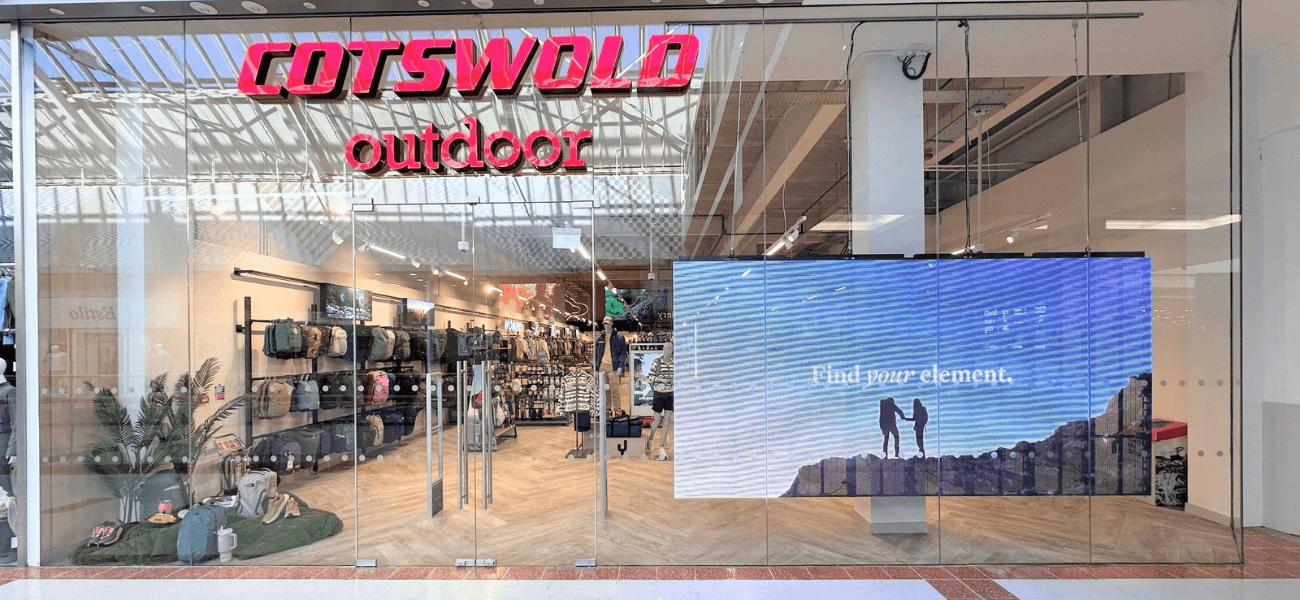
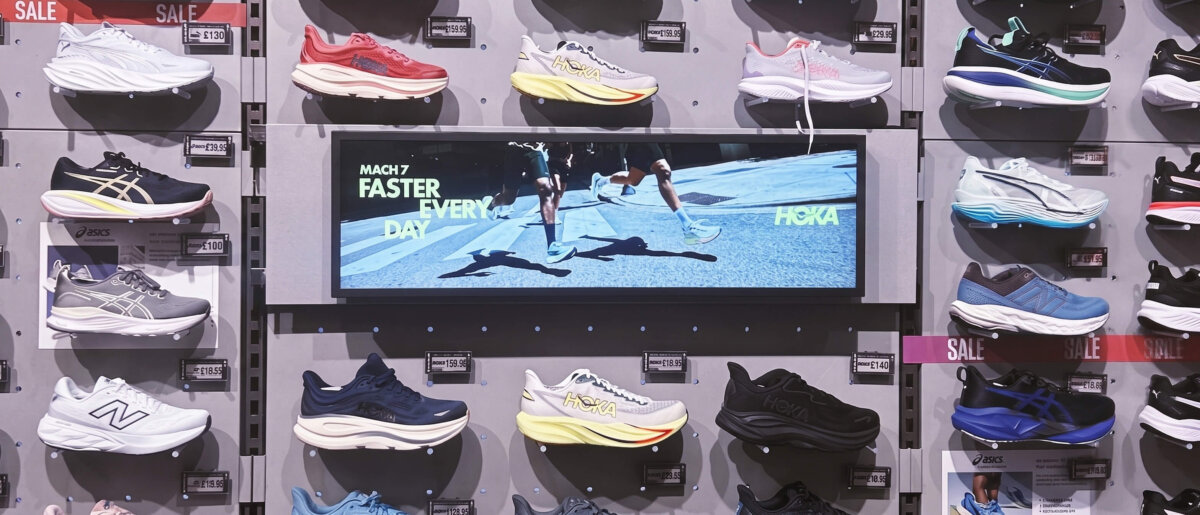
DOOH inventory spans a wide range of placements and screen types — from large-format digital billboards to transit venue displays to in-store retail screens — and each environment comes with its own standard dimensions. Across digital OOH inventory, landscape (1920×1080 px) and portrait (1080×1920 px) are among the most widely supported formats. Building creative for both orientations is recommended wherever possible, since limiting to one orientation limits access to available inventory.
The key creative specs below represent some of the most frequently used creative sizes. While there may be notable exceptions for certain inventory types, these formats provide broad compatibility across venue categories, including Entertainment, Health and Beauty, Movie Theatres, Office Buildings, Point of Care, Residential, Retail, Transit, Urban Panels, Billboards, Taxi Tops, and more.
Use these dimensions as a practical baseline. They cover some of the most common aspect ratios and give your team a clear starting point for placement-specific adjustments.
Static (display) creative: Common formats
Format
Aspect ratio
Dimensions
Common venue categories
Landscape (widescreen)
16:9
1920 × 1080 px
Entertainment, Health & Beauty, Movie Theatres, Office Buildings, Point of Care, Residential, Retail, Transit, Urban Panels, and more
Portrait
9:16
1080 × 1920 px
Entertainment, Health & Beauty, Movie Theatres, Office Buildings, Point of Care, Residential, Retail, Transit, Urban Panels, and more
Horizontal banner
7:2 or 21:10
1400 × 400 px or 840 × 400 px
Billboards, Taxi Tops, Transit
Video creative: Common formats
Format
Aspect ratio
Dimensions
Common venue categories
Landscape (widescreen)
16:9
1920 × 1080 px
Entertainment, Health & Beauty, Movie Theatres, Office Buildings, Point of Care, Residential, Retail, Transit, Urban Panels, and more
Portrait
9:16
1080 × 1920 px
Entertainment, Health & Beauty, Movie Theatres, Office Buildings, Point of Care, Residential, Retail, Transit, Urban Panels, and more
Horizontal frame
4:3
1280 × 960 px
Entertainment, Point of Care, Retail, Transit, and more
Build with the final screen placement in mind. Creative that isn’t sized to the screen’s native resolution may appear cropped, letterboxed, or distorted — all of which can trigger rejection during the publisher approval process.
Creative and inventory exceptions
If your campaign includes any of the following, confirm whether additional requirements apply before building your creative:
Spectaculars: Specs vary by screen
Airport media: Select airport screens require non-standard creative sizes. Video durations are also typically 10 seconds rather than 15 seconds
Sensitive content categories: Creatives featuring alcohol, cannabis, or political messaging may be subject to additional restrictions that vary by market, venue type, and media owner
Digital OOH media specs: File types and other technical requirements
DOOH supports three creative types — static display (JPG/PNG), video (MP4), and dynamic/DCO creative (HTML5, where publisher support is available).
Accepted creative file formats
Static Display: Accepted formats include JPG and PNG. Technical requirements include 72 ppi standard resolution and RGB colour mode
Video: Accepted format includes MP4. Technical requirements include an even-numbered pixel resolution, a bit rate below 5,000 kbps, and a standard frame rate of 30 fps
Dynamic/DCO: Accepted format includes HTML5. Technical requirements vary by publisher and should be confirmed before trafficking. Additional pre-approval from the media owner is typically required
Build all files in RGB and keep file sizes within the network’s recommended limits. Oversized files are a common cause of playback issues on bandwidth-limited screens — and unlike web ads, DOOH playback failures are visible to everyone nearby. File size requirements vary by publisher, so confirm specifications with your representative.
HTML5 and dynamic creative (DCO)
HTML5 is the standard format for dynamic DOOH creative — enabling real-time data feeds, weather-triggered messaging, countdown timers, and dynamic creative optimization (DCO). If the goal is creative that updates based on external conditions rather than looping a fixed file, HTML5 is how that’s built and trafficked in DOOH.
Ready to launch a high-impact, creative out-of-home campaign that delivers results? Browse our inventory catalog to see the complete network of high-impact digital screens available.