Product News | October 11, 2021

Why in-store signage advertising belongs in every brand’s retail media strategy
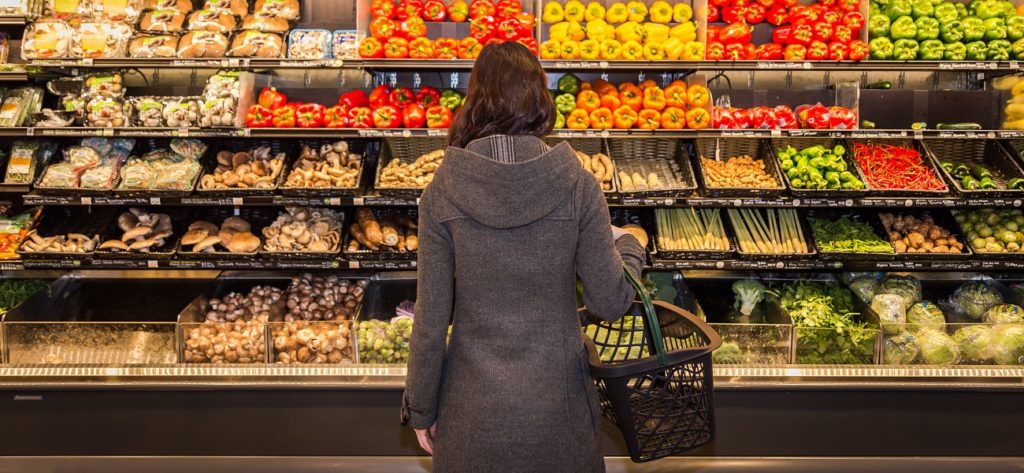
Raise your hand if you’ve ever set foot in a grocery store and picked up a few extras that weren’t on your grocery list. Maybe you were tempted by a tasty-looking bag of chips at checkout or remembered to grab the dish soap because some in-store signage reminded you it was on sale. Impulse purchases happen all the time, even when we’ve got a plan when heading into a store. After all, we’re much more likely to snap up a few add-ons on a whim if we’re already shopping. The temptation can be harder to resist.

Consumer packaged goods brands know that capitalizing on these moments of impulse are great opportunities to give sales a boost, not to mention stay top of mind with customers while they’re out and about. But the world is oversaturated with messaging, so how do you stand out against the competition and create a memorable experience that stays with your customer? There are many ways to go about this, but one of the most pivotal steps you can take is by including in-store signage messaging as part of your omni-channel strategy, using helpful, handy in-store displays to drive sales. Delivering unique, compelling ads to consumers while they’re on site and ready to spend means you get to be a part of the consumer experience every step of the way.

Reaching a receptive audience inside the store

By and large, when people are out shopping, they’re focused on the task at hand: getting what they need, and preferably efficiently. It’s part of why shoppers tend not to look at their phones much in the store unless for a price comparison or to check the shopping list. The action unfolds in real-time, and that demands a level of presence that makes checking your phone inconvenient. For brands, this makes the brick and mortar retail environment an exciting opportunity to reach customers who are undistracted.
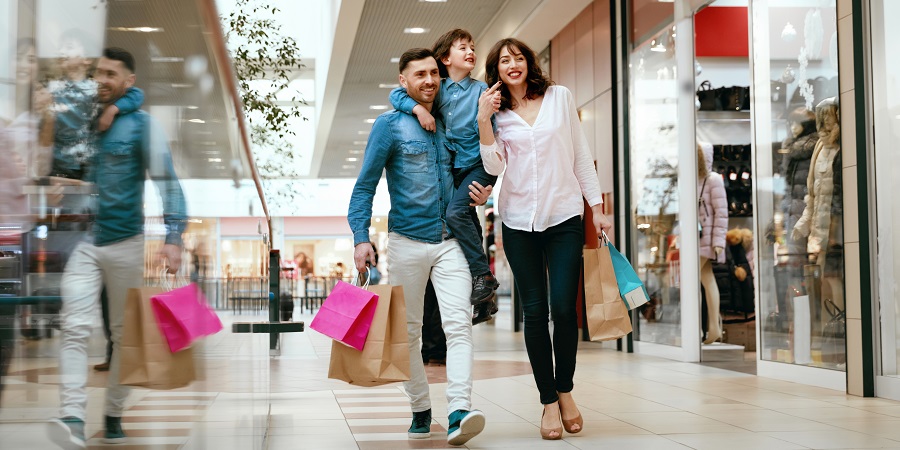
Brick and mortar retail offers a great opportunity to reach a receptive audience with ads

Changes to buying habits have demonstrated that now, more than ever, a little extra push is sometimes needed to complete the sale. Several factors brought on by the pandemic have led to major changes in the ways people shop—mainly where they’re shopping.

For instance, in our pre-pandemic lives, waltzing into a grocery store to grab what we needed was the standard. But that changed with the introduction of coronavirus rules around hygiene, capacity limits, and physical distancing requirements. Suddenly, shopping for groceries was a more stressful experience, one that involved a greater time commitment and even a wait in line before getting into the store.

While this was happening, shoppers sought out more convenient options, with many turning to the internet. Instead of blocking off an excessive amount of time to go get the groceries, people making use of e-commerce didn’t have to leave home and, often, could take advantage of same-day delivery to boot.

All this means that in order to entice people to go back to shopping in stores, it’s important to try and deliver a more convenient and information-rich experience, similar to what is found online. And while in-store signage and point-of-purchase displays have always been used to attract and target audiences shopping in-store, digital displays in particular offer new opportunities to brands looking to get their content in front of buyers at the right moment.
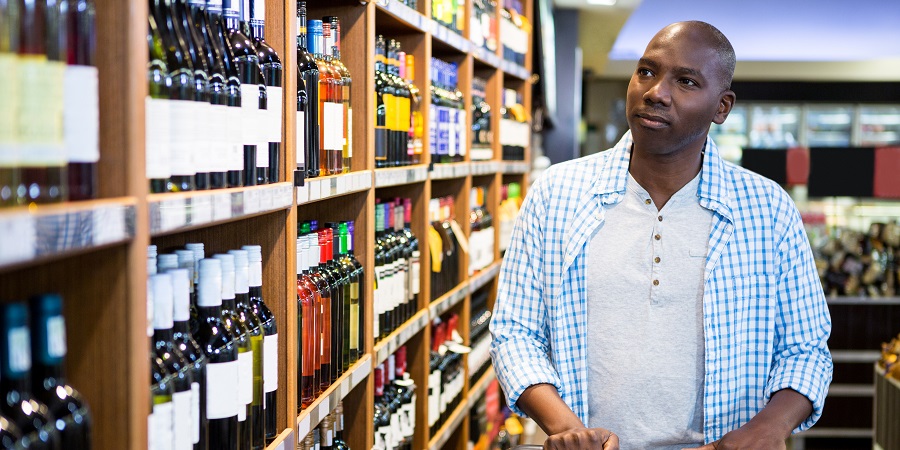
A more information-rich experience helps to drive in-store shopper satisfaction

In-store advertising and the death of the cookie

Another change to buying habits is coming thanks to restrictions on how advertisers can target their messaging in the online space. For privacy reasons, big tech companies and web browsers have begun to move away from the use of third-party cookies to collect consumer data. Some web browsers have already ceased gathering third-party data, and a full phase-out is expected to come into full effect by 2022. This will mean consumers will have to opt in if and when they want to share their data with brands. For marketers, media buyers, agencies, and brands, that means customer insights won’t be as easily available, and so creating hyper-targeted campaigns may become even more challenging.

But the absence of third-party data means now is the time for in-store advertising strategies to really shine. In-store advertising gives your brand the potential to reach consumers right when they are likeliest to spend. When partnered with other omnichannel marketing strategies like digital marketing or shelf placement, a compelling message delivered on in-store digital signage can deliver a big push to turn visitors into buyers.

Rethinking retail with omnichannel advertising

The pandemic’s impact on retail is no longer news—now, it’s time to analyze the ways that brands intend to incorporate the past couple of years of learnings into a new vision of what retail should be.

A key finding from a recent survey by Inmar Intelligence is that more retailers will be investing in on-site media offerings in the coming years. The main reasons? A desire to drive sales and diversify revenue. As brands start to develop their own digital messaging apparatus, this opens up a world of possibility.
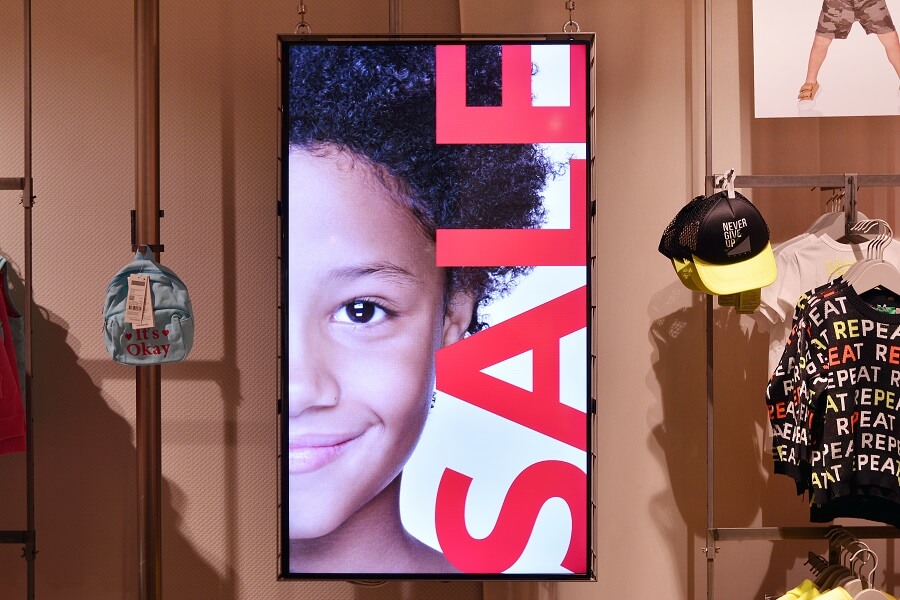
More retailers are creating opportunities to advertise in their brick and mortar locations

Say a customer was exposed to an ad prior to their arrival at a store. Through in-store signage, brands can build content that reinforces that message while the shopper is on premises. Digital displays will usually be installed at high-intent locations throughout a store, in order to optimize the effectiveness of the messaging.

By coordinating these in-store ads with ads deployed across online channels, it’s possible to create a unified message that drives improvement to both online and brick and mortar sales. It’s a chance to build stronger campaigns, in other words, by placing your brand in front of people in a high-value, high-trust environment.

Delivering contextual media with in-store displays

In-store signage has an advantage over other ad formats for its capacity to open the door for more contextual opportunities. What resonates most with CPG brands and their buyers is messaging that tells a story, creating a more favourable perception of your brand in the mind of consumers.

Launching an effective digital retail signage campaign directly in-store isn’t just a powerful way to reach customers when they’re in a buying mindset. It’s also a way to create a lasting moment that connects them to the brand. The right contextual storytelling has the power to make a lasting impression and positively influence buyer behaviour.

Customers are savvy, and by working in a contextual component to your advertising, you can help give them an experience that strikes a chord. Beyond that, contextual digitized in-store signage can work in concert with other marketing assets, such as in-store product shelf placement, flyer ads, coupons, or even digital ads, thus helping to create a more cohesive customer journey, moving from one message to the next depending on their location.
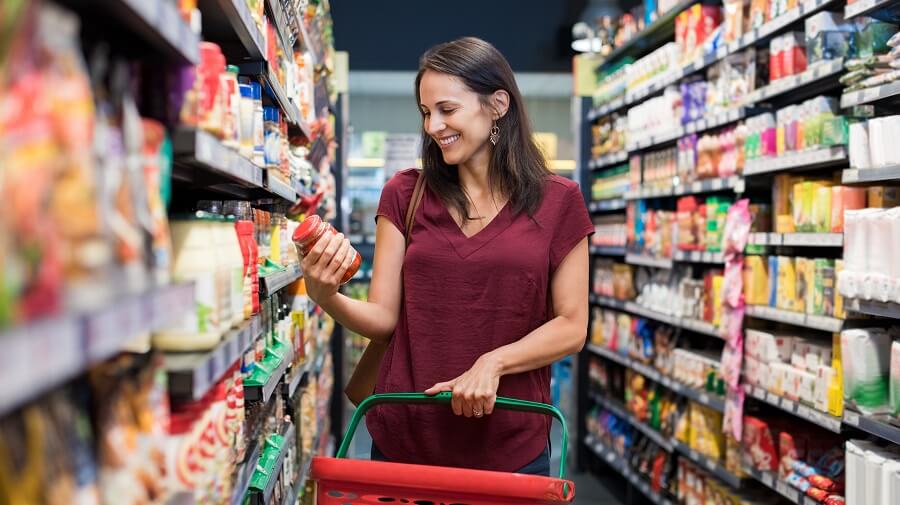
Digital in-store ads mesh well with shelf-placement and other retail marketing tactics

Digital signage advertising also gives brands the added opportunity to harness audience data for better relevance and more creativity. For example, demographic data can give you a better sense of who’s shopping and when. Messaging can then be adapted to suit, say, the stay-at-home parent crowd during the daytime, while catering ads during evenings and weekends to young professionals. Being able to track how these data change with the seasons, as holidays approach, and in response to current events can help you to flex your creative muscle and always keep your messaging up-to-date and relevant to different audiences at different times in a single location.

The power of dynamic content

While you’re at it, digital signage gives you the tools you need to take the storytelling aspect of your campaigns even further. Unlike other traditional ad formats, digital signage opens up the possibility to run dynamic content that takes the storytelling even further.

Through programmatic ad buying, the process of using contextual triggers like the weather, sports, or traffic can create a memorable moment in the eyes of your customers, thus influencing them to move forward with a purchasing decision. For example, a drop in temperatures is an opportune moment to market hot chocolate or soup, while running an ad before a big sports event might encourage you to offer a promo on chips and other gameday goodies. There’s really no limit to what can be accomplished with the dynamic capabilities offered by in-store signage.
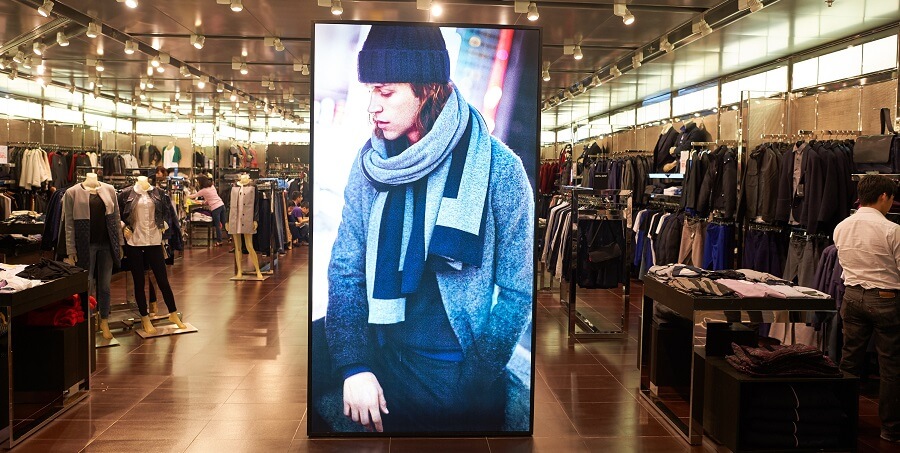
Dynamic content can allow brands to promote different offerings based on things like weather or current events

Comparing in-store signage media costs to other channels

One of the most concrete reasons why more brands are turning to in-store signage is that, unlike other ad formats, it can be a fairly marketing-budget-friendly solution. The CPM, or cost per thousand impressions, is fairly low in DOOH as compared with online channels, television, etc.

Given the high costs surrounding digital advertising, media buyers and agencies are thinking about ways to reallocate some of the marketing budgets to best reach out-of-home audiences. With a high-exposure medium such as in-store signage, an advertising campaign can reach a wide audience for less.

Quick recap: Why you should start in-store digital ad campaigns

Already, we’re starting to witness a change to retail, as stores try to get buyers back in their stores and shift away from competitors in e-commerce. In the coming months, we’re expecting to see CPGs continue to make these changes by investing in in-store content as a way to modernize the shopping experience and create a more enjoyable and tailored experience for shoppers.

By investing in digital in-store signage advertising:

  • You signal to consumers that your CPG business or media buys are adapting your omnichannel campaign strategy to suit the changes taking place in retail.
  • You’ll overcome some of the major obstacles faced by brick-and-mortar retail given the rise in popularity of e-commerce.
  • You can reach customers through an innovative and creative channel, one that can be tailored to suit the time of day and enhances a customer’s relationship to your brand through contextual storytelling.
  • You put your marketing dollars towards a more cost-effective solution than many other advertising channels.

The world is changing quickly, and those in the retail sector have seen the lasting impact of a changing world, even in just the last year. These changes are only going to continue, as brick-and-mortar shopping evolves to keep up the pace with the increasing convenience of online shopping. For this reason, meeting your consumers where they are by using an innovative solution like digital retail signage is a necessary component of adapting to the changing times in retail.

Including in-store signage messaging as a part of an omnichannel strategy is pivotal in driving revenue and taking steps towards building lasting and nurturing loyal relationships with consumers, as well as in ensuring your CPG business stays relevant in consumers’ minds.

Supercharge your next campaign with in-store digital advertising
Get started with Broadsign!

Product News | October 11, 2021

Broadsign and Mirakl Ads Announce Strategic Partnership to Unify Online and In-Store Retail Media

Cannes, France – June 24, 2026 — At the 73rd Cannes Lions International Festival of Creativity, Mirakl, the Operating System for Intelligent Commerce, and Broadsign, the leading global platform for managing and monetising out-of-home (OOH) media, today announced a strategic partnership that bridges the gap between digital retail media channels and in-store advertising. The collaboration will enable more retailers and brands to activate, manage, and measure campaigns across the entire shopper journey through a single platform.

As retail media continues to mature, advertisers are increasingly demanding omnichannel solutions that better reflect how consumers shop: researching online, then purchasing in-store. However, executing retail media campaigns across online, offline, and in-store channels today typically involves separate vendor management, fragmented planning processes, and siloed reporting. This partnership sets out to change that by integrating Mirakl Ads’ retail media solution for eCommerce and digital marketplaces with Broadsign’s in-store media platform.

For Mirakl’s Retail customers, leveraging the integration will ensure a unified buying experience for their advertisers: one campaign brief and one point of contact, covering both e-commerce placements and in-store digital screens. The partnership opens a new path to monetizing physical in-store assets alongside existing online inventory. It unlocks incremental revenue while giving advertisers omnichannel reach. 

As the two companies build the integration, retailer control will be central: Mirakl Ads will power the retail media network, while the Broadsign Platform manages the technical delivery of in-store content. Retailers retain full ownership of their data, shopper experience, inventory, and pricing decisions, while maintaining the flexibility to build on existing technology investments. Advertisers benefit from a consolidated view of campaign performance across online and in-store channels, so every dollar spent can be measured, compared, and optimized across the full shopper journey. 

“Retail media has evolved rapidly, but online, offline, and in-store are often still treated as separate channels, leading to missed opportunities and revenue,” said Mats Klevjer, Director of Partnerships for Retail Media, Broadsign. “Our work with Mirakl Ads on this integration breaks down those barriers, helping retailers give advertisers the ability to transact on in-store screens with the same ease and performance metrics they expect of digital campaigns.”

“Retailers are asking for solutions that maximize the value of every customer touchpoint, both digital and physical,” said Octavie Gosselin, Vice President of Mirakl Ads. “By partnering with Broadsign, we are setting out to build a truly unified omnichannel retail media platform. Brands will be able to benefit from a single campaign brief covering both their online and in-store presence, and the opportunity ahead, for retailers, advertisers, and the broader ecosystem, is significant.”

Both companies are actively bringing this omnichannel vision to life, with phased capabilities expected to expand. The integration is anticipated to launch in Q3, with beta testing already underway. 

About Broadsign

Broadsign develops the leading global platform for managing and monetizing out-of-home (OOH) media. The company, which also operates Place Exchange by Broadsign, the largest independent SSP for Digital OOH, empowers media owners, media buyers, and retailers to harness the power and reach of out-of-home to connect with audiences in ways unlike any other advertising channel. More than 2.8 million static and digital signs along roadways and in airports, shopping malls, grocery and convenience stores, health clinics, transit systems, and more run on Broadsign.

About Mirakl

Founded in 2012, Mirakl has been at the forefront of marketplace innovation, empowering every business to compete in the platform economy.

Today, Mirakl’s operating system combines an enterprise marketplace solution (Mirakl Platform) that enables retailers and B2B organizations to launch, scale, and operate marketplaces and dropship, AI-powered multichannel selling (Mirakl Connect), retail media (Mirakl Ads) and an agentic commerce infrastructure (Mirakl Nexus).

With dual headquarters in Boston and Paris, Mirakl helps a global ecosystem of 450+ marketplaces (B2C and B2B) and a network of over 100k third-party marketplace sellers. Brands like Macy’s, Decathlon, Carrefour, Asos, and Airbus Helicopters use Mirakl to grow their businesses in new and remarkable ways. Contact: press@mirakl.com 

Product News | October 11, 2021

From brief to activation: Inside the first fully agentic AI-powered OOH campaign

Out-of-home advertising has long been one of the strongest value propositions in the media mix. While programmatic has completely transformed how digital OOH inventory is bought and sold — bringing it on par with other digital channels — direct sales of OOH inventory still require significant manual effort. From developing media plans and evaluating inventory options to negotiating pricing, trafficking creatives, executing buys, and managing reporting and invoicing, the process can be very time-consuming, especially when campaigns involve multiple venue categories, inventory types, and publishers across the highly fragmented OOH landscape.   

But that process just got a lot faster.

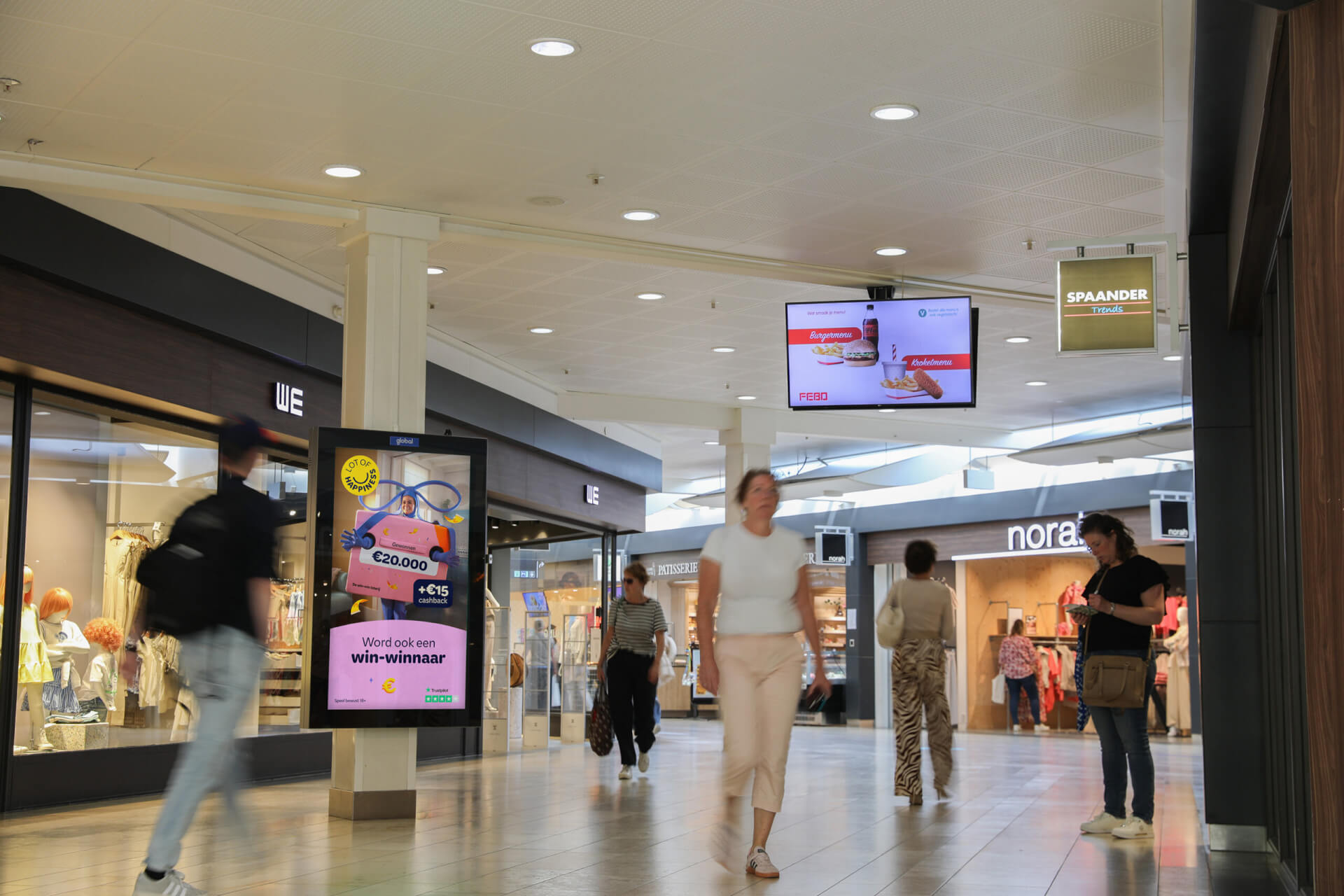
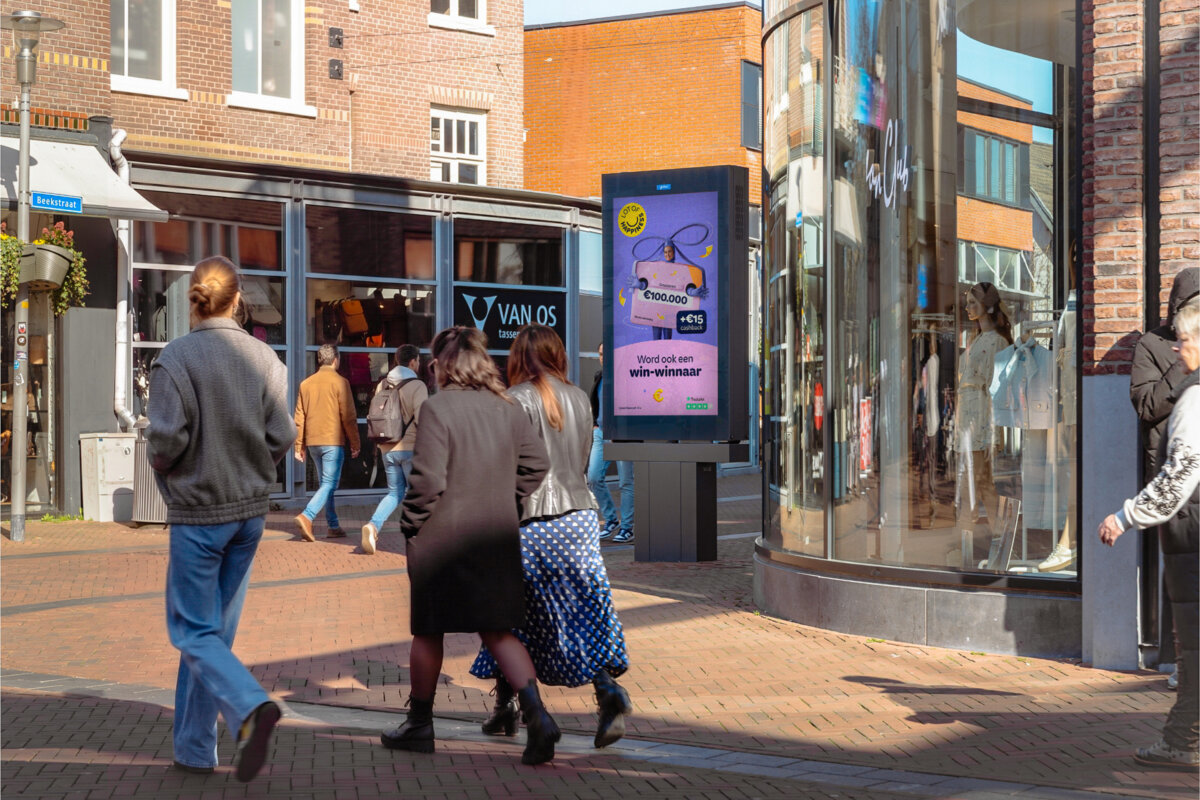
Broadsign’s sell-side AI agent and digital marketing agency Draft Digital’s buy-side agent recently enabled the first end-to-end OOH media buy, transforming what would otherwise have been a complex operational effort into a seamless, rapid, and efficient experience. The campaign was for Lot of Happiness and ran on Global Netherlands premium inventory. It marked the first time an OOH media buy has been powered by agentic AI from beginning to end, using the brand’s campaign goals to inform audience and venue targeting, media selection, campaign setup, and execution. Together, the buy-side and sell-side agents coordinated complex tasks across parties, with human oversight and guardrails in place to ensure alignment with campaign objectives and compliance with local regulations and restrictions. 

Read on to learn more about how the process unfolded — and what it means for the future of OOH.

Meet the campaign that made history

Lot of Happiness is a purpose-driven lottery based in the Netherlands with a straightforward premise: every ticket purchase benefits a cause chosen by the buyer, with roughly 50% of every sale going directly to charities like Make-A-Wish Nederland and the ALS Foundation Netherlands. As a growing organization without the deep media budgets of commercial lottery players, Lot of Happiness has built its growth strategy around operational creativity and innovation rather than outspending competitors. That orientation made them a natural early mover on this kind of experiment.

The campaign ran with a “Win-Win” message — rooted in the idea that every ticket purchase supports a charitable cause while giving participants the chance to win prizes. — delivering more than 830,000 impressions across screens inside supermarkets, shopping malls, gas stations, and on city streets throughout the Netherlands. 

But as compelling as their social mission is, it’s not the creative that made this execution notable. It’s how the buy happened. 

What typically required days to weeks of email-based coordination moved from brief to booked plan — with human approval — in less than 15 minutes. To understand how this came about, it’s worth taking a closer look at the agentic solutions involved and what they did. 

A media plan built in minutes

On our end, we built a new sell-side AI agent layer on top of the existing infrastructure for Broadsign In-Advance — an automated booking capability that allows advertisers to reserve guaranteed DOOH ad space months in advance. The sell-side agent acted as an automated query and negotiation layer: when Draft Digital submitted the Lot of Happiness campaign brief through their buy-side agent, our agent returned available inventory from our In-Advance-enabled ecosystem of media owners that matched the campaign’s targeting criteria. 

On the buy side, Draft Digital used Claude.ai to build the campaign brief and drive the planning process, translating campaign goals into targeting criteria, querying Broadsign’s available inventory, and generating a media plan for the buyer to review and approve.

Once the buyer reviewed and approved the plan, the booking was activated through Broadsign’s Place Exchange SSP and delivered programmatically on Global Netherlands’ screens.

The Ad Context Protocol (AdCP) — an emerging open standard for enabling AI agents to communicate across the advertising supply chain — served as the connective tissue, providing a standardized way for the two agents to communicate across organizational boundaries. 

Human review remained part of the process at key stages. On the agency side, that review followed what Jasmijn Kruis, Digital Marketing Consultant at Draft Digital, calls the “four-eye principle”: the buyer checks the plan, and then a second person checks the buyer’s work. “You don’t want an extra zero showing up where it’s not supposed to,” she explains. Creative was submitted through the standard approval workflow, ensuring compliance requirements remained fully intact throughout. 

Crucially, agentic AI in media buying isn’t about removing human judgment; it’s about drastically reducing the manual labour surrounding it.

Why OOH is a natural fit for agentic AI

The case for agentic AI in OOH is, in many ways, even stronger than in other channels. As a context-driven medium, OOH is rich in data that goes beyond the audience, the creative, and the screen. Success depends on understanding how a brand’s message connects to a particular audience in a particular place at a particular time. With hundreds of thousands of campaigns to learn from, AI can help surface those patterns and apply them at scale. 

“Overlaying AI atop our global static and digital OOH supply, together with advanced data and execution capabilities — such as screen-level audience indexes, dynamic creative, and guaranteed in-advance buying — opens the door to new possibilities for OOH planning and activation,” explains Broadsign CTO Bryan Mongeau. “This innovative collaboration is only the beginning.”

For Global Netherlands, what stood out about the collaboration was the sum of its parts: no single party could have done this alone. “By combining Broadsign’s infrastructure with buy-side intelligence, Draft Digital’s ambition, and our diverse digital out-of-home offering, we’ve shown how AI-driven planning can enhance the speed, precision, and flexibility of direct buys, mirroring the benefits of programmatic OOH,” says Mink Zwolsman, Business Development Director at Global Netherlands. “For us, this is a meaningful step toward making our inventory even more accessible to buyers who want seamless, omnichannel campaigns.”

The Lot of Happiness buy illustrates what that looks like in practice. Because the campaign ran alongside the client’s first television buy, Draft Digital designed the OOH targeting to synchronize with TV viewership patterns and reinforce the messaging — placing ads in areas with high concentrations of TV-viewing audiences, timed to appear before broadcast slots so viewers would see the OOH ads before seeing them on the living room screen. “We tested different types of pacing to see how the system would react,” explains Kruis, “and because we were also running on TV, we wanted the OOH ads to appear in areas with high concentrations of TV-watching audiences — at times before they would watch — so there would be a connection.” 

That kind of multi-variable precision — layering viewership patterns, proximity patterns, and time-based targeting across an entire country — is exactly the kind of planning at which agentic AI excels. What would take a human planner days of data aggregation and analysis was built into the brief and surfaced instantaneously.

Getting ahead of the shift

This campaign was a first, but it won’t be the last. Whether you’re on the buy side or the sell side, agentic AI is going to transform OOH — here’s what to expect and how to embrace that shift.

If you’re an agency or media buyer

  • Follow the audience. OOH is traditionally bought by selecting locations, but locations are really just proxies for the audiences that advertisers want to reach. AI-driven plans can select the inventory that indexes highest against a target audience, choosing from all available options — including niche placements and underutilized formats that humans may miss when trying to limit the buy to a few networks to reduce complexity. AI can handle the complexity and surface the best options to reach any desired audience.
  • Embrace contextual targeting. Whether it’s a billboard during the morning commute, a screen at the grocery checkout, an office building elevator screen during lunchtime, or a TV behind the bar on gameday, the power of OOH lies in context: delivering a message in a particular place at a particular time. Connecting audiences to locations and times can be a labour-intensive process, but with the right data inputs, AI can make those connections quickly and help ensure the right context for every impression. 
  • Elevate from task execution to strategic orchestration. AI agents can absorb the burden of low-level tasks, freeing up humans to focus on the end-to-end process — ensuring brief quality, defining campaign objectives, directing creative, designing learning agendas, and gleaning campaign insights.

If you’re a media owner or publisher

  • Expect a broader pool of buyers. AI will expose your inventory to a larger pool of demand, creating opportunities for more revenue — but it also means publishers will need to meet that demand with intelligent inventory allocation and yield optimization, as well as capabilities like competitive separation and timely advertiser and creative approvals. AI tools can help with all of the above.
  • Improve discoverability. Buy-side agents evaluate inventory against a wide variety of criteria — including location, screen characteristics, supported ad formats, venue type, and screen-level audience indexing. The more comprehensive and accurate your screen-level data, the more likely your inventory is to be surfaced as a potential match when those criteria align.
  • Maintain human oversight and control. AI will make buying and selling media smarter, faster, and more effective, but publishers remain in control. Identify the key decision points in your sales engine — pricing, approvals, restrictions — and define the processes, guardrails, monitoring, and reporting that ensure everything operates within your business parameters.

Whether you’re on the buy side or the sell side, success will depend on choosing the right partners who understand your goals and can help design and implement solutions that fit your needs.

What comes next

Broadsign powers close to three million static and digital signs globally — including the largest single source of programmatically enabled OOH supply in the world. While this pilot focused on Broadsign In-Advance-enabled inventory, the next phase will extend to all programmatically enabled screens. Our mission is to bring innovative technology to media owners to help them power their business — and agentic AI is the next chapter in that story. 

Global OOH ad spend reached $37.18 billion in 2025 and is expected to reach $56.1 billion by 2030, driven in large part by digitization, programmatic maturation, and a growing appetite for real-world presence amid continued screen fatigue. As buying workflows continue to evolve, AI will give OOH media owners the opportunity to ensure their inventory is positioned for the next evolution of media planning and activation.

The question is no longer whether agentic workflows will play a role in media buying, but how quickly the industry will adapt to capitalize on the opportunity. Here at Broadsign, we’re already working with OOH media owners to help them prepare for what comes next.

Media owners interested in making their inventory discoverable to agentic buyers can reach out to Broadsign to explore what’s possible.

Product News | October 11, 2021

DOOH specs guide: What media buyers and planners need to know before launching a campaign

Digital out-of-home (DOOH) specs follow different rules from other digital formats — and buyers who don’t know where those differences lie tend to find out the hard way, through rejected files, stalled approvals, and delayed campaign delivery.

Whether you’re setting up a digital OOH campaign for the first time or a seasoned pro troubleshooting an approval issue, this guide covers the key creative specs you need to know to create a DOOH campaign that gets results: common display and video dimensions, accepted file types and technical requirements, and other digital OOH specs best practices and considerations before trafficking. 

Working closely with our global network of media owners and publisher partners, we’ve gained first-hand insight into what they actually require from incoming DOOH creative — and the specs and requirements in this guide reflect those real-world standards. Consider this your cheat sheet for getting your campaign approved for launch the first time.

Jump to:

Why DOOH specs differ from other digital ad formats

Digital OOH operates within a closed-screen ecosystem, where media owners approve every creative before it runs on their screens. As a result, DOOH has technical requirements that don’t exist in web-based environments.

Unlike web or social advertising, DOOH doesn’t rely on open exchanges where compliant creatives run automatically without publisher review. Even when digital OOH campaigns are bought programmatically through oRTB (Open Real-Time Bidding), every creative still requires publisher approval. That process ultimately dictates accepted file types, restricted tags, and how creative rotation is managed.

The practical implication: getting DOOH specs wrong isn’t just a technical inconvenience. It triggers a revision-and-resubmission loop that stalls the approval process and delays campaign delivery. Understanding why each requirement exists makes it easier to build a compliant creative workflow from the start, rather than reverse-engineering the rules after something breaks.

READ ALSO: Best practices for high-impact OOH creative that gets noticed

Common DOOH creative dimensions and screen formats

DOOH inventory spans a wide range of placements and screen types — from large-format digital billboards to transit venue displays to in-store retail screens — and each environment comes with its own standard dimensions. Across digital OOH inventory, landscape (1920×1080 px) and portrait (1080×1920 px) are among the most widely supported formats. Building creative for both orientations is recommended wherever possible, since limiting to one orientation limits access to available inventory. 

The key creative specs below represent some of the most frequently used creative sizes. While there may be notable exceptions for certain inventory types, these formats provide broad compatibility across venue categories, including Entertainment, Health and Beauty, Movie Theatres, Office Buildings, Point of Care, Residential, Retail, Transit, Urban Panels, Billboards, Taxi Tops, and more.

Use these dimensions as a practical baseline. They cover some of the most common aspect ratios and give your team a clear starting point for placement-specific adjustments.

Static (display) creative: Common formats

FormatAspect ratioDimensionsCommon venue categories
Landscape
(widescreen)
16:91920 × 1080 pxEntertainment, Health & Beauty, Movie Theatres, Office Buildings, Point of Care, Residential, Retail, Transit, Urban Panels, and more
Portrait9:161080 × 1920 pxEntertainment, Health & Beauty, Movie Theatres, Office Buildings, Point of Care, Residential, Retail, Transit, Urban Panels, and more
Horizontal banner7:2 or 21:101400 × 400 px or 840 × 400 pxBillboards, Taxi Tops, Transit

Video creative: Common formats

FormatAspect ratioDimensionsCommon venue categories
Landscape (widescreen)16:91920 × 1080 pxEntertainment, Health & Beauty, Movie Theatres, Office Buildings, Point of Care, Residential, Retail, Transit, Urban Panels, and more
Portrait9:161080 × 1920 pxEntertainment, Health & Beauty, Movie Theatres, Office Buildings, Point of Care, Residential, Retail, Transit, Urban Panels, and more
Horizontal frame4:31280 × 960 pxEntertainment, Point of Care, Retail, Transit, and more

Per the Out of Home Advertising Association of America (OAAA) creative guidelines, common DOOH video lengths include 8, 10, 15, or 30 seconds — making 15 seconds a safe, widely supported default for broad inventory compatibility. 

Build with the final screen placement in mind. Creative that isn’t sized to the screen’s native resolution may appear cropped, letterboxed, or distorted — all of which can trigger rejection during the publisher approval process.

Creative and inventory exceptions

If your campaign includes any of the following, confirm whether additional requirements apply before building your creative:

  • Spectaculars: Specs vary by screen 
  • Airport media: Select airport screens require non-standard creative sizes. Video durations are also typically 10 seconds rather than 15 seconds
  • Sensitive content categories: Creatives featuring alcohol, cannabis, or political messaging may be subject to additional restrictions that vary by market, venue type, and media owner

For more creative build guidelines and campaign-building tips to simplify the entire DOOH process, check out our Best Practices Guide: How to create DOOH campaigns that get results.

Digital OOH media specs: File types and other technical requirements

DOOH supports three creative types — static display (JPG/PNG), video (MP4), and dynamic/DCO creative (HTML5, where publisher support is available).

Accepted creative file formats

  • Static Display: Accepted formats include JPG and PNG. Technical requirements include 72 ppi standard resolution and RGB colour mode
  • Video: Accepted format includes MP4. Technical requirements include an even-numbered pixel resolution, a bit rate below 5,000 kbps, and a standard frame rate of 30 fps
  • Dynamic/DCO: Accepted format includes HTML5. Technical requirements vary by publisher and should be confirmed before trafficking. Additional pre-approval from the media owner is typically required

Build all files in RGB and keep file sizes within the network’s recommended limits. Oversized files are a common cause of playback issues on bandwidth-limited screens — and unlike web ads, DOOH playback failures are visible to everyone nearby. File size requirements vary by publisher, so confirm specifications with your representative.

HTML5 and dynamic creative (DCO)

HTML5 is the standard format for dynamic DOOH creative — enabling real-time data feeds, weather-triggered messaging, countdown timers, and dynamic creative optimization (DCO). If the goal is creative that updates based on external conditions rather than looping a fixed file, HTML5 is how that’s built and trafficked in DOOH.

Ready to launch a high-impact, creative out-of-home campaign that delivers results? Browse our inventory catalog to see the complete network of high-impact digital screens available.