Product News | October 11, 2021

Executive Channel Network Converts Corporate Network to Broadsign International, LLC’s Digital Signage Software

800 displays in 250 locations across five cities are powered by the Broadsign platform.

Sydney, Australia. September 30, 2014. Australia’s office media specialist, Executive Channel Network, has converted 800 displays in 250 locations across five cities to Broadsign International, LLC’s digital signage software platform.

Executive Channel Network’s digital screen network connects advertisers with traditionally elusive executives while enhancing the tenant experience, reaching over 1,800,000 well-educated and affluent office workers each month. The network is expected to double in size over the next two to three years due to aggressive expansion plans in Australia and Europe, where it currently has 155 locations in the UK, 76 in France and 10 in the Netherlands.

“Executive Channel Network chose Broadsign because it met our strict criteria in user requirements, display needs and the development roadmap,” said Justin Kingston, Chief Operating Officer at Executive Channel Network.

Running in premium CBD office towers, Executive Channel Network’s product solutions include high-definition videowalls, digital screens in foyers, in-lift installations, brand interactions and corporate car park displays. Commercial-grade displays range from 24” to 70” in size.
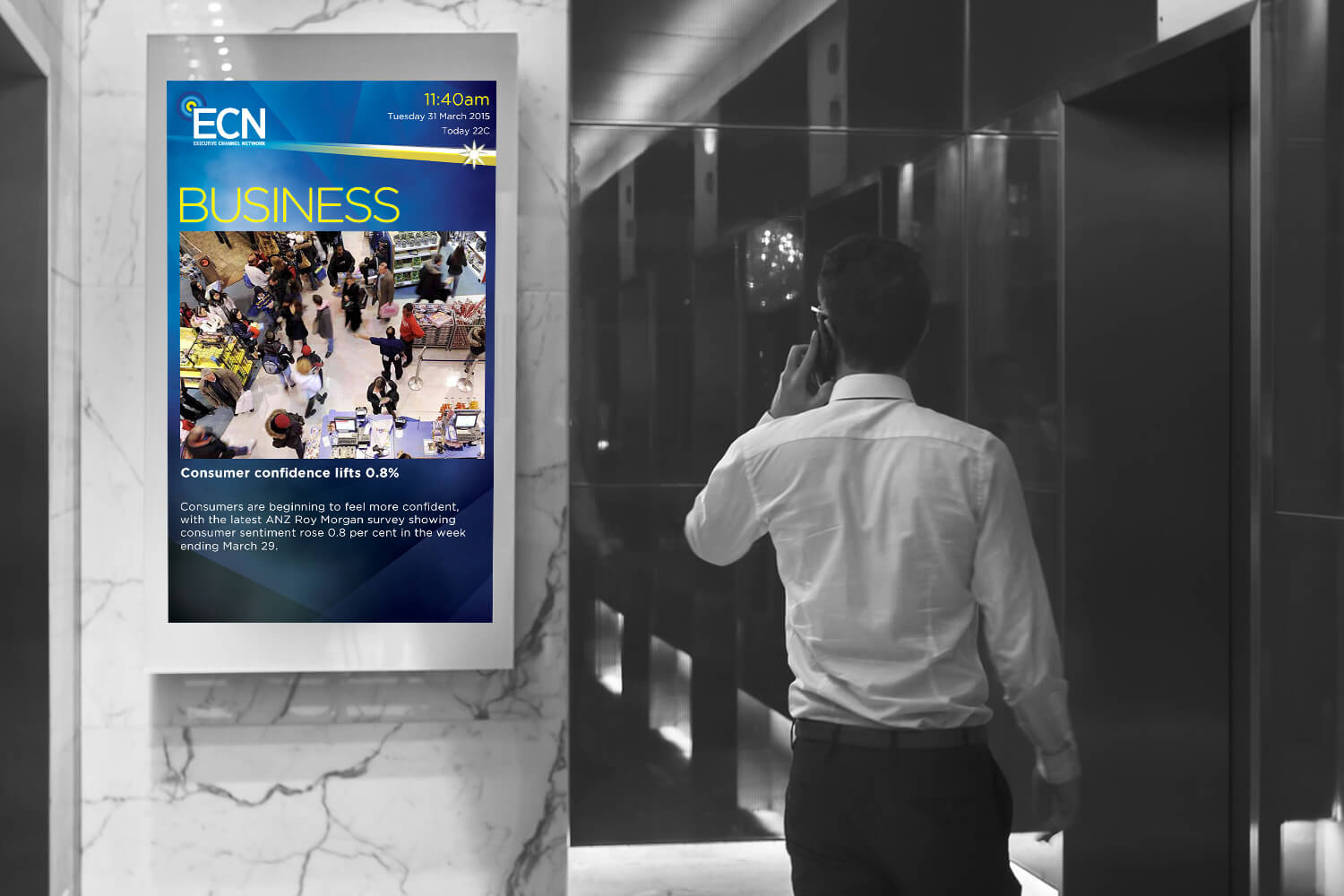
Executive Channel Network screen near office building elevator.

High-profile customers including Expedia, Commonwealth Bank, IG Markets and Coles advertise on the network. Clients such as Expedia and IG Markets take advantage of Executive Channel Network’s real time digital innovation capability.

Executive Channel Network’s three minute loop features relevant, tailored advertising along with real-time content inclusive of news, weather, sports, entertainment and stock market updates.  Property owners have the ability to integrate their brand seamlessly into this messaging.

“Broadsign is known to power premium networks that cater to audiences and advertisers with high expectations,” said Skip Beloff, Vice President of Sales at Broadsign. “We are delighted that Executive Channel Network will use our rich feature set to satisfy said demands and look forward to working on further innovations with such a prominent partner in Australia’s corporate market.”

To learn more about how Broadsign’s digital signage software can meet the needs of your network, sign up for a free 60 day trial of the platform.

About Broadsign

Broadsign International, LLC is the first global provider of cloud-based software for digital signage networks. Its platform was designed exclusively as a management system for media companies operating digital out-of-home and digital place-based media networks, giving them an unlimited capacity for growth without adding personnel. After over a decade in the industry, Broadsign’s latest incarnation, Broadsign X, has become a mature and reliable fit for all digital signage software needs and its Android-based smart player, Broadsign Xpress, has decreased the cost of deploying digital signage compared to PC-based hardware alternatives. Broadsign’s constant growth, extensive network and dedication to predicting and responding to industry trends make its digital signage solutions a safe bet for the future of networks with even the most complex of requirements. For more information about Broadsign, visit https://broadsign.com.

About Executive Channel Network

ECN is a digital communication business providing major office buildings with ‘real-time’ information, connecting executives to relevant content and providing brands with a premium quality, highly targeted advertising network for an aspirational environment. ECN Australia is a part of the Executive Channel International group of companies. Our brand purpose is to facilitate meaningful connections between property owners, office executives and advertisers.
Product News | October 11, 2021

3 strategies for planning smarter programmatic DOOH campaigns: Data-backed tips from our new industry report

LinkNYC digital advertising kiosk on a busy New York City street corner, surrounded by pedestrians, cyclists, and storefronts.

As the programmatic digital out-of-home (pDOOH) market matures, the question for many advertisers is no longer whether to use it, but how to make it work harder. At the same time, the rise of new targeting signals, creative formats, and deal models means buyers are navigating a more complex landscape — one where maximizing ROAS and aligning DOOH outcomes with broader campaign goals are top of mind.

To better understand how these shifts are shaping advertiser investment and planning strategies, we analyzed aggregated transaction data from the Broadsign and Place Exchange SSPs — together representing the world’s largest independent programmatic OOH ecosystem, with more than 1.7 million programmatically-enabled screens.

Drawing on the findings published in our new 2026 Programmatic DOOH Trends Report, this article highlights three practical strategies buyers can use to plan smarter, allocate budgets more effectively, and get more value from their programmatic DOOH campaigns.

Understanding today’s programmatic DOOH marketplace: Insights for agencies and advertisers

No longer limited to a small group of early adopters, today’s category mix — spanning sectors associated with everyday consumer purchase decisions as well as those with longer consideration cycles — shows programmatic OOH being used across a wide range of business contexts.

Top spending advertiser categories

Global, full-year 2025 | Categorized by IAB category

The diversity of advertiser investment reinforces programmatic DOOH’s growing role as a mainstream media channel rather than a specialist one. It also reflects increasing confidence in the channel’s ability to support a wide range of campaign objectives across different industries. But as the market matures, buyers are navigating a more sophisticated programmatic landscape — one where performance is increasingly shaped by the planning decisions made before a campaign ever goes live.

3 strategies for planning smarter programmatic DOOH campaigns

Whether you’re launching your first programmatic OOH campaign or looking to level up your pDOOH performance at scale, we’ve got you covered with practical insights — backed by real transaction data from activations across the globe.

1. Think beyond core outdoor environments 

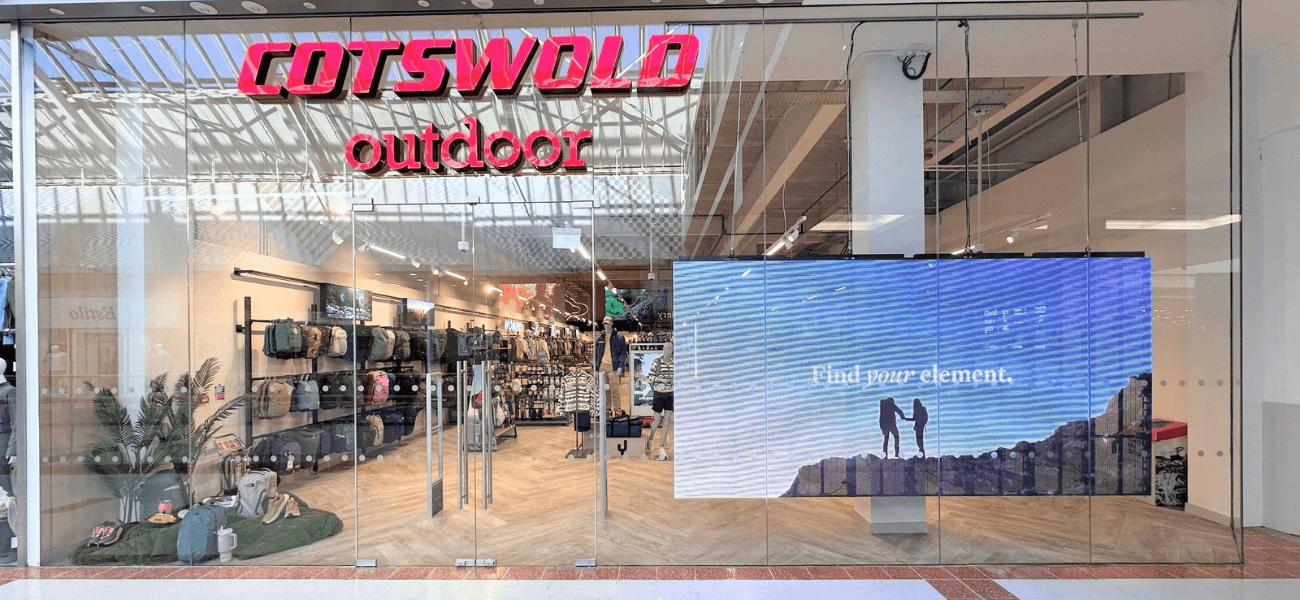
Advertisers have long relied on out-of-home to reach audiences in busy public spaces like city centres and along major highways. And digital OOH — especially when transacted programmatically — gives buyers a faster, more flexible way to activate campaigns in those same high-traffic settings. But as digital screens extend into a wider array of everyday environments, buyers have an opportunity to think beyond traditional outdoor settings and choose inventory based not just on visibility, but on its potential to align messaging with audience mindset.

 Spend distribution by venue category

Global, full-year 2025

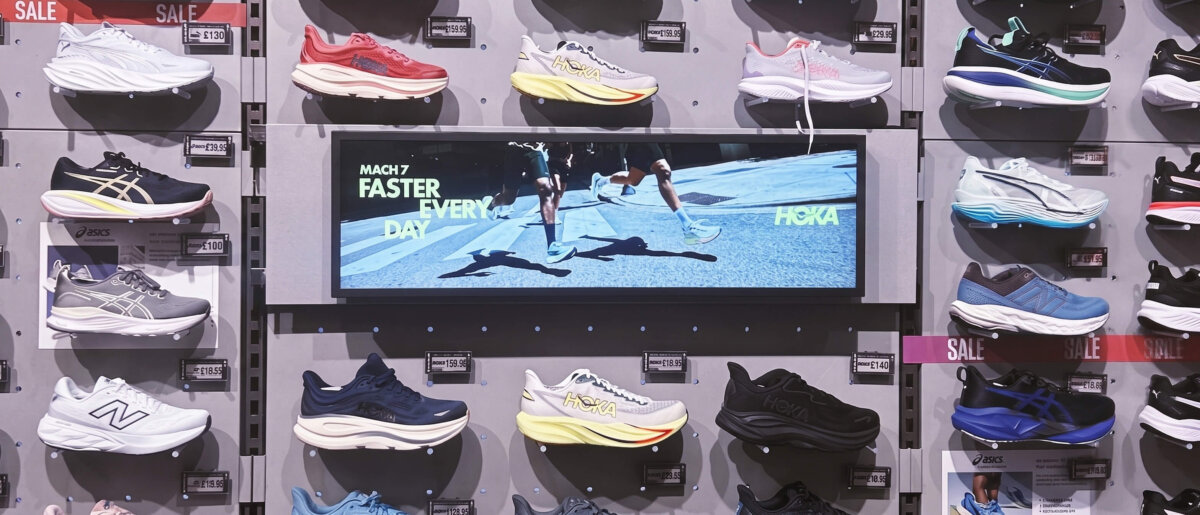
Our transaction data reflects this reality. Outdoor remains the largest venue category, accounting for nearly half (48.4%) of all programmatic OOH spend. But meaningful investment across other context-rich environments like Retail (18.5%) and Transit (12.7%) points to strong buyer demand to reach audiences in relevant moments throughout the physical world.

Today’s strongest programmatic OOH plans evaluate the role different environments can play in achieving campaign objectives and use those insights to guide more intentional, performance-oriented allocation decisions. In many cases, that means combining high-reach environments for foundational coverage and layering in more targeted or context-driven placements to meaningfully engage audiences as they move about their days.

2. Check whether you can repurpose existing creative before commissioning new assets

Programmatic OOH gives buyers the flexibility to activate campaigns at scale across a growing mix of digital inventory. While different file specs across networks can take a little extra coordination, it’s getting easier as the channel evolves. pDOOH video and display creative is increasingly aligning around a few common formats, making it simpler to activate across networks, repurpose creative from other channels, and spend less time building custom assets.

The findings in our Programmatic DOOH Trends Report illustrate just how concentrated creative specifications have become. For example, two asset sizes — 1080×1920 (vertical portrait) and 1920×1080 (landscape) — together accounted for 77% of all programmatic video spend in 2025. And the top three display ad sizes — 1080×1920 (31.4%), 1920×1080 (23.3%), and 1400×400 (24.2%) — made up 79% of total display spend.

For buyers, it’s easier than ever to scale creative across screens, with technology simplifying activation across a wider range of formats through automated reformatting. That gives brands more flexibility to focus their resources where they can have the most impact, whether that’s exploring unique formats or investing in capabilities like dynamic creative optimization (DCO), which allows messaging to adapt automatically based on changing real-world conditions.

3. Match your deal type to your campaign objectives

Advertisers are taking a more considered approach to buying digital out-of-home programmatically, using different transaction models depending on campaign requirements. Real-time bidding via the open exchange (oRTB) provides a fast and flexible way to activate DOOH campaigns at scale, while private marketplace (PMP) deals provide access to curated inventory through pre-established deal structures.

Spend by transaction type

Global, full-year 2025 | Place Exchange transactions only

Our data shows that PMP transactions accounted for more than 86% of programmatic OOH spend in 2025. This includes Custom PMPs, which allow buyers to build deals around specific inventory and audience criteria, and Always-on PMPs, which provide turnkey access to curated inventory without requiring new agreements.

This distribution doesn’t suggest that one transaction model is inherently better suited to programmatic DOOH. Each serves a different purpose depending on campaign objectives: open auction can support scale, flexibility and speed; PMPs can address specific inventory, audience or contextual requirements; and programmatic guaranteed can provide delivery commitments or secure specific placements.

Transaction model selection should therefore be driven by campaign requirements as part of the broader planning process, rather than by a preference for one buying method over another.

Explore more data-backed findings in our 2026 Programmatic DOOH Trends Report

Access additional benchmarks, regional trends, and category-level insights drawn from aggregated transaction data from the world’s largest independent programmatic OOH ecosystem.

Download the 2026 Programmatic DOOH Trends Report