Product News | October 11, 2021

A Sure Bet: Maximizing your sports betting marketing strategy with out-of-home advertising
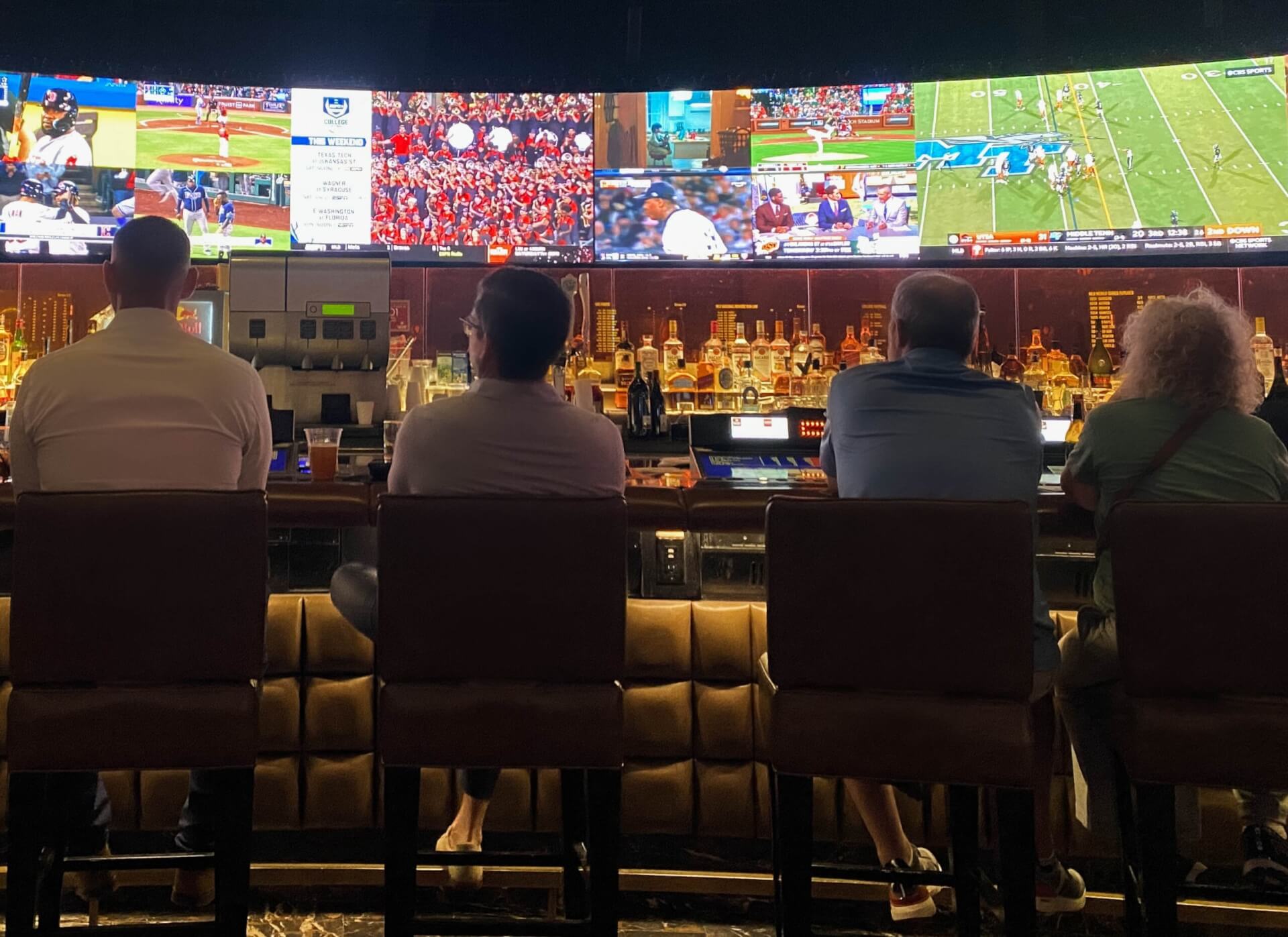
In the world of sports betting, scoring an advertising touchdown has never been more crucial. With the legalization of sports betting in over 34 U.S. states as of 2023 and revenue projections soaring into the billions, the industry is experiencing a massive surge with no signs of slowing down as more legislation gives it the green light. Last year, sports betting experienced the highest growth of all commercial gaming segments, with revenue up 75% to 7.5B year over year. Today, over 50 sportsbooks like Caesars, FanDuel, DraftKings and more are operating legally across the country, marking fierce competition for capturing the attention (and wallets) of sports and gaming enthusiasts. 

As the industry continues to grow, so will the need for brands and advertisers to scale their marketing strategies to make a splash among competing brands. If you’re gearing up to tackle your sports betting media strategy, especially ahead of the 2024 Big Game, out-of-home advertising offers a unique set of advantages that can significantly impact the success of your campaigns.

The power play of OOH advertising for sports betting

Some 30-second TV ads played during the 2023 Big Game sold for a whopping $7 million, up $500,000 from 2022 – and that number is expected to climb even further this year. One of the most-viewed and talked about sports betting ads was FanDuel’s Kick of Destiny, featuring tight end Rob Gronkowski, marking the sportsbook’s first-ever Big Game commercial. While FanDuel’s multimillion-dollar ad was definitely buzz-worthy, there are other channels sports betting advertisers can turn to to maximize their reach and budgets for major sporting events and beyond – like OOH.  In fact, sports betting companies DraftKings and FanDuel were among the top 100 out-of-home spenders in Q3 last year.

Following last year’s major American football event, the OAAA and Geopath sought to calculate what nearly $7 million could buy in the OOH space. Their research revealed that by investing $6.5 million in a Big Game ad, a brand could utilize OOH advertising to secure exposure in the top 50 U.S. markets. This would result in over 1 billion impressions, with an average reach of 84 percent and a frequency of 9.5 in 27 markets – all at an impressively low cost per thousand impressions (CPM) of $5.40. It’s a remarkable return on investment.
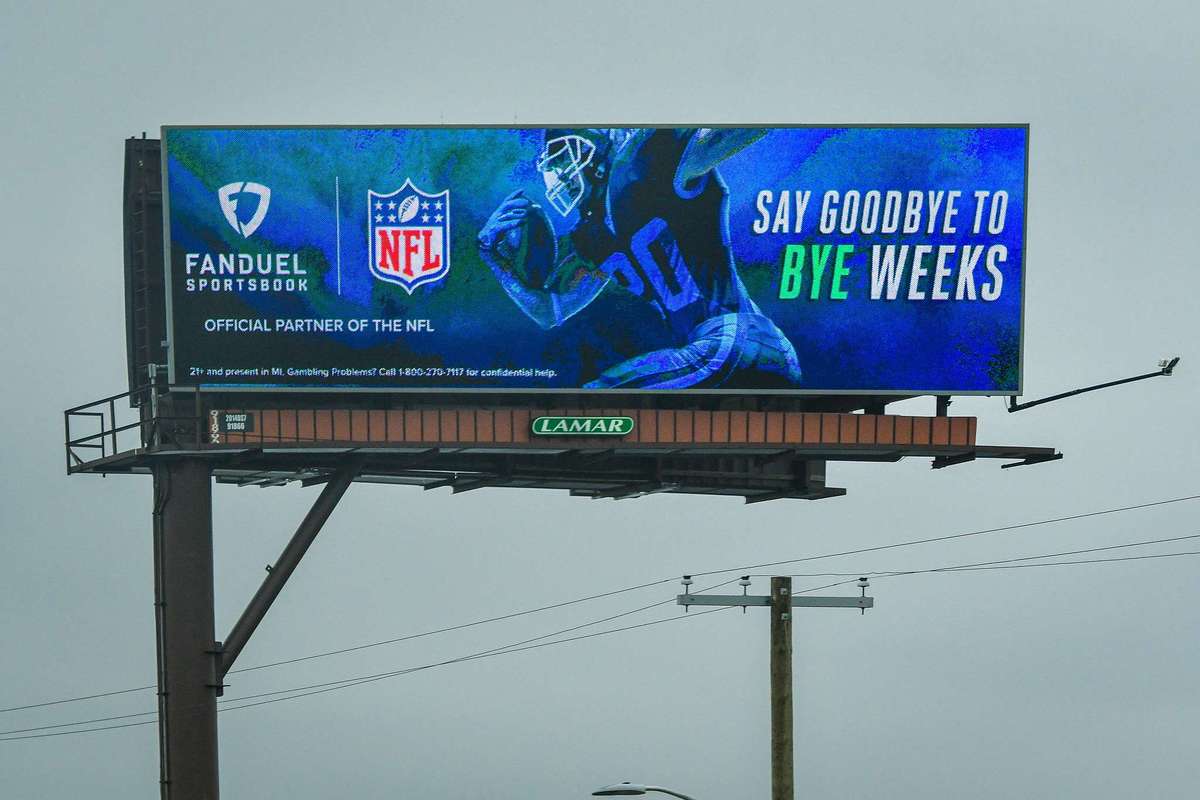
FanDuel’s sportsbook billboard drives awareness for its NFL partnership.

Drive awareness for betting and gaming platforms with attention-grabbing billboards 

When it comes to driving awareness for sports betting platforms, both new and well-established, OOH is the real MVP. According to OAAA and Harris Poll Rese data, 54% of U.S. adults in cities of 1M+ have noticed OOH ads for sports betting and gambling. Additionally, 62% of Americans who saw OOH ads for sports betting engaged in some way, like sharing information word-of-mouth and visiting websites. So, what makes the medium so effective in boosting awareness and interest in sports betting and gaming companies?

For one, OOH allows advertisers to broaden campaign reach in high-visibility locations while being as contextual as possible. For sports betting, this means reaching a relevant audience in areas like sports bars, stadiums, transit hubs, and other sports-related venues where enthusiasts gather. Placing ads at multiple touch points along the consumer journey ensures target audiences can engage with a brand as they move along their day, from commuting to work to grabbing a drink in a resto-bar with friends.

Additionally, activating ads in the physical world allows sports betting and gaming platforms to enable hyper-localized content, tailoring messaging to capitalize on local events, trends, or preferences. For example, a sports betting platform could activate local DOOH ads in the weeks leading up to a highly-anticipated football game to engage potential betters in the host city. Placing ads across billboards, transit and urban panels, sports bars, and more locations near the stadium can be a key way to reach a fervent fan base in that area.
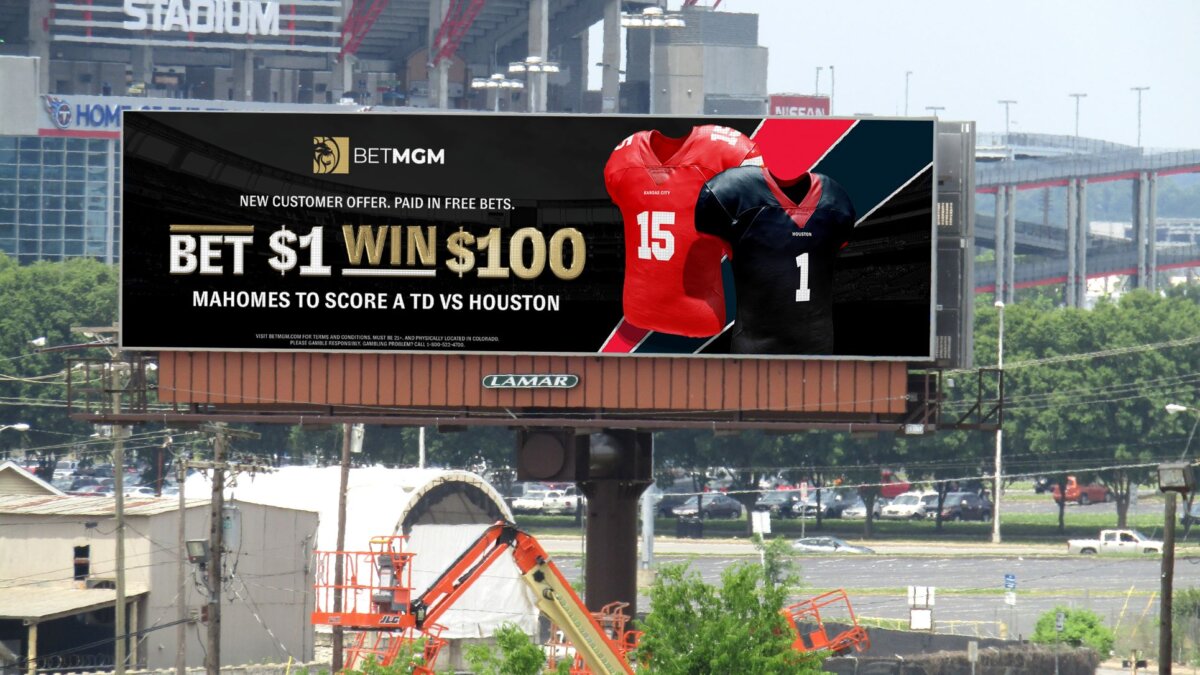
BetMGM’s out-of-home ad promotes a special offer for new customers.

Increase player bets and engagement with contextual content

OOH ads often feature eye-catching and dynamic content that captures attention and encourages viewers to take action, especially when the content is interactive and provides a contextual experience. When DOOH ads are activated programmatically, sports betting and gaming advertisers can give real-time updates on site promotions, live odds, game results, and more – quickly updating creatives based on specific triggers. 

Advertisers can even optimize campaigns by switching messaging or pausing ads based on dayparting, like running ads when people are more likely to place a bet (Football Sunday, anyone?) This dynamic content keeps audiences engaged and informed, creating a sense of urgency to place bets. As new markets and states legalize the practice, attention-grabbing ads can quickly be activated to generate awareness and encourage action. Another popular approach is to display different ads based on the outcome of a game, switching campaign messaging based on goals and live game updates.

There are all sorts of interactive venue types advertisers can leverage to promote sports betting platforms. For example, activating ads on touch screens in sports bars and pubs allows patrons to place bets or access odds while watching games. Hosting live betting contests on in-house screens during halftime or commercial breaks keeps bargoers engaged in a contextual setting while increasing their chances of placing bets. Other interactive placements like kiosks and transit displays allow users to explore betting options, access tutorials, or place bets right at the location.
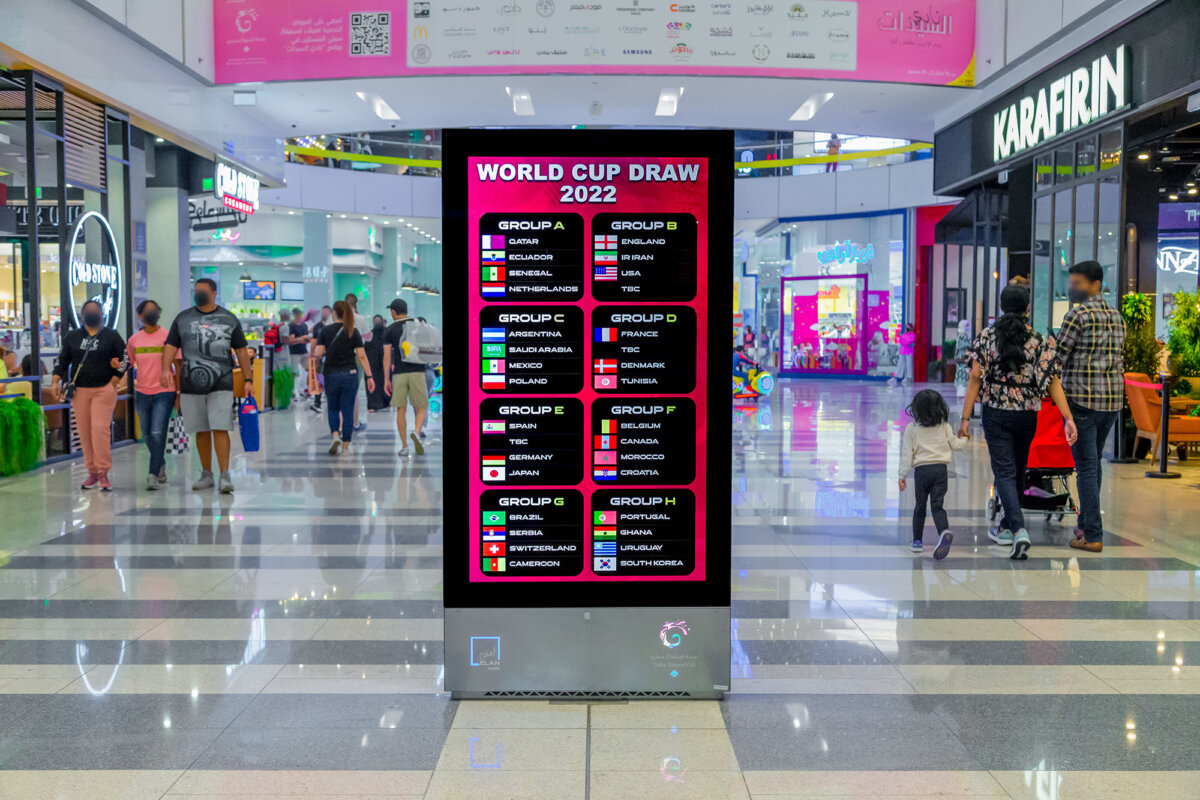
ELAN Media’s screen in Qatar displays real-time updates of the 2022 World Cup draw.

Complement small screens through omnichannel executions

While OOH advertising is impactful and effective on its own, integrating the medium into a broader omnichannel strategy can ensure your brand stands out across both digital and offline channels. Interactive DOOH ads create a fun and engaging experience for the audience. They can also be instrumental in connecting physical advertising efforts with the digital realm, providing a seamless and holistic brand experience. 

Aside from making your brand more visible to a wider audience, OOH sports betting executions also trigger online engagement. According to the OAAA, 47% of U.S. consumers who saw OOH ads for sports betting visited a website following ad exposure. Incorporating mobile integration into your OOH strategy with QR codes on ad creatives can lead users to mobile apps or betting sites for further engagement, encouraging audiences to place bets or access exclusive rewards and offers. 
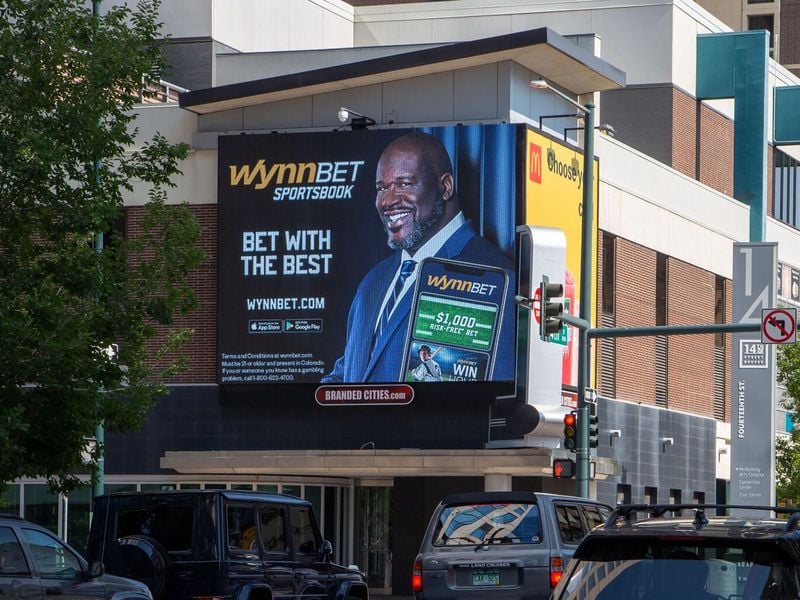
WynnBET’s out-of-home ad directs viewers to place bets via its online sportsbook.

Sports betting advertisers can also ​​create a continued content experience from physical to online screens by retargeting audiences exposed to OOH ads on their mobile devices or other digital channels. Through device ID passback, audiences exposed to DOOH ads in a geofenced area can be retargeted via mobile and digital ads, increasing brand touchpoints throughout their journey. For example, a sports betting company can initiate a cross-channel retargeting campaign, collecting device IDs of OOH ad viewers and later serving personalized ads on their mobile devices, social media, and other digital channels. This data-driven strategy provides valuable user behaviour and preferences insights, enabling data-driven decision-making in future campaigns.

When it comes to sports betting advertising, it’s not just about visibility; it’s about engaging with your audience where they live and breathe sports. As the gaming and betting industry grows, so does the potential to reach audiences in new markets. And with the Big Game fast approaching, there’s never been a better time to drive awareness and action with OOH advertising that scores big.

Want to build an impactful sports betting OOH campaign?

Explore our curated audiences, inventory, and contextual locations in our Sports Betting Package!
Product News | October 11, 2021

Cotswold Outdoor Group Expands Retail Media Strategy to In-Store with Broadsign and IUF

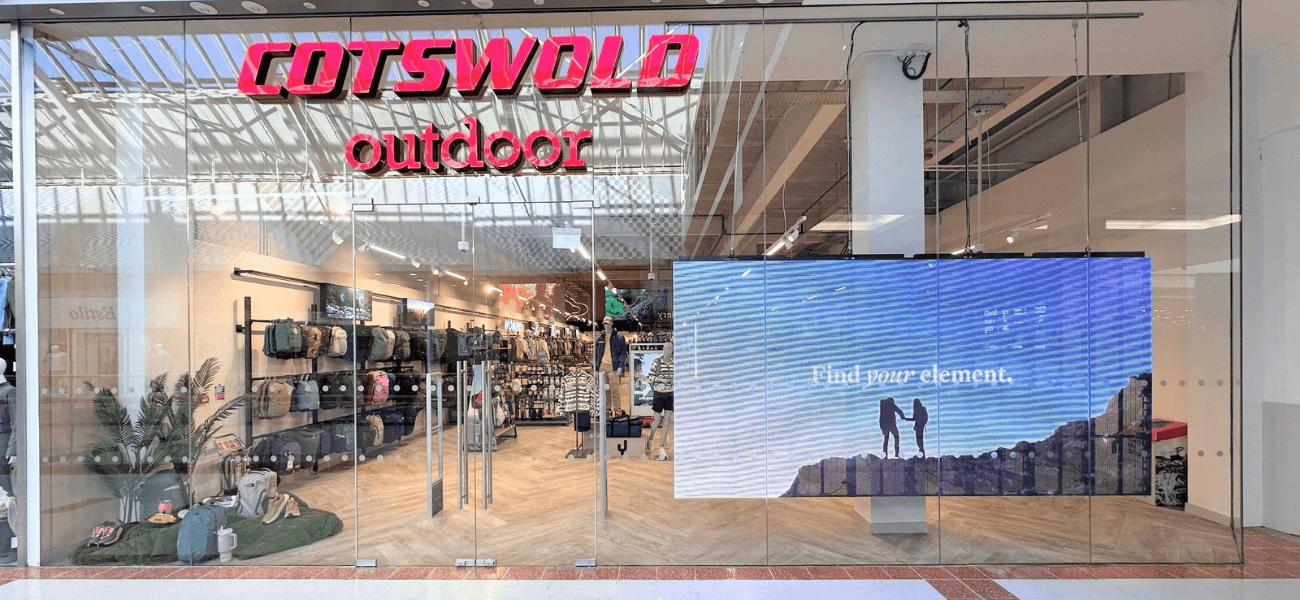
Exterior view of a Cotswold Outdoor store in a shopping centre, featuring a large digital display in the storefront showing an outdoor campaign.

Collaboration delivers scalable display network infrastructure, creating new omnichannel opportunities for advertisers and driving measurable results

MONTREAL – (October 6, 2026) – Retail media technology provider Broadsign and in-store media integrator IUF announced a collaboration with UK retailer, Cotswold Outdoor Group, to expand its retail media network (RMN) with a new scalable in-store advertising infrastructure. The upgrade provides a unified workflow that streamlines media planning, management, and measurement in-store and across onsite and offsite channels. It enables Cotswold’s brand partners to seamlessly execute omnichannel ad campaigns that engage shoppers at the point of purchase and beyond.

Broadsign, Cotswold Outdoor Group, and IUF designed the network with long-term growth in mind. It presently includes 149 till, shelf, totem, large format, and front-of-store displays across 23 stores, which are powered by the Broadsign Platform (specifically the Broadsign CMS and Ad Server) and support a range of media. 

The Broadsign Platform is helping to streamline operations and centralize content management and network health monitoring. The technology is also advancing screen monetization opportunities by scheduling ads, automating yield, and balancing complex campaign rules to help Cotswold Outdoor Group capture optimal revenue. With IUF’s ongoing deployment and support, the infrastructure allows the retailer to manage and scale in-store media operations efficiently while maintaining a reliable shopper and advertiser experience.

Through Broadsign’s omnichannel integration with Zitcha, Cotswold Outdoor Group’s retail media platform, brand partners, and agencies can easily extend omnichannel strategies into the physical store environment. The network is already delivering measurable results for participating brands, like HOKA, ASICS, and Nike. Most recently, a targeted HOKA campaign combining onsite and in-store media placements delivered a 13 percent lift in units sold per store, demonstrating the value of reaching shoppers at multiple touchpoints on the path to purchase. 

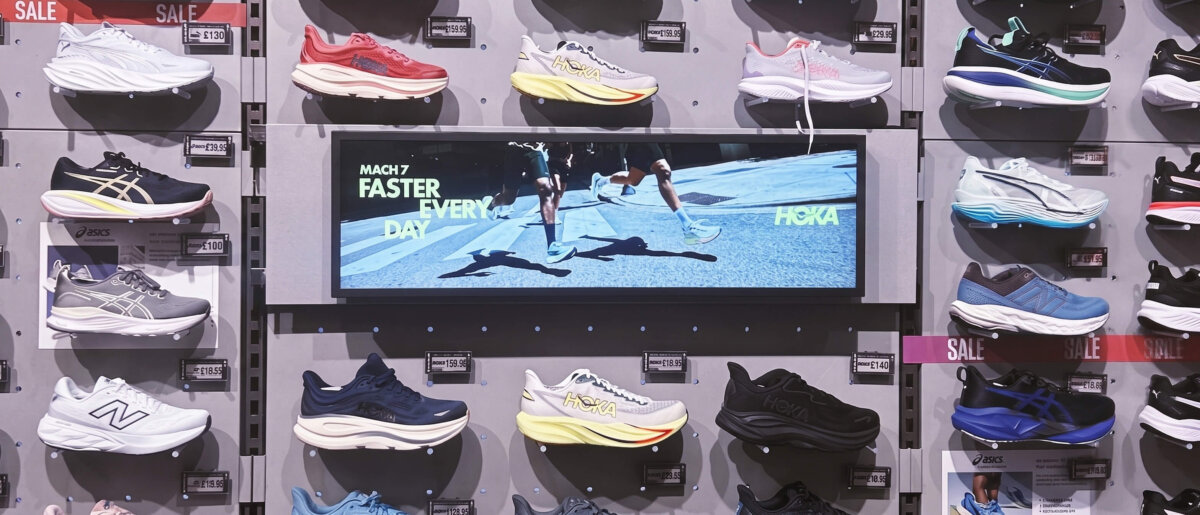
In-store shoe display featuring running footwear from HOKA, ASICS, New Balance and other brands, with a digital screen showing a HOKA advertising campaign.

“At Cotswold Outdoor Group, we’re passionate about helping people get closer to the outdoors — and that starts with creating inspiring moments. Our brand partners are a big part of that journey, and this collaboration with Broadsign and IUF offers a powerful new way to connect with our customers in-store, alongside our onsite and offsite media channels,” explained Mary Antieul, Head of Commercial, Cotswold Outdoor Group. “It means we can bring the right messages to shoppers at the right moment, with less friction for brands and a more connected experience for customers. The early results have been really encouraging, and we’re excited to build on that momentum as we expand the network and explore future programmatic opportunities.”

“Retail media is evolving fast, and partnering with IUF, we’ve delivered an in-store media infrastructure for Cotswold that can scale rapidly. Together, we’ve designed a network that makes it easy for its team to add, manage, control, and monetize new screens and integrate programmatic trading capabilities down the line,” explained Frank Vallenga, Vice President, Platform Sales, EMEA and SEA, Broadsign. “By leveraging our integration with Zitcha, Cotswold has been able to connect audiences across their various retail media channels, which is a challenge many retailers have yet to solve.” 

“This project went from tender to a live network generating revenue within twelve weeks which demonstrates the expertise of all of the technical partners involved,” said Josh Bunce, CEO, IUF.  “Together we were able to deliver a cohesive customer journey so that Cotswold Outdoor Group can maximize its in-store retail proposition today but also ensure that it can scale easily into the future. The in-store channel is proving to be a competitive differentiator when advertisers start mapping out budgets with brands already seeing impressive results from the in-store activations.”

About Broadsign

Broadsign develops the leading global platform for managing and monetizing out-of-home (OOH) media. The company, which also operates Place Exchange by Broadsign, the largest independent SSP for Digital OOH, empowers media owners, media buyers, and retailers to harness the power and reach of out-of-home to connect with audiences in ways unlike any other advertising channel. More than 2.8 million static and digital signs along roadways and in airports, shopping malls, grocery and convenience stores, health clinics, transit systems, and more run on Broadsign.

About IUF 

Making spaces perform, IUF is a leading technology solutions partner that delivers seamless, future-ready digital solutions across retail, stadiums, transport, DOOH, live events, attractions, workplaces and more. IUF designs, delivers and manages end-to-end digital signage, experiential and large-scale LED, transforming physical environments into intelligent, revenue-driving destinations. Founded in 2008 in Bristol UK, IUF is now active in over 30 countries. 

Product News | October 11, 2021

A conversation with JB Hi-Fi: Why the future of in-store retail media is hyperphysical

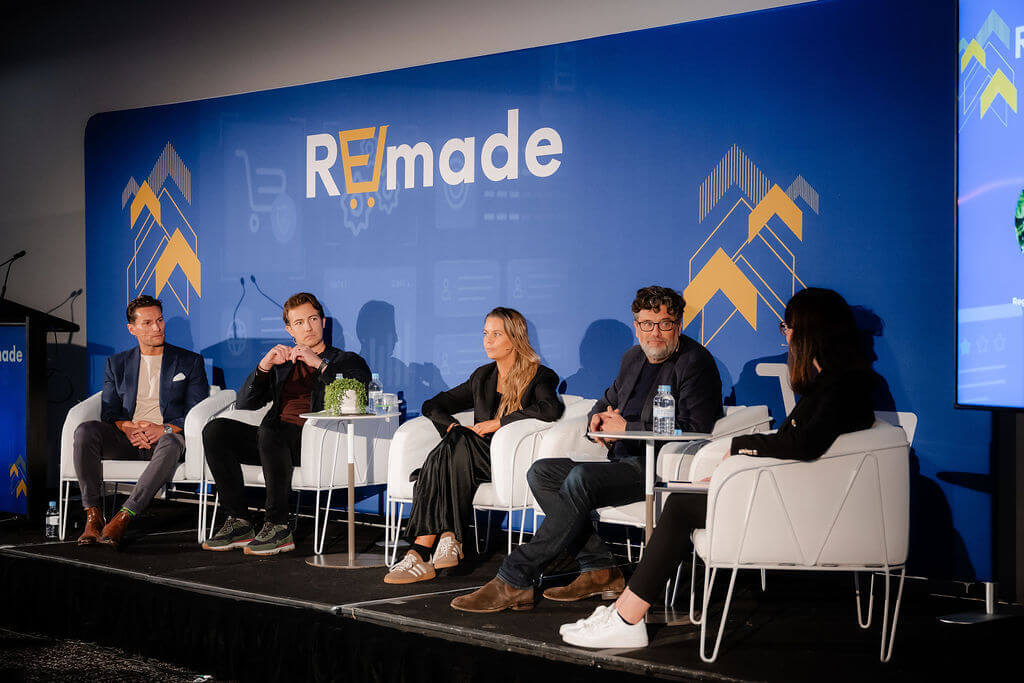
Panel discussion at Mumbrella REmade 2026, with five speakers seated on stage in front of a blue REmade backdrop.

In-store retail media is moving beyond screens.

At Mumbrella’s REmade event in Australia this month, Broadsign joined JB Hi-Fi, a leading Australian consumer electronics retailer, Retail Media Works, a retail media consultancy, and Criteo, a global commerce media company, on stage to unpack what it takes to build a retail media network that connects the physical store with the wider shopper journey.

With more than 200 stores forming its retail media network, JB Hi-Fi is taking a distinctly “hyperphysical” approach, exploring how its stores can create value for shoppers, suppliers and advertisers while staying true to the experience that makes the retailer unique.

The conversation offered a look at where in-store retail media is heading, and more importantly, what retailers need to consider as they build and grow their networks.

Start with the shopper

For JB Hi-Fi, retail media starts with the store itself. Scott Browning, General Manager, Strategy & Insights at JB Hi-Fi, spoke about the role the physical store has always played in the brand and the importance of keeping the customer experience at the centre of its retail media strategy.

“The store has always been the face of the brand. The website is actually the hidden face of the brand because you actually don’t see it in the real world until you arrive.”

That perspective is central to how JB Hi-Fi approaches retail media. The opportunity isn’t simply to add advertising to an existing retail environment. It is to understand how media can work within that environment in a way that feels natural to the shopper and stays true to the brand. 

As Scott put it: “The way in which we position our brand, the way in which JB Hi-Fi is famous for what it does, we have to make sure that authenticity still comes through.”

That means thinking about the store as more than a collection of screens. It is a physical environment with its own customer journey, context and moments where media can add value. For JB Hi-Fi, retail media needs to build on that experience, not compete with it.

The screen is only the starting point

One of the key themes from the discussion was that creating an in-store media network requires more than installing digital screens. As Ben Allman, VP Platform Sales at Broadsign, explained, the physical screen itself doesn’t necessarily need to change. What changes is what happens behind it.

For a retailer operating hundreds of stores, that means having the infrastructure to manage inventory, campaigns, priorities and reporting across the network, while also being able to tailor content and campaigns to different locations and audiences. All while supporting the day-to-day needs of the retail business.

For JB Hi-Fi, the Broadsign Platform provides the technology to manage its in-store media environment across more than 200 stores. This allows the retailer to build on its existing digital footprint and bring those screens into a broader retail media network, rather than treating retail media as a completely separate business.

Measurement is key to making in-store a media channel

Another major theme of the conversation was measurement. As in-store media continues to grow, retailers need to give advertisers greater visibility into what they’re buying and how their campaigns deliver. That means bringing more accountability and measurability that advertisers expect from other media channels into the physical store.

The panel discussed the opportunity to make the store increasingly behave like a digital environment from a measurement perspective, while recognizing that measuring physical environments comes with its own considerations.

For JB Hi-Fi, this is part of building a network that can offer meaningful value to suppliers and advertisers while creating a better understanding of how media performs within the shopping environment.

Retail media goes beyond digital screens

The conversation also expanded beyond digital signage. Static placements, physical store assets, sponsored search, online channels and off-site media can all play a role in the broader retail media ecosystem.

That creates an important opportunity for retailers: rather than defining their media network around a particular format, they can think about how different touchpoints work together across the shopper journey.

For JB Hi-Fi, its physical footprint is a significant part of that opportunity. The store can work alongside digital channels to create a more connected experience for shoppers and more opportunities for brands to engage them.

Build, test and learn

Perhaps one of the most practical takeaways from the discussion was that retail media networks don’t need to be built perfectly from day one.

The panel spoke about the importance of testing, learning what works in the physical environment and evolving the offering based on shopper and advertiser needs. That mindset is particularly important as retailers continue to establish what in-store retail media looks like within their own businesses. Every store environment is different, and the most effective approach needs to reflect the retailer, its shoppers and its commercial model.

JB Hi-Fi’s approach is a strong example of this in action: taking an established physical network and building the media capabilities around it, while continuing to learn and evolve.

Looking ahead to the next phase of in-store retail media

The conversation at REmade made one thing clear: the future of retail media isn’t about choosing between physical and digital. It’s about connecting the two.

JB Hi-Fi is showing what that can look like in practice by bringing its physical stores into a broader retail media strategy, while keeping the shopper experience at the centre.

For Broadsign, we’re proud to support that journey by providing the technology infrastructure behind JB Hi-Fi’s in-store network and helping bring its vision for retail media to life across its stores.

Interested in turning your in-store environment into a measurable media channel? Connect with our team to see how Broadsign helps retailers grow their in-store media networks while keeping the shopper experience front and centre.

Product News | October 11, 2021

Context Networks Selects Broadsign to Scale Contextual Advertising Across Display Networks

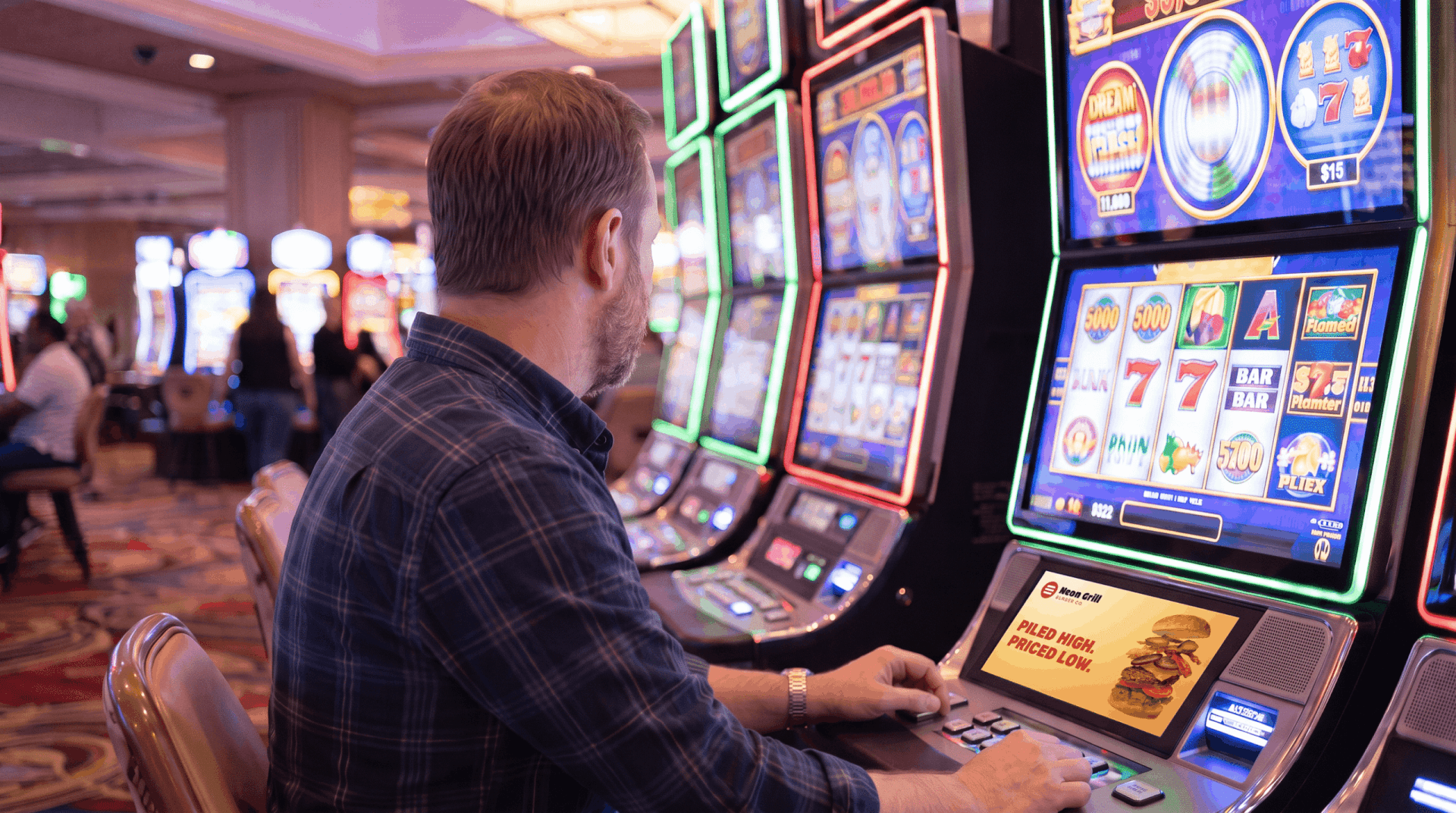
A person plays a slot machine in a casino, with a digital ad displayed on the machine’s lower screen.

Broadsign Platform to unlock programmatic demand and scalable OOH operations across Context Networks inventory, with gaming environments a launch focus ahead of G2E

LAS VEGAS, Nevada – September 24, 2026 – Context Networks, a contextual advertising and monetization platform for gaming and network digital display environments, today announced a collaboration with Broadsign, the leading global platform for managing and monetizing out-of-home (OOH) media, to support the next phase of growth of Context Networks’ Contextual Promotions Media Network™ (CPMN™). As a result, Context Networks now has a unified foundation for managing, delivering and monetizing screen-based media as the company expands across gaming and other controlled display environments.

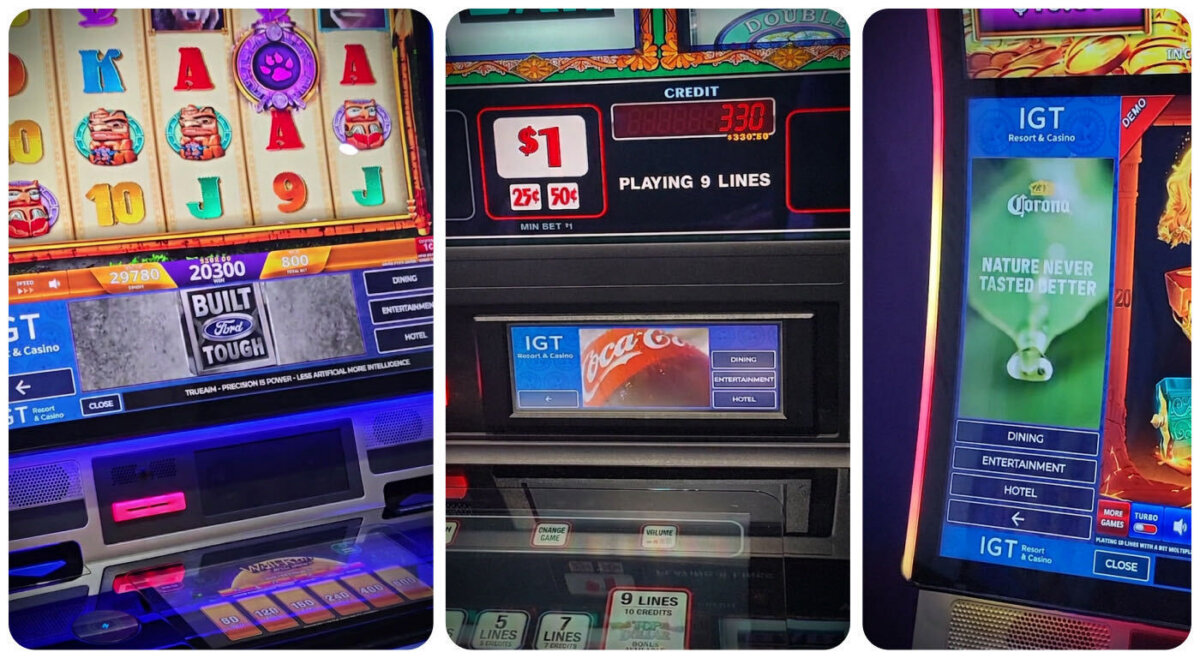
Through the collaboration, Context Networks is connecting eligible CPMN™ inventory to the Broadsign Platform, the company’s complete, reliable Ad Server and Content Management System (CMS).  This will enable Context Networks to manage business-critical content and advertising across its network of displays as well as the Place Exchange supply-side platform (SSP), Broadsign’s programmatic digital out-of-home (DOOH) SSP. 

Context Networks brings contextual intelligence, a monetization model designed for controlled screen environments, specialized integrations, and operator and reseller relationships that can help extend Broadsign technology into non-traditional screen environments as the network grows. It introduces a differentiated source of digital inventory and vertical expertise for Broadsign in environments where customer attention, dwell time and operator-controlled screens create a distinctive media opportunity. Broadsign delivers enterprise network management, campaign automation, reporting and established programmatic demand connectivity.

While gaming is Context Networks’ immediate launch focus ahead of Global Gaming Expo (G2E), taking place September 28 through October 1 at The Venetian Expo in Las Vegas, the collaboration is designed to support its broader display network strategy. Context Networks’ business model extends beyond casino floors to operator-controlled environments that include distributed gaming, ATMs, kiosks, gift-card kiosk networks, digital faucets, hotel concierge apps and other connected screens. 

The company’s current footprint spans 14 states and 23 designated market areas, with advertising and operator-owned content already running in distributed gaming environments. Broadsign provides Context Networks with a more scalable way to onboard additional screen networks and reseller partners while maintaining consistent campaign logic, delivery and reporting.

“Broadsign gives us a proven infrastructure to scale our model without losing what makes it valuable: contextual relevance, operator control and measurable monetization,” said Matthew Olden, Founder, COO & Executive Chair of Context Networks. “Gaming is an important launch market for this work, but the underlying opportunity is broader. Across network digital display environments, operators already control valuable screens and audience relationships. Our job is to help turn those assets into new commercial value while giving advertisers a better way to reach qualified audiences in the moments and environments that matter.”

For operators and media owners, the combined model creates a path to turn existing digital displays into measurable new revenue without requiring them to build a separate advertising technology business. Operators retain governance over eligible inventory, campaign rules, house content and the customer experience, while CPMN™ creates a new commercial layer around screens and systems they already own or manage.

Brands and agencies can now access differentiated inventory in high-attention environments that traditional media plans might miss. Contextual signals can help align advertising with place, activity, timing and audience value, while the Broadsign Platform makes eligible inventory easier to access through familiar OOH and programmatic workflows. As a result, advertisers get a stronger contextual fit, more relevant delivery and clearer performance feedback.

“Context Networks is opening a compelling category of inventory that fits naturally with the continued evolution of out-of-home,” said Robert Loftus, VP of Platform Sales at Broadsign. “By connecting Context Networks’ operator relationships and specialized integrations with the Broadsign Platform and Place Exchange SSP, we can help make these screens easier for buyers to access while giving operators the control, transparency and flexibility they need to participate with confidence.”

Operator control is particularly important in gaming environments, where security, regulatory oversight, and operational continuity are central considerations. Rather than asking operators to introduce an isolated advertising stack, the Context Networks model uses established digital signage and programmatic infrastructure while preserving operator control over what appears on each participating screen. Existing promotions and operational content can continue to run alongside paid advertising based on rules set by the operator.

During G2E, Context Networks will demonstrate how the combined technology stack can connect gaming and other operator-controlled digital screens to the broader advertising ecosystem, while meeting with operators, integrators, resellers, advertisers and agencies about opportunities to activate new screen inventory.

About Broadsign

Broadsign develops the leading global platform for managing and monetizing out-of-home (OOH) media. The company, which also operates Place Exchange by Broadsign, the largest independent SSP for Digital OOH, empowers media owners, media buyers, and retailers to harness the power and reach of out-of-home to connect with audiences in ways unlike any other advertising channel. More than 3 million static and digital signs along roadways and in airports, shopping malls, grocery and convenience stores, health clinics, transit systems, and more run on Broadsign. For more information, visit https://broadsign.com.

About Context Networks

Context Networks is a contextual advertising and monetization platform for gaming and network digital display environments, helping brands deliver more relevant, personalized messages in high-attention moments enabling operators to turn existing screens into measurable new revenue. By combining contextual intelligence, secure marketplace infrastructure, real-time buying, and operator-controlled delivery, Context makes emerging screen inventory easier to access, buy, measure, monetize, and scale. The result is a marketplace that helps advertisers improve campaign relevance and performance while helping operators create new commercial value without compromising the player or customer experience. For more information, visit https://www.contextnetworks.net.


Product News | October 11, 2021

Retail media ad servers explained: How retailers can turn in-store inventory into revenue

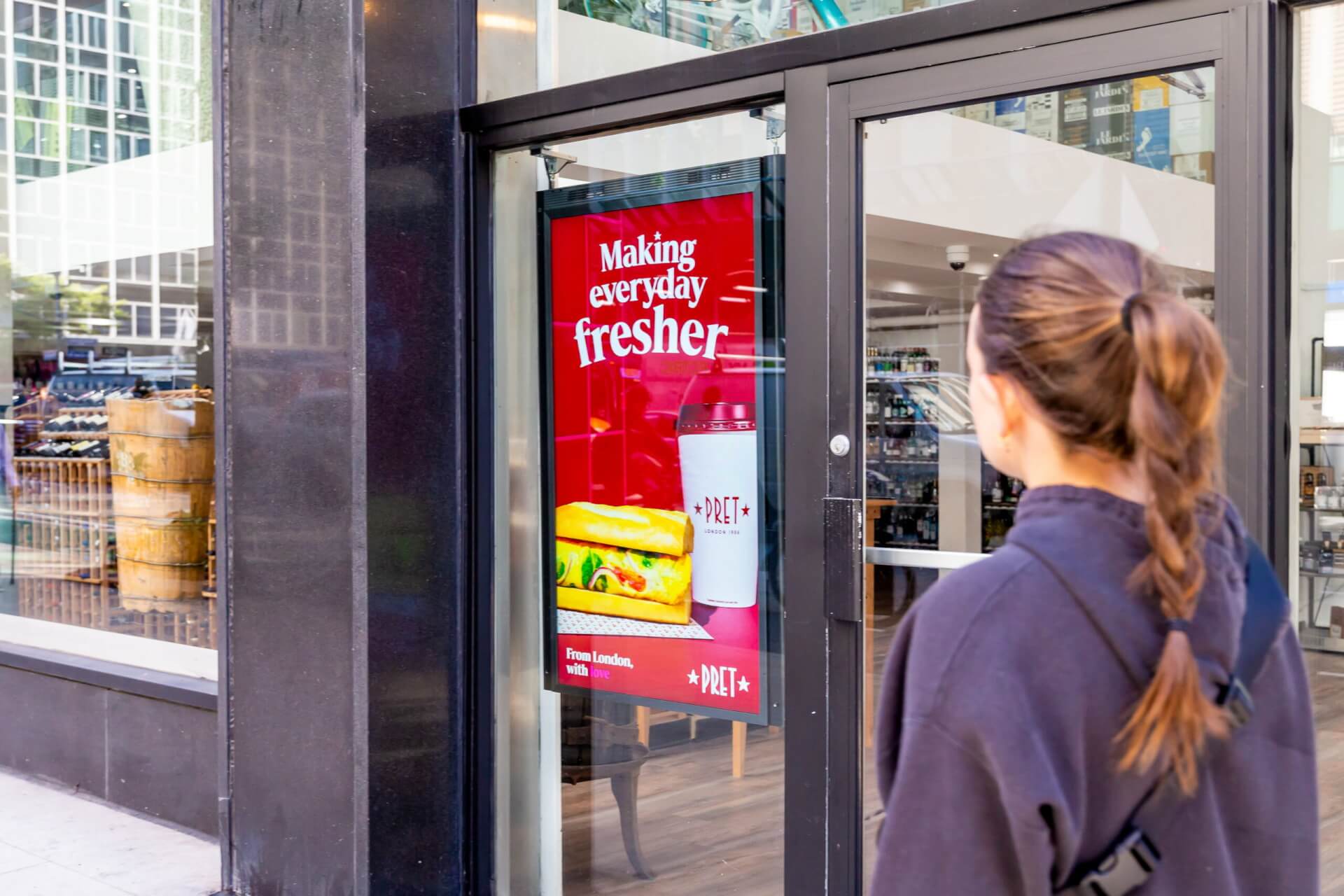
Smartify Media digital screen outside a retail store in Sussex, New York, displaying a Pret advertisement.

For many retailers, physical media assets are already in place, from screens in aisles and at checkout to displays above end caps and in other high-traffic areas of the store. Together with other in-store media placements, these existing assets can become a scalable, sellable media channel that generates meaningful revenue.

But monetizing an in-store network is more complicated than making ad space available. Retailers need to understand exactly what advertising opportunities they have to sell, manage campaigns across different screens and placements, and balance merchandising, operational, and advertiser priorities.

That raises some practical questions. What advertising space is available to sell? How do you make sure campaigns run where and when they’re supposed to? And how do you prove that delivery back to advertisers?

That’s where a retail media ad server comes in. It provides the infrastructure that connects a retailer’s advertising inventory — the media placements available for advertisers to buy — to advertiser demand, helping teams sell, schedule, deliver, optimize, and measure campaigns across their networks.

What is a retail media ad server? 

A retail media ad server is a platform that helps retailers manage and monetize advertising inventory across their retail media network. That network can include everything from websites and apps to email, loyalty programs, and physical in-store placements. For retailers monetizing their in-store screens, an ad server provides the infrastructure to manage advertising opportunities across their in-store media network.

While ad servers originated in online advertising, in-store retail media comes with a different set of considerations. Retailers aren’t just managing ad space; they’re balancing media campaigns with merchandising priorities, supplier relationships, store operations, and the overall shopper experience.

Across an in-store screen network, advertising opportunities can vary by store, screen, location, and time. An ad server brings those opportunities and the campaigns running across them together in one place, giving retailers a central way to manage booking, scheduling, delivery, optimization, and reporting.

Ad server vs. digital signage CMS: What’s the difference?

A digital signage content management system (CMS) and a retail media ad server play different but complementary roles. Put simply, a CMS helps you operate your network, while an ad server directly monetizes it.

A CMS handles the day-to-day management of screens and content, including playlists, scheduling, devices, and network operations. An ad server focuses on the advertising business across those screens, helping retailers understand what inventory is available to sell, book and manage campaigns, support different buying methods, optimize delivery, and report back to advertisers. It can also bring direct and programmatic demand together within the same network.

Retailers don’t have to choose between the two. An ad server can work alongside an existing CMS and broader technology stack, adding the capabilities needed to monetize in-store media without replacing the systems already in place. Broadsign’s retail media ad server, for example, can integrate with existing systems via APIs, enabling retailers to build on their current infrastructure.

When does a retailer need a retail media ad server?

There is no magic number of screens that means a retailer needs an ad server. The tipping point is complexity. Selling ten campaigns across a handful of screens is one thing. Managing hundreds or thousands of screens, stores, formats, advertisers, campaign goals, and buying models is another. 

As an in-store media network grows, spreadsheets and manual processes can quickly become a bottleneck. Teams need a reliable way to understand inventory availability, manage competing demand, deliver on campaign commitments, and identify opportunities to monetize capabilities that might otherwise go unsold. 

So, how do you know when you’ve reached that point?

Checklist: You may be ready for an ad server if…

  • You’re spending too much time figuring out what ad inventory is available
  • You can’t confidently tell a brand what inventory you can sell them
  • You’re manually reshuffling campaigns to meet commitments
  • You’re managing digital and static inventory separately
  • Your advertisers want to buy based on impressions or audience
  • You want to introduce non-endemic programmatic ads
  • You oversell your ad space and can’t meet advertiser commitments
  • You have ad inventory going unsold, but no easy way to identify or package it
  • Your retail, trade, and media teams are managing the same inventory separately, creating a risk of double-booking

What should a retail media ad server actually do?

At its core, a retail media ad server should make it easier for retailers to manage and monetize their media inventory as their networks grow, with better visibility, greater flexibility, and less manual work.

Create a clear view of sellable inventory: Bring inventory across stores, screens, formats, and dates into one place so teams can see what’s available, what’s already committed, and where there’s additional capacity to sell.

Support more ways to buy: Accommodate campaign requests based on budgets, impressions, share of voice, takeovers, locations, dates, and other objectives, giving brands and agencies more flexibility in how they buy.

Connect sales with campaign execution: Turn campaign bookings into schedules that determine where and when ads will run, while keeping media sales, merchandising, trade marketing, and store operations aligned around the same campaign plan.

Optimize campaign delivery and inventory: Manage pacing and competing brands to help campaigns deliver as promised while making better use of available capacity and minimizing unsold inventory.

Connect with existing retail technology and data: Integrate with your existing CMS, POS, CRM, inventory, and audience platforms, while incorporating real-world data signals like product availability, time of day, weather, location, audience, or foot traffic to help plan and execute more impactful campaigns.

Provide reliable proof of delivery: Capture when and where a campaign ran, giving retailers the data they need to report on delivery and demonstrate that advertiser commitments were met.

Support direct and programmatic ad sources: Manage direct ad sales while creating the infrastructure to introduce programmatic demand, giving retailers more ways to monetize available inventory.

Building the infrastructure for scalable in-store retail media

The opportunity in in-store retail media goes beyond putting more advertising on screens. It’s about building a media channel that brands can buy reliably, and retailers can monetize effectively. Getting there requires more than putting advertising on screens. Retailers need the right infrastructure to connect inventory, sales, campaign delivery, optimization, and reporting, while working alongside the technology and data they already have.

Broadsign’s Retail Ad Server brings those capabilities together, helping retailers turn their in-store media assets into a scalable, measurable media business and drive more media revenue.

Turn your in-store media into a revenue opportunity with Broadsign’s Retail Ad Server. Learn more.