Product News | October 11, 2021

How 8Infini is Innovating Outdoor Advertising in Indonesia with DOOH
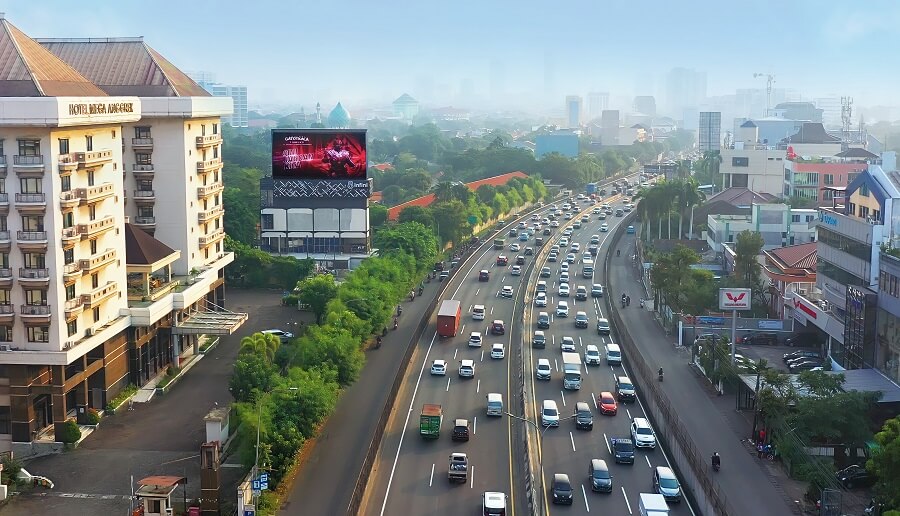
While out-of-home media is a popular advertising format across Indonesia, dynamic digital out-of-home is still only rising in popularity. That’s expected to change as more of the country’s OOH companies begin to harness the power of DOOH. 

One of the factors driving this shift is likely the creative freedom the format affords, its potential to reach broad audiences and the numerous data and analytics capabilities that are becoming more widely available thanks to technological advancements. 8Infini is a media owner on the mission to shape the future of outdoor advertising in Indonesia with a network of prominently-located digital screens in some of the country’s biggest and most bustling cities. 

Bringing bright, digital screens to Indonesia’s cities

Named for the seemingly infinite possibilities that digital screens can offer advertisers, 8Infini was founded in 2019 by a team of out-of-home experts. Though the company is a newcomer to Indonesia’s OOH space, they’ve already made quite an impression among advertisers in its three years of existence. 

The company’s network comprises static and dynamic large-format LED “videotron” screens. These are found in prime spots throughout Jakarta, one of Southeast Asia’s most populous cities. With six digital and two static screens in Jakarta and five digital screens in Bandung, these screens are predominantly located along roadways and at the heart of busy intersections, catering to pedestrians and motorists alike. Besides these screens, a portion of their business model is also focused on traditional transit media, where their business started. The OOH media operator will soon be deploying an additional four digital screens in Bogor, another two in Bandung, as well as one digital and three static screens in Jakarta. 
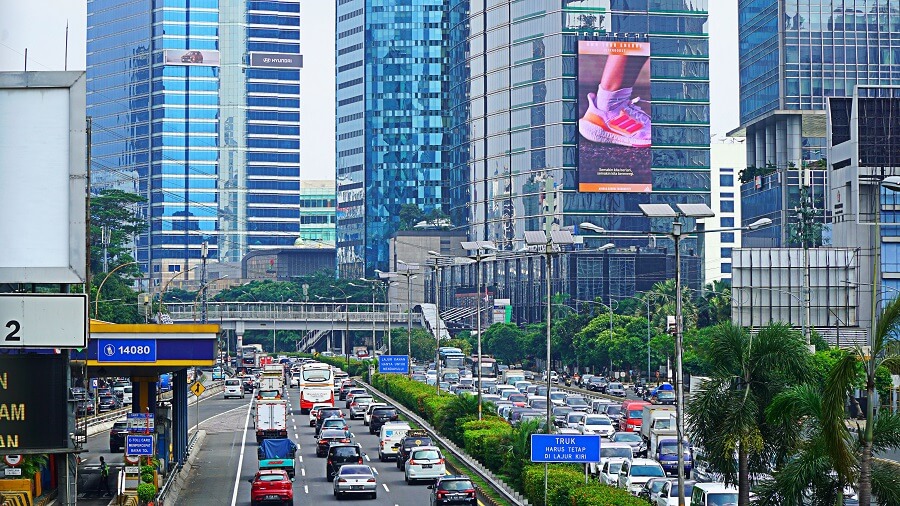
8Infini’s preferred technology partner, Broadsign, are enabling the OOH media provider to further enhance flexibility, advancement in their operations, improved performance and increased screen capabilities.  Expansion plans are imminent and underway: the business hopes to significantly increase its network in the coming months, adding another ten screens to its roster by the end of 2022. These additions to the network are expected to be installed in Jakarta, and, eventually, the team hopes to bring their screens to other large cities such as Bogor. 

With its inventory’s strong presence in prime locations, it’s only fitting that 8Infini’s network attracts a wide range of advertisers from various industries. Their screens have previously run ad campaigns spanning virtually every category, such as entertainment and cinema, fashion, brands, start-ups, logistics, insurance and banks. 

Besides its network in highly-visible locations, offering interactive and dynamic capabilities makes 8Infini’s inventory popular among all types of media buyers and brands. Slowly but surely, they’re noticing that increasingly brands are moving towards the more interactive features available with their offering, partly due to the in-depth analytics and insights thanks to their Admobilize integration.
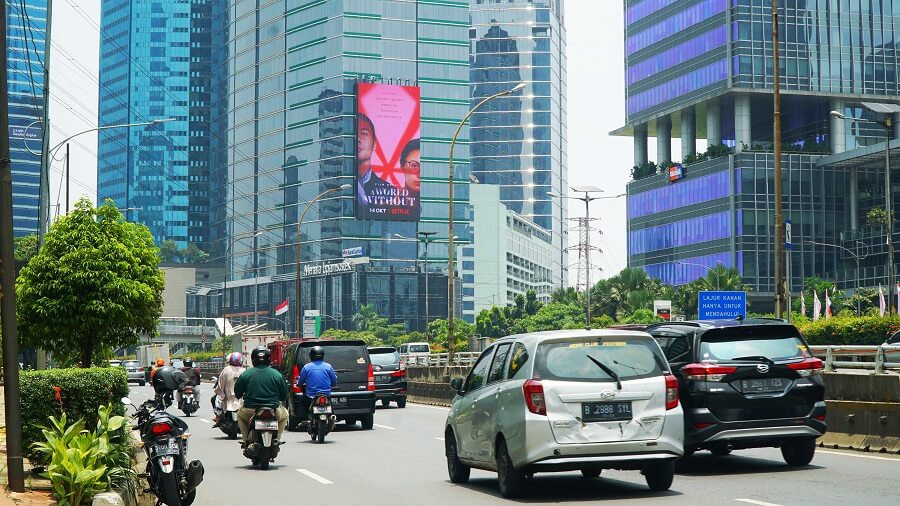
One of the more popular trends in OOH advertising is 3D creatives. As more advertisers are looking to experiment with interactive and dynamic content on screens to build compelling and exciting campaigns, 8Infini is able to make that happen and hope to continue making interactive content more widely available in the country. 

8Infini’s team takes great pride in and is passionate about the medium and its network. They emphasize the importance of maintenance and upkeep, with a team ready to resolve any issues in case of network outages.
The first robotic LED in Southeast Asia 

Their latest project is one of the first of its kind in Jakarta—an impressive LED screen located on the outside facade of the Mandarin Oriental Hotel, luxury hotel located in the city’s financial district. The luxurious hotel is a popular destination for tourists visiting the region, welcoming guests from all over, with the large-format screen positioned on the hotel’s exterior. 

Because of its location in the city’s financial district, the hotel tends to cater to an upscale clientele, making this a prime location for the massive screen, which spans 614 square meters and is made up of 512 robotic panels, each one capable of moving independently.

This is the first robotic Videotron screen of its kind in Indonesia, the largest screen in Southeast Asia, and one of just three in the world.  

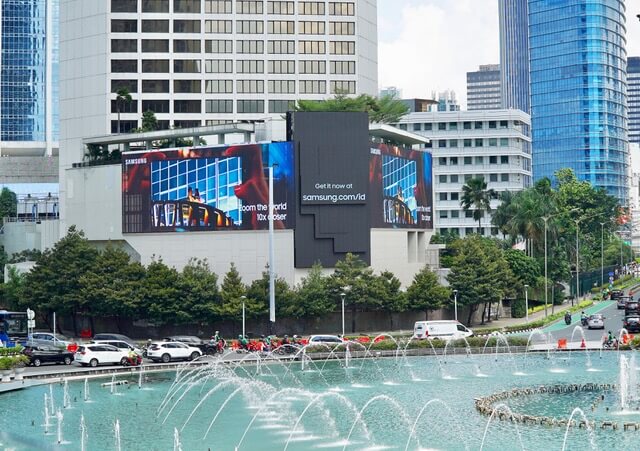
Since its unveiling, the screen has already played some fairly attention-grabbing and internationally acclaimed campaigns, running ads from Samsung, Spotify, Permata Bank, Disney Studio, and Disney+.  Ultimately, its strategic location in Jakarta’s bustling commercial district makes it an ideal choice for businesses looking to increase brand visibility.

Broadsign and 8Infini, a platform built for scalability

Given that there are a number of out-of-home players in Indonesia, the team behind 8Infini knew that to stay competitive, it needed to onboard the support of an industry-leading digital signage software.

Initial plans to develop its own CMS were abandoned, and instead, the team implemented the only platform suited for its specific needs: Broadsign Control. Partnering with Broadsign means that 8Infini can compete with some of the major OOH media operators in the region and keep up with the latest trends in out-of-home. Moreover, Broadsign is built for scalability — which aligns perfectly with 8Infini’s strategies.  

While the team doesn’t necessarily envision 8Infini becoming the largest outdoor billboard player in Indonesia, by operating the Broadsign suite, they can offer their customers a complete offering for OOH advertising investments.  
Big plans, infinite possibilities

Infini OOH wants to add ten new screens to its inventory in the coming months. Building up the network was always in its goal, but like so many businesses worldwide, the pandemic slowed its growth strategy. These days, 8Infini’s team feels more confident than ever about where they’re headed next. Behind the scenes, they’re busy masterminding other exciting projects as exciting and innovative as the Mandarin Oriental Hotel LED Videotron screen. 

Until then, 8Infini is showcasing all that’s possible with DOOH over traditional OOH, by tapping into the power of digital screens to bring brighter and bolder experiences to the Indonesian market.

Want to power your own OOH network with the world’s leading solution?
See what Broadsign can do for you

Product News | October 11, 2021

Best practices for high-impact out-of-home creative

The out-of-home (OOH) ads that stop people in their tracks, spark awareness, and drive action all share a common thread: they’re built on proven creative principles shaped by real-world testing and what works in today’s evolving OOH landscape.

Effective OOH creative relies on bold design, minimal text, and clear branding. But what works on a static highway billboard may not have the same impact on a digital out-of-home (DOOH) screen or a crowded subway platform at rush hour.

That’s what makes OOH unique. It reaches audiences as they move through real-world environments like airports, malls, roadways, and city centres across both static formats and dynamic, data-driven digital displays, offering far more creative flexibility than the medium often gets credit for.

This guide explores the OOH and DOOH creative strategies that consistently deliver results before you plan your next campaign.

OOH creative fundamentals

When developing the creative for an OOH ad, there are core principles to keep in mind.

  • Define your goals: What does the ad wish to accomplish? Is the aim to drive in-store traffic? Stand out from competitors? Remind existing customers of an ongoing promotion? A firm strategy narrows the focus and clarifies the message. 
  • Be bold: Most out-of-home ads have only seconds to reach audiences. When producing OOH or DOOH creative, employ boldness to stand out.
  • Keep it simple: A less-is-more approach is typically most effective. Messaging should be clear, direct, and to the point. 
  • Let brand personality shine: Use humour, surprise, intrigue, even edginess to amplify your message. 
  • Context is key: think about how your creative fits into its surroundings. Incorporating messaging that speaks to current events or relates to live data can boost performance and turn your ad from informative to innovative.

Think Design

Great OOH design is built for how people experience it. In fast-moving environments, you have seconds to make an impression, so clarity and visibility matter more than complexity.

At its core, effective design comes down to a few essentials:

  • High-contrast colours that cut through busy surroundings
  • Simple, focused layouts that are easy to process at a glance
  • Bold, recognizable imagery paired with clean, legible type
KFC’s bold, recognizable imagery makes this billboard instantly identifiable

Context matters just as much as design. What works on a roadside billboard viewed at speed won’t translate the same way to a street-level or place-based screen where dwell time is longer. Simpler creative performs better at a distance, while closer environments allow for more detail, as long as clarity isn’t compromised.

And while best practices exist for a reason, they are not rules. Intentionally breaking them can be just as effective when done with purpose.

Get the Specs Right

Even the strongest creative can fall flat if it is not built for the screen. OOH and DOOH formats vary widely across billboards, transit shelters, retail environments, and place-based networks, each with different dimensions, orientations, and file requirements.

A few fundamentals to keep in mind:

  • Design for both vertical and horizontal formats so layouts translate cleanly across environments
  • Stick to supported file types like JPG or PNG for static, and MP4 or HTML for digital placements
  • Keep file sizes within recommended limits to ensure smooth delivery and playback
  • Always build with the final screen size and placement in mind to avoid cropping or distortion

Below are some of the most common specs for digital and video displays in the US. 

Most Common Display Sizes:

  • 1920 x 1080
  • 1080 x 1920
  • 1400 x 400
  • 840 x 400

Most Common Video Sizes (15-Second):

  • 1920 x 1080
  • 1080 x 1920
  • 1400 x 400 
  • 1280 x 960

For more guidelines on proper format sizes, read our Best Practices Guide: How to create DOOH campaigns that get results

READ ALSO: Our favourite OOH and Billboard Ads of 2025

Let’s talk about text

It’s not just about what you’re saying, but how you’re saying it: typeface and formatting contribute to how the ad, and its messaging, are received. 

  • Large, bold typeface is easier for people to read, especially from a distance
  • Avoid thin or serif typefaces, which can be harder to read 
  • Proper spacing between letters, words, and lines will help improve readability and visibility
  • Keep the copy short and sweet, and limit messaging to five to seven words
  • Stick to one simple, direct message and call-to-action 
  Viewing Distance  Minimum Readable Text Height 
  5’ – 50’  1” – 2”   (72px – 144px @ 72dpi)
  50’ – 100’  2” – 4”   (144px – 288px @ 72dpi)
  100’ – 200’  4” – 8”   (288px – 576px @ 72dpi)
Virgin Active’s OOH display delivers big impact with minimal text

Video creatives

A recent study found that full-motion video OOH ads drive a 65% increase in “intent to learn more” compared to static creative, along with a 41% lift in perceived relevance, clear indicators of stronger audience consideration.

That’s why incorporating motion into your digital content is such a powerful way to capture attention. In most environments, videos should run no longer than 10-15 seconds; however, longer videos can be impactful for audiences in specific venue types with longer dwell times, like gyms, doctors’ offices, or bars.

Note: Place Exchange by Broadsign can seamlessly adapt social media and in-app vertical video creatives for portrait-mode screens, so you can get maximum value from a single video. 

Creating personalized and dynamic content

When vying for a consumer’s attention, optimizing a digital out-of-home campaign with Dynamic Creative Optimization (DCO) can be the x-factor in reaching target audiences. 

DCO means adjusting and optimizing DOOH ads for real-world contexts and environments, pulling data to deliver ads in response to current events or trends, such as the weather, sports scores, financial markets, audience profiles, or other nearby events or relevant information. 

With DCO, ads can deliver more personalized experiences and stronger audience relevance. In fact, according to the OAAA and The Harris Poll, 81% of respondents exposed to weather-triggered ads featuring relevant product offers found them valuable. Thinking about where your ad will live along the consumer’s journey, and in what context, is an opportunity to create a high-impact ad that resonates with your target audience. 

To create a high-impact ad, thread in creative that responds to live signals like time of day, weather, audience demographics or current events for a more targeted activation that reaches audiences at key moments.

Some ideas include:

  • Modify messaging based on relevant data inputs (e.g., weather, sports scores, etc.): Entice customers on rainy days to pop by for a warm cup of coffee, or advertise air conditioning units on extremely hot days, display sports scores during high-ticket events.
  • Schedule time-sensitive or product-specific promotions 
  • Incorporate daily countdowns for popular movies or big events with universal appeal 
McDonald’s weather-triggered OOH campaign in Qatar

Tracking and measurement

Knowing how your current campaign performs is crucial for planning the next. Use ID markers like QR codes, SMS messages, short-link URLs, hashtags, emails, or phone numbers to track and measure your ad’s performance. Adding a Call to Action (CTA) to your creatives can enable you to directly track “click-through” response to your OOH creative.

The winning formula for an out-of-home ad that gets noticed and delivers on ROI is to combine brand-safe creativity, outside-the-box thinking, and contextual relevance. With these OOH creative best practices in your toolkit, you can successfully create an ad that stands out.

Ready to launch a high-impact, creative out-of-home campaign that delivers results? Browse our inventory catalog to see the complete network of high-impact digital screens available. 

Product News | October 11, 2021

De’Longhi drives 121% lift in brand preference with programmatic DOOH

To strengthen its position as a leader in premium home coffee experiences, De’Longhi partnered with Broadsign to launch a programmatic digital out-of-home (pDOOH) campaign across Poland during the competitive holiday shopping season.

Objective

The campaign aimed to move audiences from brand awareness to purchase intent, positioning the Eletta Explore as the preferred choice for holiday gifting in a competitive retail landscape.

Strategy

In collaboration with agency partner Salestube PL, the campaign used the OutMoove DSP to activate premium pDOOH inventory across major Polish markets, focusing placements exclusively within high-traffic shopping mall environments.

Indoor screens in major shopping malls reached consumers in high-intent environments close to the point of purchase. By concentrating on mall inventory, including spectaculars, concourse screens, and food court displays, the campaign captured the attention of gift-seekers while they were actively browsing and shopping.

Dayparting aligned ad playouts with peak shopping hours, ensuring strong visibility during periods of elevated foot traffic throughout the holiday retail season.

Creative

The campaign featured cinematic video creative starring global brand ambassador Brad Pitt, accompanied by the localized copy: “To nie tylko idealny prezent. To Perfetto” (“It’s not just the perfect gift. It’s Perfetto.”).

By combining a recognizable ambassador with motion-driven creative across high-traffic placements, De’Longhi established a memorable presence during the year’s busiest retail window.

Results

  • 121% Lift in Brand Preference: The campaign achieved a significant increase in brand preference, successfully strengthening De’Longhi’s positioning against key competitors in the premium coffee category.
  • 190% Lift in Intent: The campaign effectively influenced consumer behaviour, delivering nearly a 3X lift in consumer intent to interact with the brand or visit the De’Longhi website.

Want the campaign highlights? Check out the infographic below.