| October 11, 2021
Beyond digital boundaries: How to maximize campaign impact with DOOH and social media
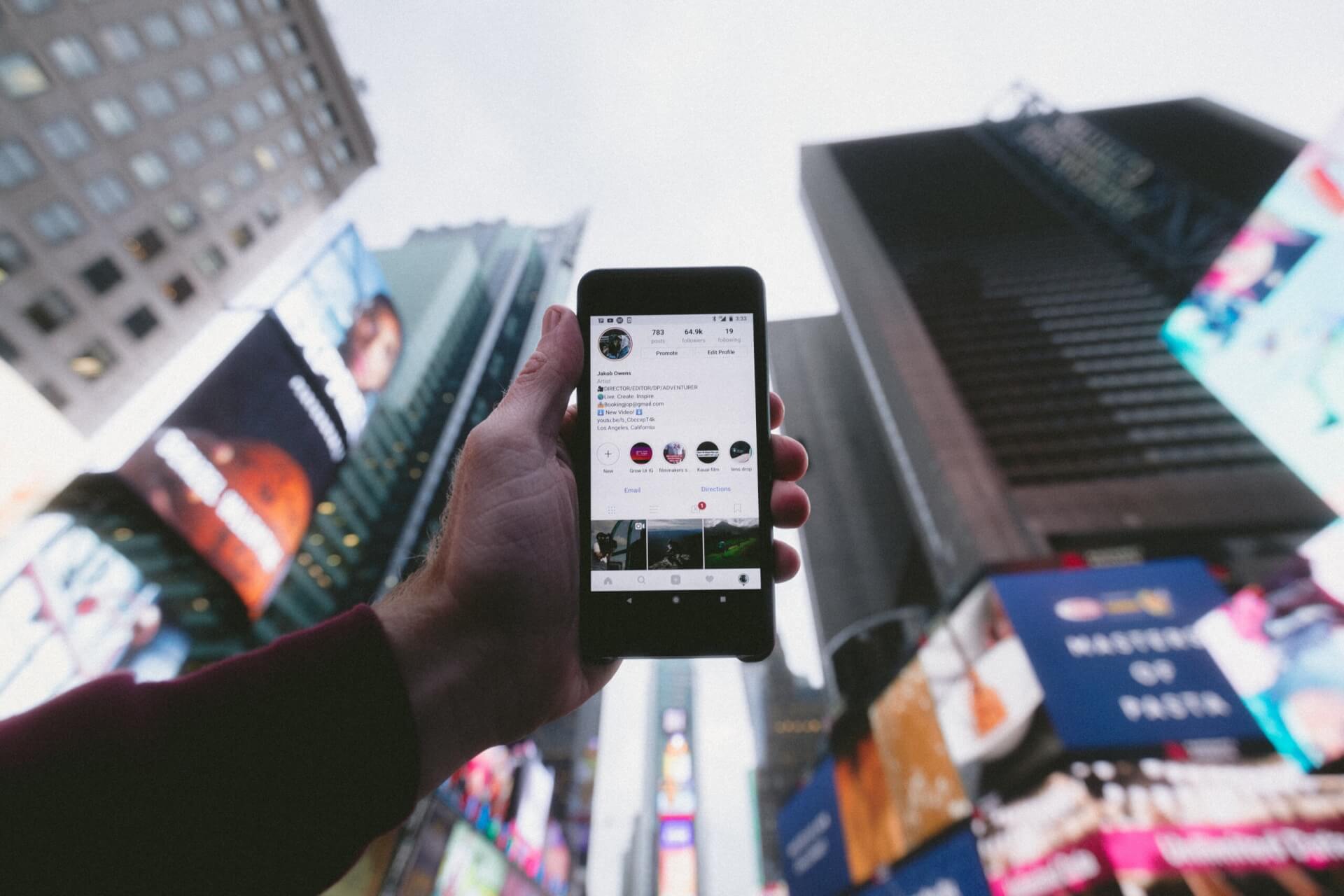
In 2023, being active across multiple channels is a top priority – and forward-thinking advertisers are embracing omnichannel strategies that activate both online and offline ads. As these types of integrations expand, the convergence of digital-out-of-home (DOOH) advertising and social media is revolutionizing how brands engage with their target audience.
A new study from Ocean Outdoor supports this claim; building on a decade of work with Neuro-Insight, their latest wave of neuroscience research helps establish how DOOH advertising can strengthen campaigns running on social media across KPIs like brand relevance, likeability, and authenticity. If a brand has a social media strategy in the marketing plan, it should incorporate DOOH to make it better and more effective.
The shifting social media advertising landscape
Social networks, from Instagram and Facebook to Twitter, TikTok, and YouTube, have become essential tools for any company hoping to promote its product and service offerings. Social media advertising accounted for roughly a third of all digital ad spending last year and is projected to surpass $207 billion in global ad spending in 2023. However, the rising popularity of this channel has made it more challenging for brands to stand out from the competition. With more marketers investing in social media ads, brands must allocate bigger budgets to their paid marketing strategies to remain competitive. A 2022 report from Hootsuite found that even though marketers were spending considerably more on social media ads than they were a year ago, they saw fewer overall impressions for their investment.
That doesn’t mean social media advertising is going away any time soon, though – far from it. Even with global economic uncertainty and the mounting pressure on marketers to deliver more with less, 52% of organizations say that social media has become more important for them in 2023, and close to half (42.62%) say they’re planning to increase their social media budget in the next twelve months.
Social media has established its place in the marketing and communications mix. But as the social media landscape continues to evolve, marketing professionals must adapt to these changes and be willing to embrace new strategies for engagement. In particular, the mix of digital out-of-home advertising and social media platforms has paved the way for compelling advertising that captivates audiences like never before.
The synergy of DOOH and social media
In an era where consumers are constantly connected and forever transitioning between online and offline experiences, DOOH and social media seamlessly complement and enhance each other. In harnessing the dynamic capabilities of DOOH and the widespread reach of social media, brands can create impactful and immersive campaigns that engage consumers across multiple touchpoints.
Let’s dive deeper and explore how integrating DOOH and social media drives brand awareness, engagement, and business success.
Extended reach
On top of increased competition, today’s marketers must contend with widespread digital fatigue and “banner blindness.” When you also consider that almost a third of global consumers now use an internet ad blocker, this significantly reduces the likelihood that your ad will reap the expected impact. Digital OOH signage, on the other hand, is unskippable and Adblock-proof in addition to being highly visible. And as consumers return to commuting and spend more time outdoors, there’s evidence that OOH advertising is becoming more effective. By integrating these two mediums, media buyers can achieve an amplified presence, engaging online and offline consumers and creating a cohesive brand experience.
The integration of DOOH and social media advertising also allows for cross-platform amplification. Your social media campaigns can be extended beyond the digital realm by leveraging DOOH screens to promote hashtags, user-generated content, or contests. Simultaneously, your DOOH displays can encourage offline audiences to engage with your brand online, creating a continuous and immersive brand experience across channels.
Contextual relevance
Another critical aspect of this synergy lies in the ability to deliver contextually relevant messages, which have been shown to increase engagement, recall, and purchase intent. Social media platforms offer robust targeting capabilities based on demographics, interests, and behaviours. When combined with DOOH, media buyers can leverage data-driven insights to tailor real-time content displayed on digital screens. This enables you to deliver highly relevant and timely messages that resonate with your audience in specific locations, optimizing the effectiveness of your campaigns and enhancing overall engagement.
Expanded creativity & storytelling
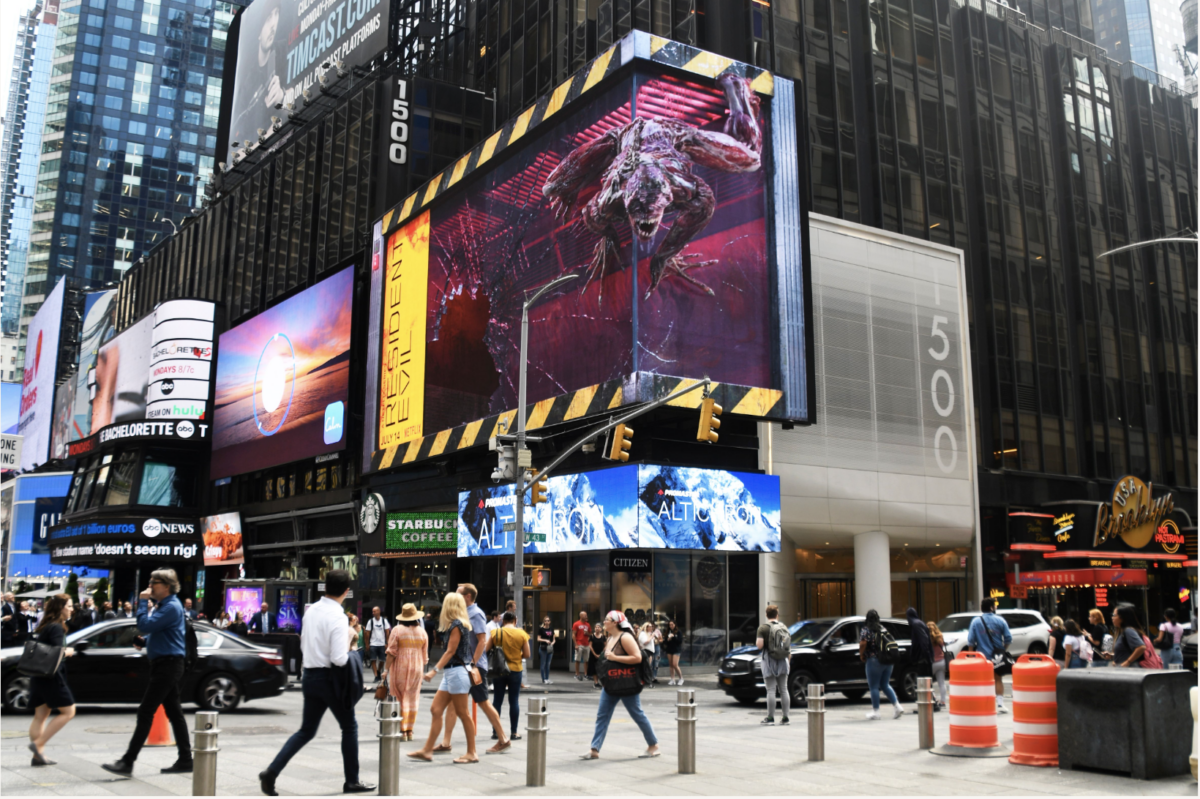
Additionally, integrating DOOH and social media advertising unlocks new creative possibilities. DOOH allows for captivating visual storytelling, utilizing large digital screens to showcase dynamic content, videos, animations, and interactive elements. By seamlessly integrating with social media, media buyers can extend the reach of these creative executions and enable deeper interactions with consumers. This combination of visually stunning displays and interactive engagement creates a memorable and impactful brand experience, driving brand recall, loyalty, and advocacy.
Three ways to supercharge your campaigns with DOOH and social media advertising
By combining the power of both mediums, advertisers can create truly immersive and impactful campaigns that seamlessly bridge the online and offline worlds. But as consumers become more discerning and marketing budgets tighten, standing out and engaging your target audience requires a strategic approach that leverages the strengths of both DOOH and social media channels.
To help you get started, we’ve uncovered three tactics that will help you maximize the impact and effectiveness of your integrated online (social) and offline (DOOH) campaigns. Whether you’re a seasoned marketer or just venturing into paid media, these tactics will provide valuable insights and practical strategies to elevate your advertising efforts.
1. Cross-channel promotion & amplification
According to Ocean Outdoor’s latest neuroscience research, DOOH primes social media content positively. In other words, people are drawn more toward a brand on social media when they’ve seen the brand campaign on DOOH first. Socially amplified DOOH content shared by brands was shown to strengthen brand familiarity and relevance, and when participants saw the same piece of DOOH content in person and then amplified socially, there was a tangible uplift in brand perception and engagement.
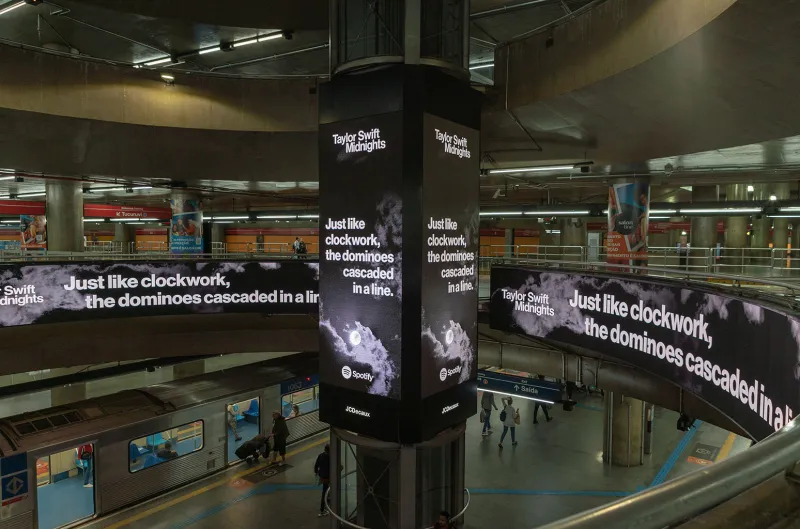
The pre-release campaign for Taylor Swift’s ‘Midnights’ album is an excellent example of the power of this kind of cross-channel synergy in action. Known for her penchant for leaving breadcrumbs for fans to decode on social media, Swift once again engaged her followers in unravelling hidden messages – this time, incorporating billboards as a key element. As the album’s release date drew nearer, snippets of lyrics adorned DOOH screens in prominent locations like New York City’s iconic Times Square, amplifying anticipation and uniting #Swifites worldwide. This innovative approach exemplified how OOH advertising can simultaneously captivate mass audiences and generate widespread excitement across various platforms.
Using a cross-channel approach enables advertisers to maximize the impact of their campaigns, creating a powerful synergy that amplifies messaging, increases engagement, and ultimately drives better results.
Tactics and insights:
- Maximize the reach and engagement of your campaigns by promoting your DOOH content on social media and vice versa.
- Encourage social media users to interact with your DOOH ads by sharing photos, videos, or experiences related to the campaign.
- Similarly, display social media handles and hashtags on your DOOH screens to drive online engagement. This cross-channel promotion generates buzz, expands your audience, and fosters a community around your brand.
2. Interactive & user-generated content
Savvy advertisers are beginning to grasp the potential value of earned media generated through social platforms and digital out-of-home. Fortunately for brands, these channels’ integration also seems to occur at the audience level. Thanks to the new creative capabilities of digitized OOH units, today’s DOOH ads have become much more eye-catching. And with that, it’s becoming more common to see people capturing these ads in the real world and voluntarily sharing them with their social media followers.
As an example, Samsung’s Galaxy S23 activation turned a Brussels metro station into an immersive “botanical experience” replete with two giant LED screens, a 40m2 botanical flower mat, and a selfie wall that leveraged user-generated content to forge deeper connections with their target audience, both in-person and online.
Advertisers who understand the potential value of these types of interactions can analyze these shares to incorporate better the earned media that comes from each device.
Tactics and insights:
- Encourage user participation and engagement by incorporating interactive elements and user-generated content into your integrated campaigns.
- Create interactive experiences on social media platforms, such as polls, contests, or challenges, and integrate them with your DOOH displays.
- Encourage users to share their experiences, photos, or videos related to your campaign and showcase them on social media and DOOH screens. This approach not only boosts engagement but also generates authentic user content that enhances the credibility and reach of your campaigns.
- Analyze these shares to incorporate the earned media from each device better.
3. Contextual (re)targeting & conversion tracking
One powerful tactic seen amongst today’s leading advertisers is to combine the precise targeting capabilities of social media platforms with the location-based targeting offered by DOOH. Doing so enables them to target (and retarget) audiences more effectively on mobile devices while delivering contextually relevant DOOH ads in their physical vicinity. This can be through location-based mobile research, offline metrics like footfall measurement, or cross-channel attribution.
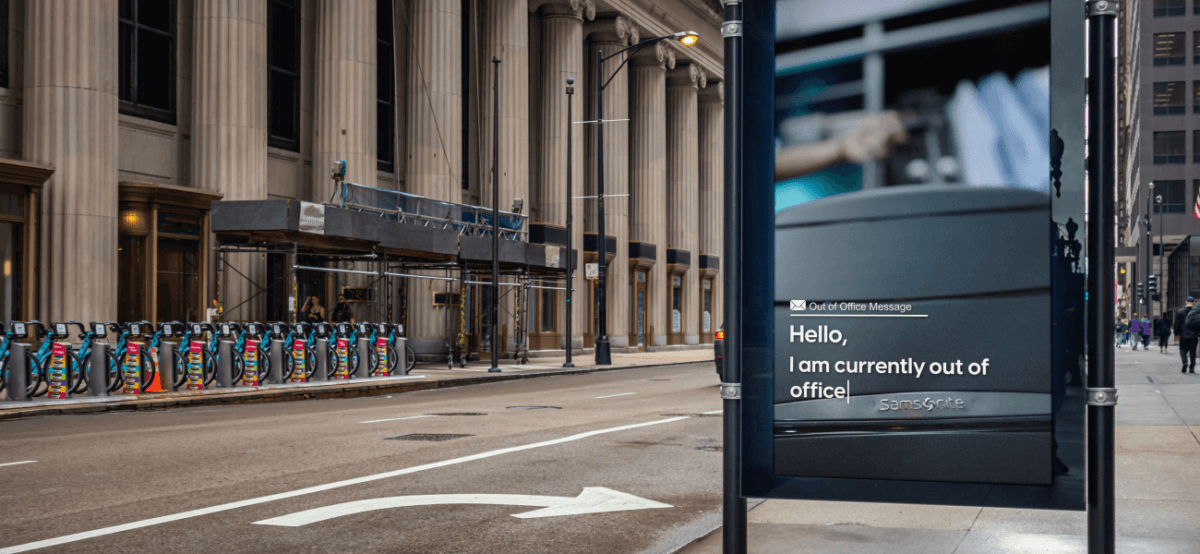
When Samsonite wanted to improve brand awareness and consideration amongst late Gen Zs and younger millennials – a digitally-savvy audience segment that consumes content across multiple social platforms – they took a unique creative approach that extended ad messaging from online media channels to IRL. Their omnichannel Take What’s Yours campaign ran DOOH ads with other media channels, including social media platforms like Instagram, YouTube, and TikTok. Over the two months, the campaign served over 1 million ads, resulting in nearly 15 million impressions.
Advertisers can also leverage retargeting to reinforce campaign messaging and drive conversions. For example, if someone sees your DOOH ad but doesn’t convert, you can retarget them with relevant social media ads to keep your brand top-of-mind and encourage them to take action. This integrated retargeting approach maximizes campaign effectiveness and boosts ROI.
Tactics and insights:
- Leverage social media’s advanced targeting options to reach the right audience online while using DOOH’s geotargeting capabilities to display relevant ads in specific physical locations.
- Integrate offline metrics, like footfall measurement, with online measures to see the impact of DOOH in the social space.
- Utilise retargeting to reinforce your messaging and drive conversions. By tracking user interactions with your DOOH and social media campaigns, you can identify interested prospects and retarget them with personalized ads across both channels.
Want to learn more about the benefits of implementing DOOH into your social and broader digital media strategies?
Contact our team to get started!