| October 11, 2021
3 reasons to combine digital out-of-home (DOOH) and mobile advertising
As brands embrace cross-channel advertising, the buzz around combining digital out-of-home (DOOH) and mobile advertising continues to grow — and for good reason. DOOH gives brands a high-impact presence in the physical world, while mobile provides another opportunity to connect with audiences throughout their day. Together, the two channels can extend campaign reach, encourage engagement, and help turn real-world attention into action.
OOH doesn’t just capture attention in the physical world; it can drive the next action on mobile. In the U.S., 35% of adults have researched a product or service on their phone after seeing an OOH ad, while 19% have made a purchase.
From retargeting audiences on mobile after potential OOH exposure to creating opportunities for direct interaction through QR codes or NFC, there are several ways advertisers can connect the two channels. Mobile and location data can also provide additional insight into campaign performance, helping advertisers understand what happens after an OOH impression.
So, how can DOOH and mobile advertising work together to make omnichannel campaigns more impactful? Let’s take a closer look.
How does OOH-to-mobile retargeting work?
One of the key ways DOOH and mobile work together is through mobile retargeting. OOH-to-mobile retargeting uses anonymized location data and mobile device IDs to build audiences that may have been exposed to an OOH ad, then reaches those audiences with related mobile ads.
Here’s how it typically works:
- Estimate potential exposure: Location and timing signals can be matched with where and when a DOOH ad appeared. Some providers can also account for a screen’s viewshed — the geographic area from which an ad could reasonably be seen — to more accurately estimate exposure.
- Build an audience: Mobile device IDs associated with potential exposure can be used to create a retargeting audience. These identifiers don’t reveal the identity of individual passersby, and potential exposure doesn’t confirm that someone actually saw the ad.
- Retarget on mobile: That audience can then be served related mobile ads that reinforce the original message or provide more information, an offer, or another call to action.
Programmatic DOOH (pDOOH) can make this kind of cross-channel activation easier by allowing advertisers to plan and buy DOOH alongside mobile and other digital media through the DSPs they already use.
Extend audience reach and boost brand visibility
By adding mobile advertising, brands can stay connected with consumers throughout their day, maintaining a consistent presence across physical and digital environments.
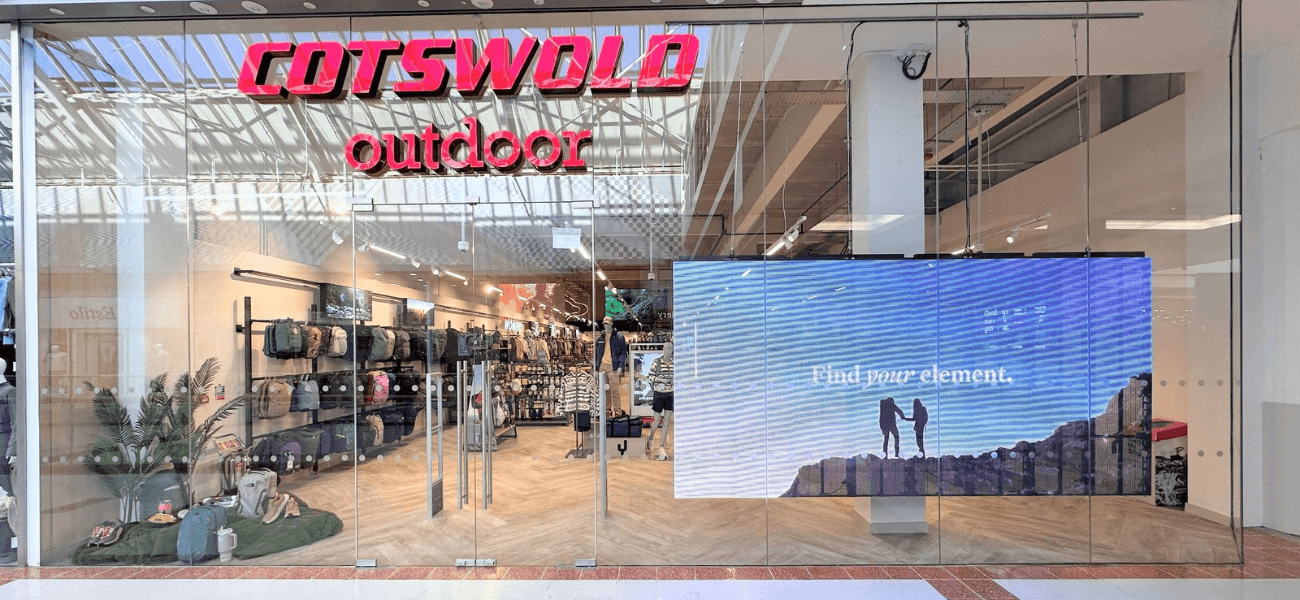
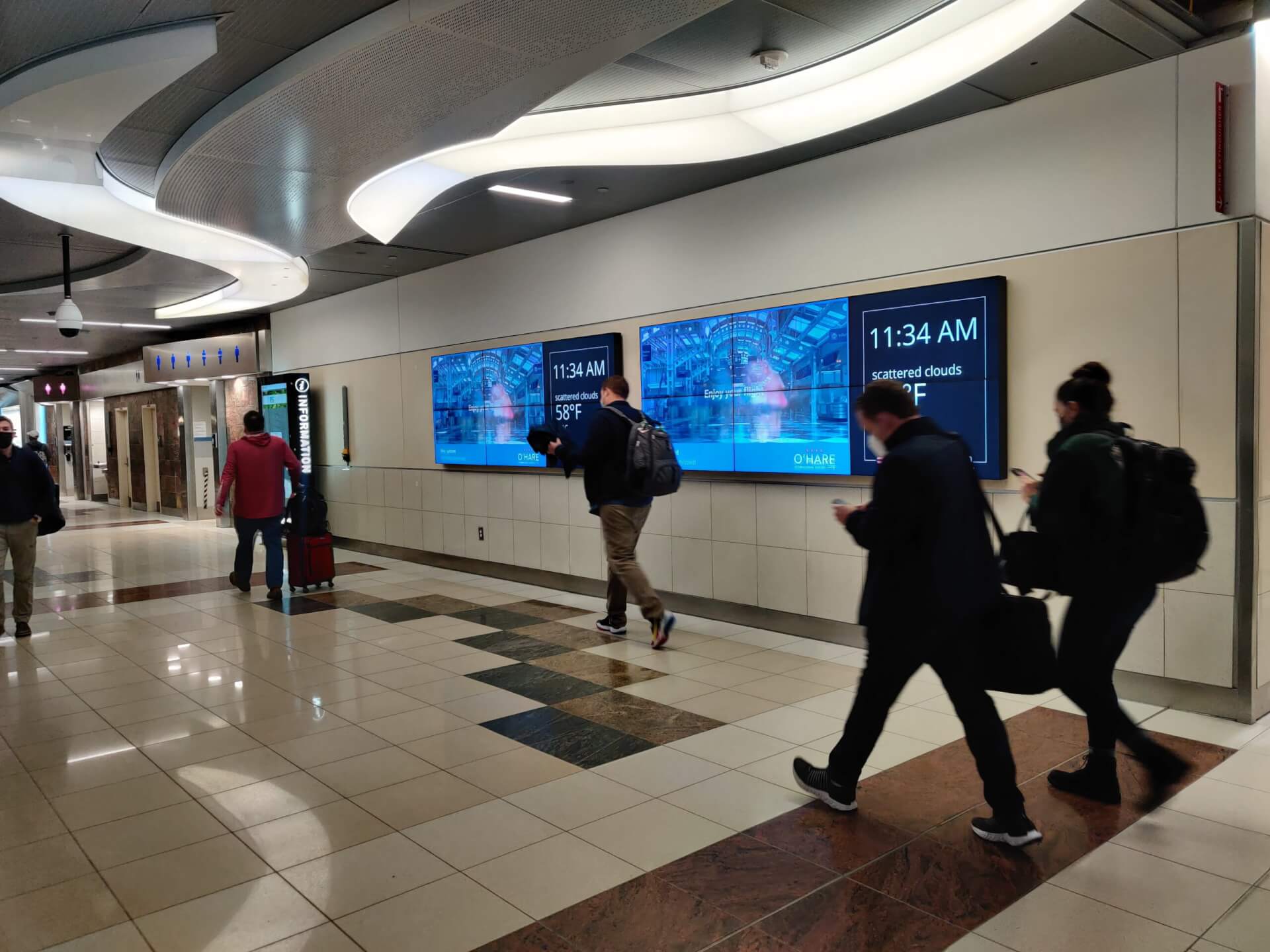
For example, a DOOH campaign running on screens at bus stops, along city streets, and inside busy train and subway stations might catch the attention of office workers during their morning commute. Later, a retargeted mobile ad can reinforce the message with more information or a personalized promotion.
Pairing DOOH with mobile retargeting doesn’t just extend a campaign’s reach — digital OOH can also positively prime responses to related messages encountered in other media. A foundational study by Ocean Outdoor and Neuro-Insight found that digital out-of-home primed mobile 48% more effectively than television when measuring memory encoding. More recently, the 2026 Point of Social study found that people spent an average of 42% longer looking at social ads on their mobile devices after first being exposed to OOH advertising from the same brands.
Case study: How foodora got creative with pDOOH + mobile
Foodora was popular for its food delivery service, but its pickup option wasn’t as well-known. Determined to change this, foodora’s in-house programmatic marketing team incorporated digital OOH screens into its media campaign to build targeted awareness of the feature among German consumers.
While the screens helped the brand reach consumers during the workday, their locations were also used to support online and mobile activation. Using longitude and latitude data, consumers near campaign screens could be served a related ad on their mobile phones to increase campaign reach and frequency. foodora’s multi-channel programmatic campaign served 107,000 ads and reached one million impressions, demonstrating an early example of how programmatic DOOH and mobile could work together.
Tip: Geo-targeting is a proven way to connect DOOH and mobile ads. For example, a digital billboard promoting a store sale can trigger mobile ads with discount codes when users are nearby.
Increase engagement through interactivity
While DOOH grabs attention, mobile can give audiences an immediate way to act on it. By incorporating interactive elements like QR codes, tap-to-connect NFC (near-field communication), or short links into DOOH creative, advertisers can connect a public-screen experience directly to a mobile one.
Unlike mobile retargeting, these interactions are initiated directly by the consumer. Someone might scan a QR code on a billboard to view a product, access an offer, download an app, or learn more about what they just saw.
Interactivity is particularly valuable when a campaign has a clear next step, and research consistently shows OOH’s ability to drive digital engagement. According to a Harris Poll and OAAA study, 74% of mobile device users reported taking action on their devices after recent DOOH exposure, including searching for an advertiser (44%), visiting its website (38%), or scanning a QR code to access information, coupons, or discounts (nearly 25%).
More recent OAAA research from 2026 reinforces this trend, with 86% of U.S. consumers saying they’d take action after seeing a retail OOH ad that interested them, including visiting the retailer’s website or app (45%) or searching for it online (42%).
Case study: Boehringer Ingelheim saw a +105% lift in purchase consideration with DOOH
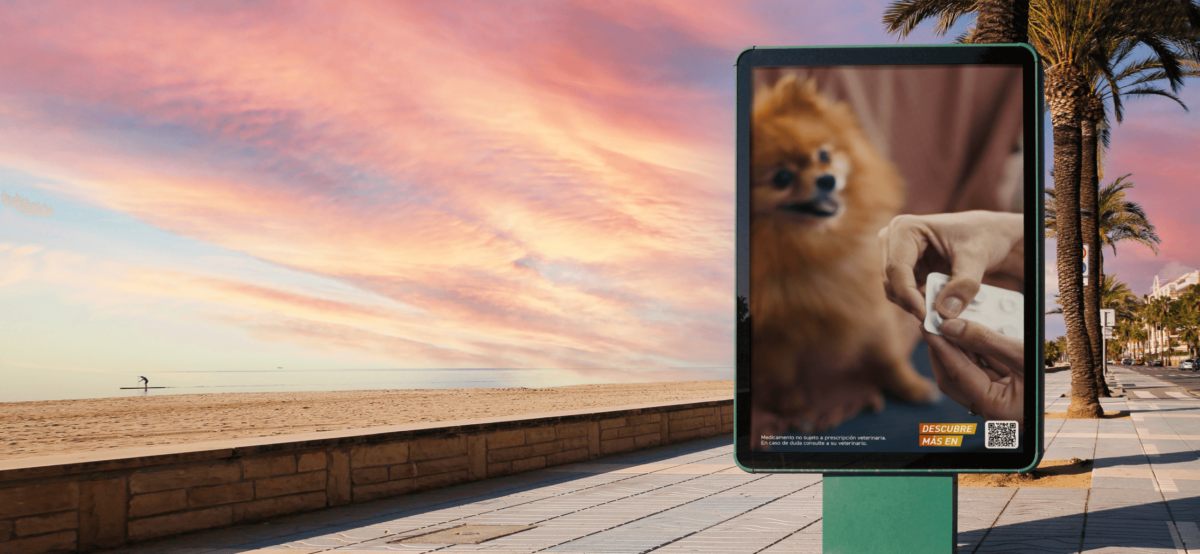
Boehringer Ingelheim wanted to boost awareness and sales for Frontpro Antiparasitic, its pet antiparasitic product. Leveraging a mix of static and digital creatives, the campaign featured QR codes that encouraged audiences to interact directly with the ads.
Strategically placed in shopping malls and on outdoor screens near pet stores carrying the product, the ads combined broad physical-world visibility with a simple mobile next step for pet owners. The campaign ultimately drove a 105% lift in purchase consideration, demonstrating the impact of pairing high-visibility OOH placements with an interactive path to further engagement. Read the full case study.
Improve campaign measurement and attribution
Combining DOOH and mobile gives advertisers more ways to evaluate campaign performance beyond impressions. Mobile and location data can help connect potential OOH exposure to downstream actions, including website visits, app engagement, conversions, and store visits. Interactive features like QR codes and NFC also provide direct measurement signals when consumers choose to engage with an ad on their phones.
Together, these capabilities offer a clearer picture of what happens after OOH exposure. An OAAA and Kochava study analyzing device-level data across hundreds of campaigns found that OOH generated a median 20% lift in in-person outcomes and a 14% lift in digital outcomes, including website visits and app downloads. The study also found that OOH-to-digital conversion rates increased 5.3x between one and 10 ad exposures, highlighting how attribution can reveal the relationship between exposure frequency and consumer action.
READ ALSO: Solidify your understanding of important DOOH metrics and learn how advertisers can leverage data from OOH campaigns to retarget audiences across digital channels through audience extension.
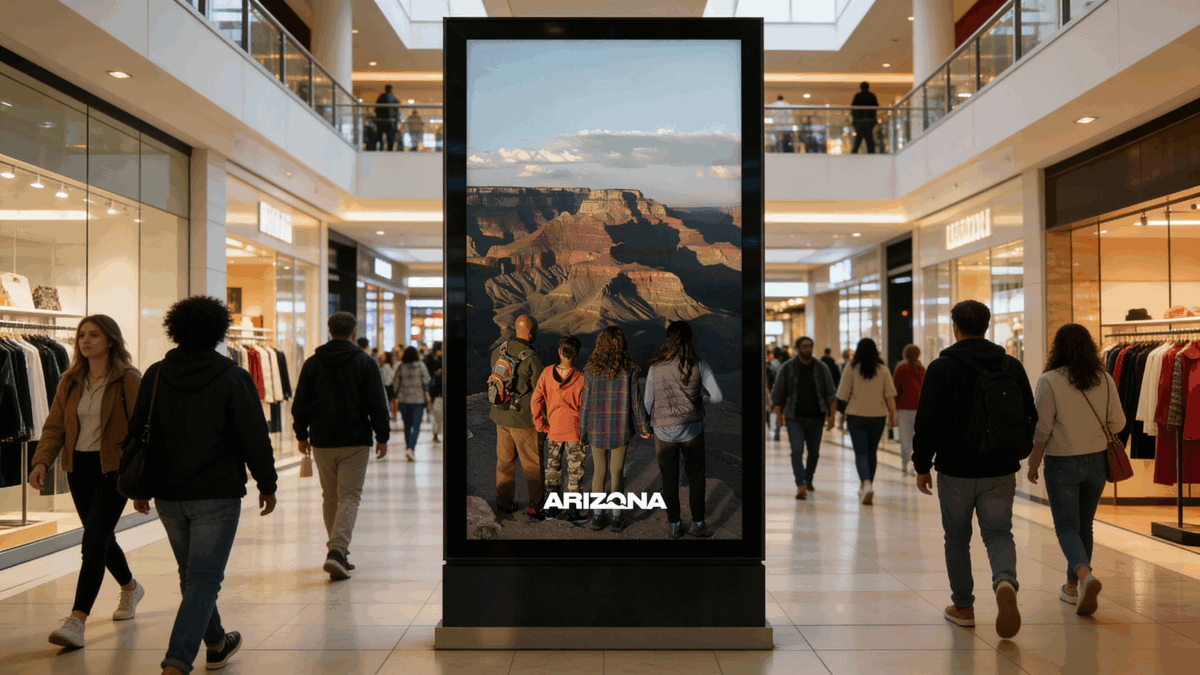
Case study: How Visit Arizona connected pDOOH exposure to real-world arrivals
Visit Arizona wanted to build top-of-mind awareness among prospective travellers while driving measurable visits to the state. Working with its agency, Off Madison Ave, the tourism organization launched a programmatic DOOH campaign across high-traffic venues in key markets and used mobile retargeting to extend the campaign beyond the initial OOH exposure.
An arrival-lift study helped measure the campaign’s real-world impact, finding a 30% increase in arrivals — above the 23% national average cited for similar campaigns. Mobile ads also achieved a viewability rate of more than 90%, illustrating how mobile can extend a DOOH campaign while attribution helps measure its impact. Read the full case study.
Why DOOH + mobile advertising is the future of cross-channel marketing
As consumers move seamlessly between digital and real-world spaces, combining DOOH and mobile advertising offers a powerful opportunity to engage them at every touchpoint. With extended reach, interactive experiences, and measurable results, this pairing delivers a powerful way to boost engagement and achieve marketing goals.